






 Portuguese
  Spanish


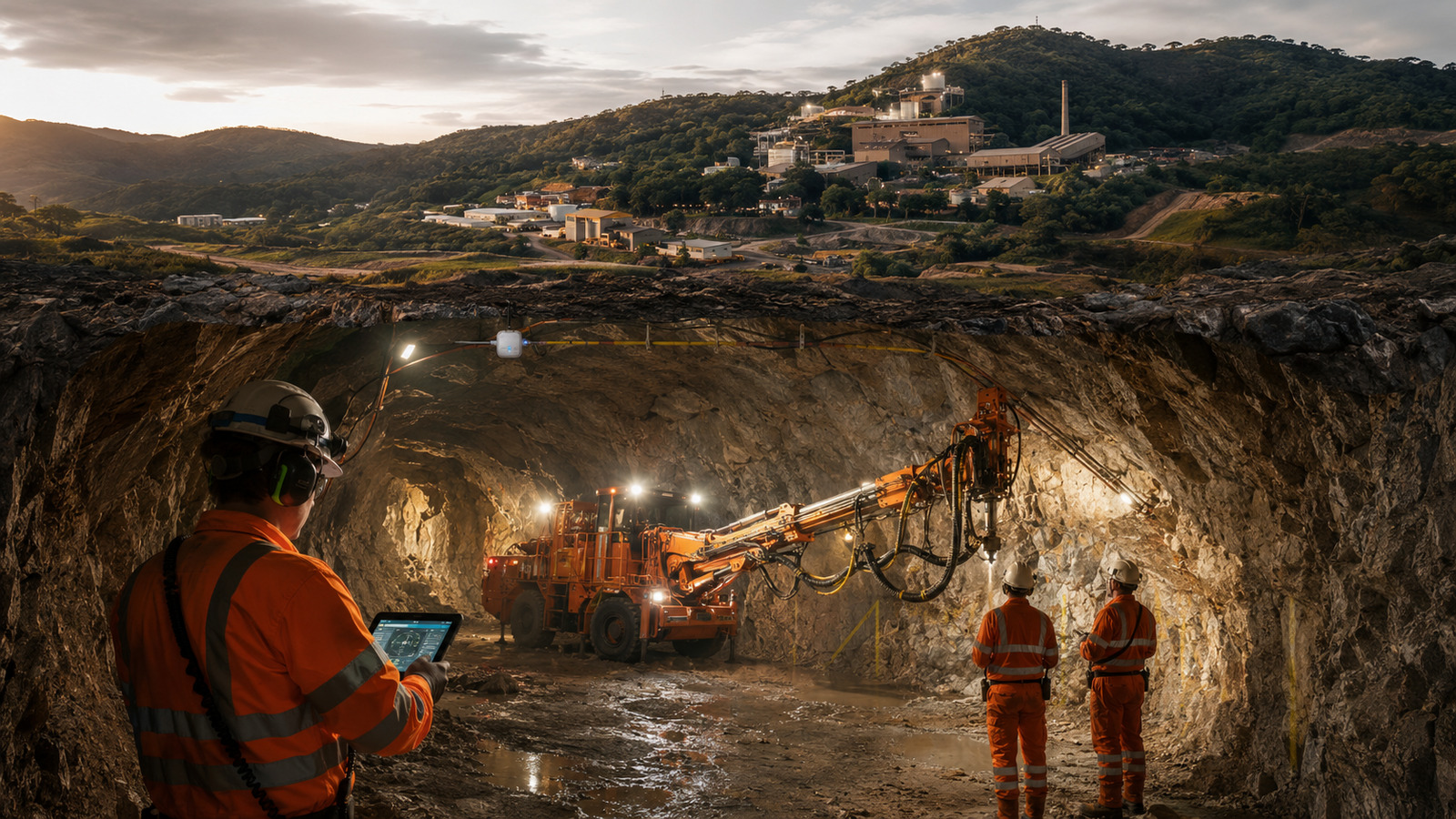

AngloGold Ashanti, operating in Brazil since 1834, bets on technology, real-time tracking, and new work shifts to enhance safety and productivity in underground gold mining in Minas Gerais
The gold extraction of AngloGold Ashanti in Minas Gerais combines an operation started in Brazil in 1834 with technologies such as underground Wi-Fi, worker tracking, and remotely operated loaders. At the Cuiabá mine, which reaches 1,600 meters deep, the company claims to use innovation to increase productivity and reduce risks.

Gold extraction in underground mine reaches 1,600 meters in Minas Gerais
The Cuiabá mine in Minas Gerais shows how gold extraction has changed in almost two centuries. To reach the deepest points of the operation, the journey begins in a two-story elevator, with a capacity for up to 50 people per trip.
The descent takes about four minutes to level 11, at 900 meters deep. Then, workers still travel approximately 25 minutes by car or van to deeper areas of the mine.
-
Water Tunnel to Cut Through Andes: 14 km Underground Passage at Over 4,000 Meters Could Transform Atlantic-Pacific Trade Routes

-
Chinese Company Enters Brazil to Compete with Mercado Pago, Stone, PagBank, Promising Local Manufacturing and Innovative Payment Solutions

-
Brazil Imports 85% of Its Whey Protein; New $120 Million Factory Aims to Change That

-
Sakura Soy Sauce, Originating from a São Paulo Village in 1940, Now Holds 75% of the Market



Today, the operation reaches 1,600 meters deep. According to Luiz Otávio de Lima, CEO of AngloGold Ashanti Latam, the Cuiabá mine is among the five most technological underground mines in the world.
The numbers help explain the complexity of the activity. About a thousand people work daily in the mine, in different shifts. To produce just 6 grams of gold, it is necessary to dismantle a ton of rocks.
Company founded in 1834 maintains continuous operation in the country
AngloGold Ashanti is presented as the oldest continuously operating industry in Brazil. Its history in the country began in 1834, when an English company arrived in Minas Gerais to explore the second gold cycle, marked by the mechanization of mining.
According to Lima, the operation began in São João del-Rei. Later, the company transferred its activities to Nova Lima, where it acquired the Mina Velha and began operating as São João del Rey Mining Company.
Over time, the company changed its name and shareholder control. After the British period, it began operating as Morro Velho in the 1960s. In the late 1990s, it was incorporated by AngloGold Ashanti.
Today, Brazilian activities are concentrated in Minas Gerais, with two underground mines, Cuiabá and Lamego, in addition to the metallurgical plant in Nova Lima.
Brazil is also the company’s only global operation with a 100% verticalized process, from mineral research to the refining of the gold bar ready for sale. For the CEO, this model represents an advantage for the business.
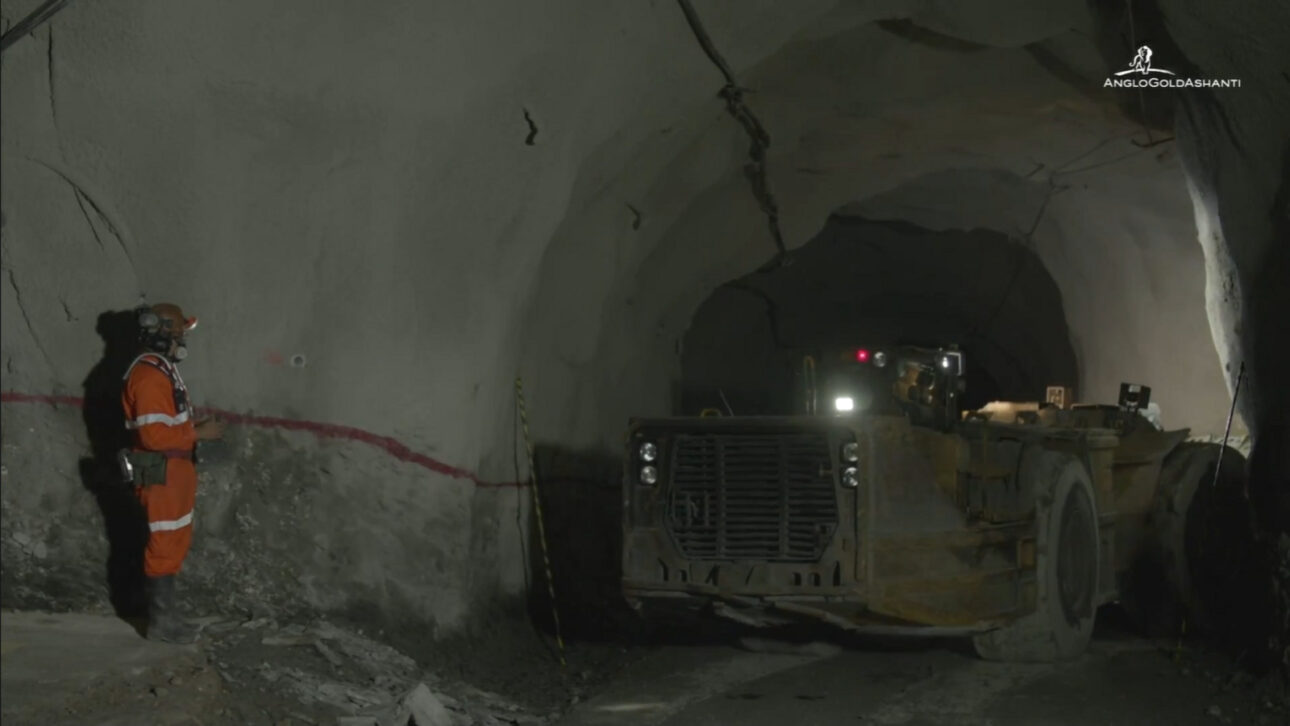
Underground Wi-Fi, tracking, and remote operation reduce risks
Technology has taken on a central role in the operation. The Cuiabá mine is 100% connected by Wi-Fi and has over 400 routers underground.
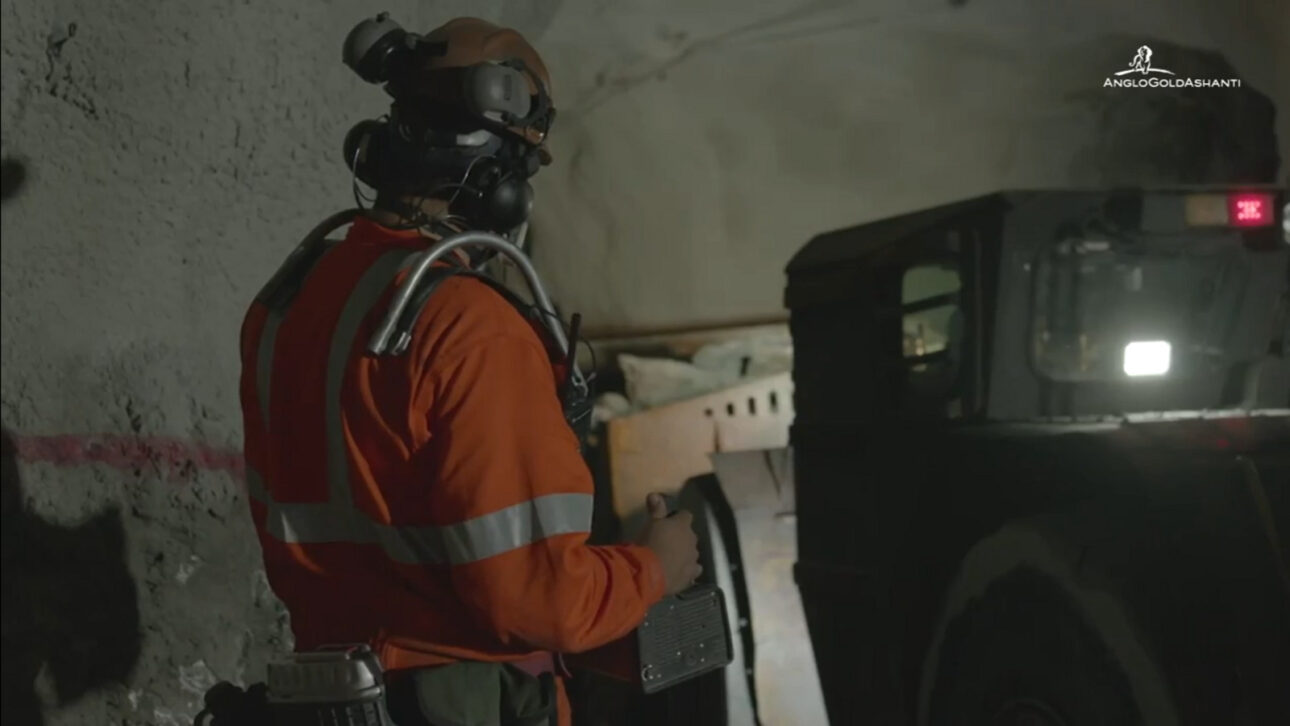
This structure allows real-time monitoring of workers’ locations through the People Tracking system.
According to Lima, the company can know exactly where each employee is inside the mine. In the event of any incident, the response speed increases.
Connectivity also helps in cost management. Since the company knows the number of people at each work front, it can adjust or turn off the rotation of the fans. According to the CEO, this generates almost 25% energy savings.
Another advancement is in the remotely operated loaders. The equipment can move up to 130 tons of material per hour and is controlled from the surface by operators with joysticks. The proposal is to remove people from areas of higher operational risk.
4×3 and 4×4 scale replaces old work model
The transformation also reached the employees’ routine. At the corporate office in Nova Lima, the workweek has been from Monday to Thursday since 2024.
In the mines, the old 6×1 scale was replaced by a model of four days of work followed by four days off.
According to Lima, the change occurred after internal research, tests, and listening to the workers. The CEO states that safety indicators improved significantly after adopting the new schedule.
The reduction, as reported by the executive, mainly occurred in high-frequency, low-impact accidents, such as sprains, finger pinches, and incidents associated with fatigue and lack of attention.
For Lima, the company tries to act like a “192-year-old startup” by adopting management models considered unconventional for a mining company with almost two centuries of history.
Latin America has lower production, but greater weight in cash flow
AngloGold Ashanti maintains 11 operations distributed across Africa, Australia, and Latin America. Africa accounts for about 60% to 65% of the group’s global gold production. Australia represents approximately 19%.
Latin America, comprising operations in Brazil and Argentina, accounts for about 16% of the company’s global production.
Even with a smaller share in volume, the region generated 26% of the group’s free cash flow last year, according to Lima.
In Brazil, the goal for this year is to produce 290,000 ounces of gold in Minas Gerais, above the 273,000 ounces recorded in 2025.
Globally, AngloGold Ashanti ended 2025 with $9.9 billion in revenue. In the first quarter of 2026, the free cash flow reached $1.2 billion, an increase of 190% compared to the same period the previous year.
This article was prepared based on information from the interview with Luiz Otávio de Lima, CEO of AngloGold Ashanti Latam, on the podcast De Frente com CEO, by EXAME, with data, numbers, and statements preserved as per the consulted material.


