Portuguese
  Spanish


Project of EF-118 Foresees 245 Kilometers Between Espírito Santo and Rio de Janeiro, with Direct Connection to the Port of Açu and Investment Estimated at R$ 6.12 Billion, Even After the Failure of Negotiations Between Federal Government and Vale.
The federal government decided to maintain the schedule of the Estrada de Ferro 118 (EF-118), between Espírito Santo and Rio de Janeiro, even without the approximately R$ 2 billion it intended to obtain with the contractual renegotiation of Vale.
The first phase, of 245 kilometers between Santa Leopoldina (ES) and São João da Barra (RJ), where the Port of Açu is located, had a technical project sent to ANTT and is expected to proceed for analysis by TCU in October 2025, with a market offering planned for the first semester of 2026.
The package for this section totals R$ 6.12 billion in investments and includes a public contribution estimated at R$ 1.82 billion to enable the concession, according to an investigation disclosed by the sector.
-
Trans-Siberian Railway’s New Sister Line, BAM, Stretches 4,300 km Through Permafrost and Seismic Zones in Northern Russia

-
180-Year-Old Bridge Disappears from Brazilian Farm, Found 180km Away, Sparks Investigation into Illegal Sale of Historical Heritage

-
Brazil’s Defunct Railway Network Leaves Over 100,000 Properties Abandoned for Nearly 30 Years, Facing Neglect and Safety Risks as Government Struggles to Regulate Assets Amid Degraded Stations and Unlawful Use

-
Belo Horizonte’s Beltway Project Risks Losing $5 Billion to Metro Expansion if Court Doesn’t Act Soon; State Government Plans New Lines with IDB Support





Stalemate with Vale and Impact on Financing
The negotiations to review the contracts of the EF Vitória-Minas (EFVM) and the Estrada de Ferro Carajás (EFC), renewed in advance in 2020, were concluded without agreement on August 28, 2025.
The Union reported that, in light of the lack of consensus, it will adopt administrative and judicial measures to seek “fair pricing” of the assets, a move that reduces the likelihood of Vale contributing funds to EF-118 as intended.
Without funding from the mining company, the Ministry of Transport asserts that there are other sources to cover the initial section’s costs, maintaining the plan to auction the asset after validation by the control agencies.
The assessment is that the modeling may rely on public contributions to balance the economic-financial equation and unlock the project, as already admitted by the government in public hearings about EF-118.
What Will Be Auctioned and How Is the Layout
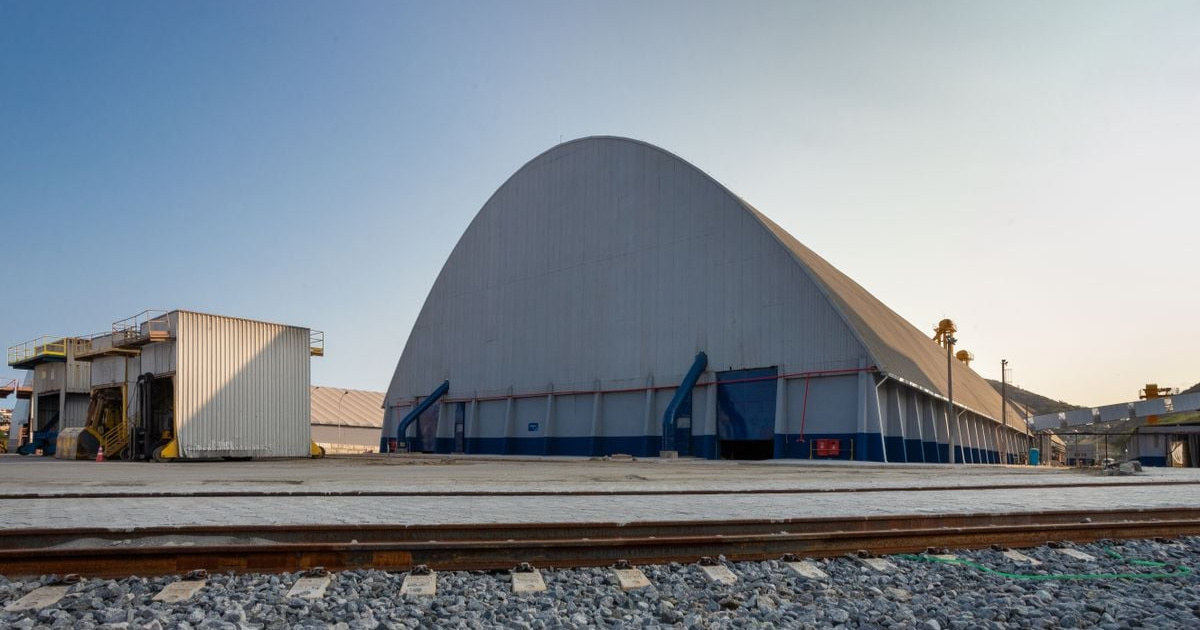
The advancing scope prioritizes the direct connection of the Vitória-Minas network to the area of the Port of Açu, creating a dedicated corridor for iron ore, steel, pulp, and bulk cargo.
The phase of 245 km connects Santa Leopoldina, a terminal of the project in Espírito Santo, to São João da Barra, in northern Rio de Janeiro, enhancing the competitiveness of Açu and relieving bottlenecks on BR-101.
The estimate is R$ 6.12 billion in capex and R$ 1.82 billion in public viability contribution, values already communicated to the market alongside the regulatory calendar.
In parallel, the broad design of EF-118 — also referred to as the Southeast Railway Ring — foresees a total axis of about 575 km, built from scratch between Nova Iguaçu (RJ) and Santa Leopoldina (ES).
This layout anticipates connections to the MRS and EFVM systems and access to strategic ports, such as Ubu (Anchieta), Porto Central (Presidente Kennedy), and the Açu itself.
Regulatory Calendar and Market Window
The submission to TCU is the final step before the bidding announcement.
The current indication is that the documentation will reach the court in October 2025, paving the way for the publication of the bidding announcement and competition in the first semester of 2026, provided there are no significant adjustments required.
In parallel, recent statements from the Ministry of Transport project railway auctions until the end of 2026, with EF-118 among the priorities, reinforcing the goal of preserving the investment window of the sector.
Economic Model and Participation of the Union
The government has been advocating a model with direct participation of the Union to balance risk and return, especially in greenfield sections.
In EF-118, the guideline is to combine private investment with public contribution in a staggered manner, concentrated in the initial years of the contract, to accelerate implementation and induce economies of scale in shipping via Açu.
This logic has been presented in hearings and official materials since the beginning of 2025.
Although there are divergences regarding the exact size of the first phase in different communications throughout the year — with references to alternative configurations, such as a “reduced central section” — the current guidance in negotiations with the market points to the Santa Leopoldina–São João da Barra segment with 245 km.
Adjustments may occur at TCU, a stage in which demand studies, engineering, and risk matrix are refined.
Why EF-118 Is Strategic
By integrating networks and offering direct railway access to port terminals, EF-118 aims to reduce logistics costs, enhance timeline predictability, and diversify export routes.
The Port of Açu, an energy and industrial hub in northern Rio de Janeiro, has been receiving investments and has the capacity to absorb a significant increase in cargo, creating synergy with the new railway.
This combination is seen by state governments and the private sector as a vector to <strongattract new productive projects in the ES–RJ corridor.
What to Watch in the Coming Months
Attention is first directed to TCU’s analysis.
Next, the details of the bidding announcement, which will bring performance targets, access rules, and a schedule for public contributions.
Finally, the investor appetite amid the macro scenario: the presence of railway operators and infrastructure funds will be crucial for competition and the project’s cost of capital.
With the competition for resources becoming fiercer and the absence of Vale’s contribution, which factors will weigh more in the investor’s decision to compete for the initial segment of EF-118: the design of the public contribution, the demand risk, or the logistical integration with the Port of Açu?