Portuguese
  Spanish


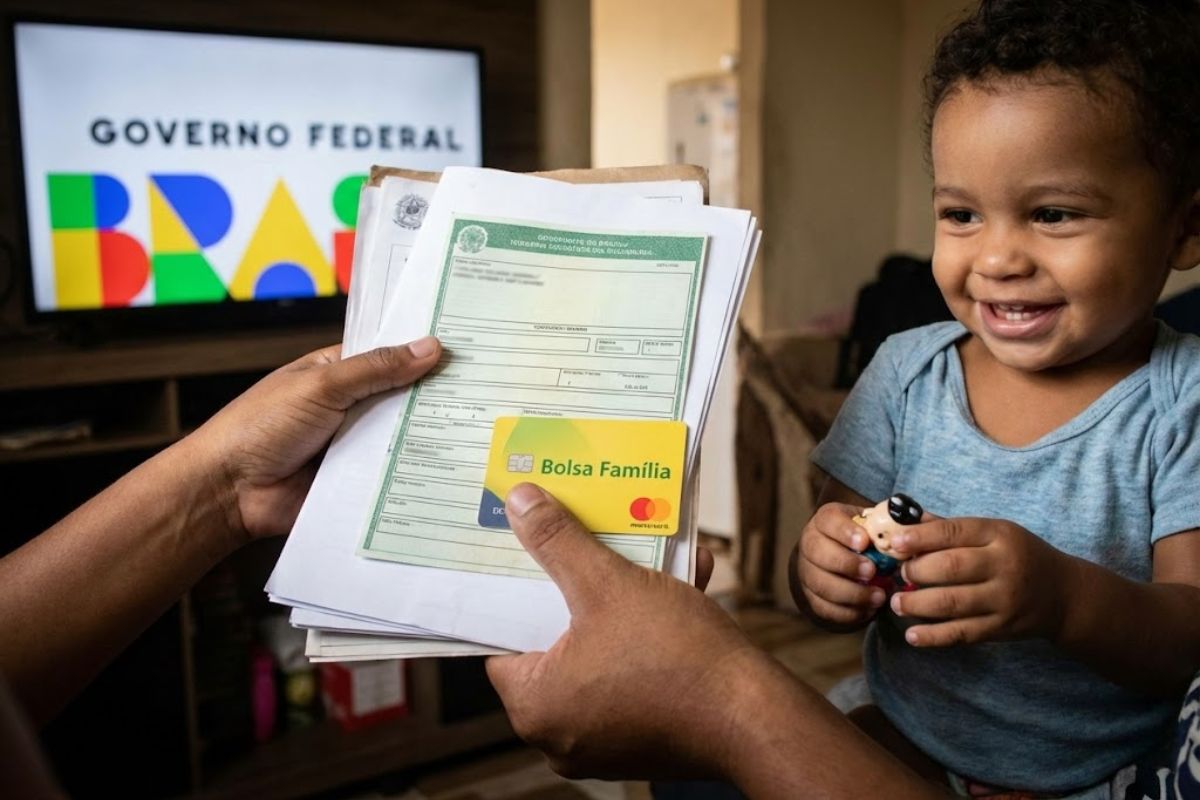

Extra Money of R$ 150 Per Child Will Continue in 2026 in Bolsa Família Via First Childhood Benefit, Complementing the Payment of R$ 600. The Additional Applies to Children from Zero to Six Years, Can Be Multiplied by Children, Requires Updated CadÚnico and Compliance with Health, Vaccination and Schooling When Applicable.
The extra money for Bolsa Família families with young children is maintained in 2026.
The additional of R$ 150 per child continues as First Childhood Benefit.
This amount serves as a supplement to the benefit structure of the program.
-
Brazilian Civil Servant Earns $2,800 Monthly but Seeks Legal Help as Bank Loans Consume Nearly 80% of Income

-
Brazilian Pet Industry Giant with $6 Billion Valuation Targets 24 Million Customers, Launches Franchise Model with Six Revenue Streams and $7.80 Subscription Plan for National Expansion

-
Daughter of a Mechanic, Roberta Pirolla Turns Passion for Cars into a Million-Dollar Vehicle Wrapping Business Set to Grow 75% in a Male-Dominated Industry

-
At 30, Thyago Plácido turned Innova into a solar energy operation serving central Brazil with over 300 projects completed.


Bolsa Família also maintains the mechanism that ensures the minimum level of R$ 600, through a supplement when the total benefits fall below this amount.
In practice, the extra money is calculated based on family composition.
This allows more than one additional payment when there are two or more children within the eligible age.
To receive it, the family needs to keep the updated CadÚnico.
They also need to comply with the program’s conditions, such as health routines, vaccination, and school attendance when applicable.
How the Extra Money of R$ 150 Per Child Works
The additional of R$ 150 is paid for each child in the first childhood within the beneficiary family.
This amount is added to the monthly payment.
The aim is to reinforce income just at the time when expenses related to care and development tend to be more intense in the household budget.
As the payment considers family composition, the extra money can multiply in households with more than one young child.
Rules to Receive in 2026
The CadÚnico must be regular and compatible with the family’s reality.
The program maintains health monitoring requirements.
Vaccination must be up-to-date.
School attendance applies when applicable, according to age.
The goal is to link income support to minimal social protection routines.
What Else Goes into the Calculation of Bolsa Família
In addition to the extra money for the first childhood, Bolsa Família operates with amounts per person and additional payments by profile.
There is a share per member that composes the family calculation base.
There are additional payments of R$ 50 for children and adolescents aged 7 to 18 years incomplete.
There are additional payments of R$ 50 for pregnant women.
There are additional payments of R$ 50 for nursing mothers.
This structure by family composition concentrates more resources in households with a higher number of dependents.
Impact on Combating Child Poverty
The focus on early childhood appears as a strategic axis of the program.
The extra money serves as an immediate income boost during a period of greater vulnerability within the family.
In practice, this tends to ease recurring expenses such as food, hygiene items, and travel for health routines.
Recent Reach of the Program and Average Payment Dimension
Bolsa Família reached 18.7 million families in December 2025.
The reported national average amount was R$ 691.37 that month.
This level results from the sum of the minimum amount with additional payments, including the extra money for the first childhood when the family qualifies.
Do you already receive the extra money of R$ 150 per child in Bolsa Família or do you know someone who will depend on this additional amount in 2026?