Portuguese
  Spanish


The East Perth Common Ground, a 17-story building with 112 complete apartments, opened in Perth, Australia, as permanent housing for the homeless and low-income people. Each apartment has its own kitchen and bathroom, and the social housing provides on-site support 24 hours a day.
An Australian city has decided to tackle street life with concrete, scale, and a model already tested worldwide. In Perth, the capital of Western Australia, the East Perth Common Ground has opened, a 17-story building with 112 complete apartments designed as permanent housing for the homeless and low-income earners. Support for residents is provided by Mission Australia.
The project delivers more than just walls. About half of the 112 apartments are reserved for people who have spent years sleeping on the street, and the building provides on-site support 24 hours a day to help residents reorganize and maintain their rental agreements. The construction cost around 70 million Australian dollars and followed the Common Ground model of supported social housing, internationally recognized as a good practice.
A 17-story building to address street life
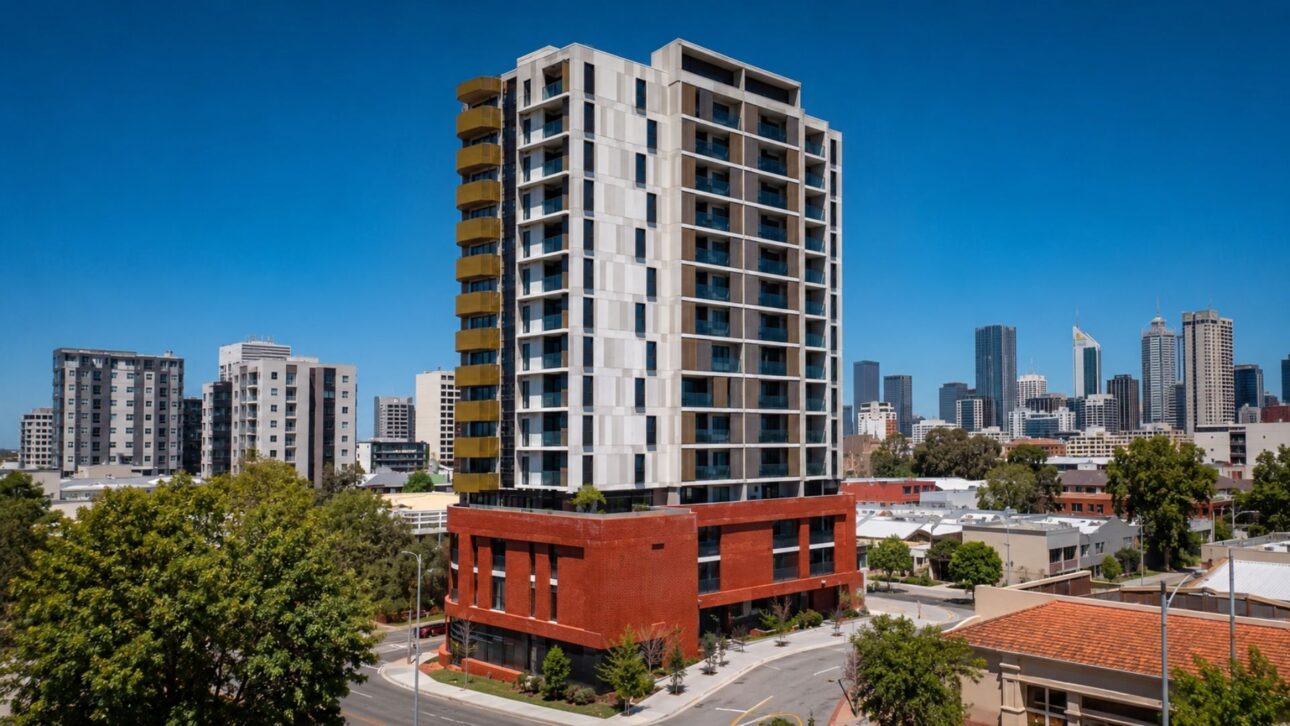
The scale is striking. Instead of an improvised shelter, Perth erected a 17-story building, named Kaalak, a name of Noongar origin, at the corner of Hill and Wellington streets in East Perth.
-
81-Meter Bridge Made from Over 7 Tons of Recycled Plastic Connects Isolated Communities in Panama Canal Basin, Allowing Safe Passage for Over 300 Residents

-
Australia’s First Two-Story 3D-Printed House Built in 18 Hours, 22% Cheaper Than Traditional Methods, Uses Concrete That Hardens in 3 Minutes
-
Architect Converts 1955 Grain Silo into 31m² Home with Full Amenities, Including Kitchen, Bathroom, Curved Living Room, and Loft Bedroom

-
Egypt Partners with China to Build 2 GW Wind Turbine Factory and 2,000 MW Wind Farm in Gulf of Suez, Aiming to Export Across Africa


There are 112 complete apartments, along with common areas and commercial spaces on the ground floor, all within a single tower in Australia.
The bill is for a large project. The East Perth Common Ground cost about 70 million Australian dollars, mostly funded by the Western Australian government, with 8 million coming from the federal government.
The construction, carried out by the contractor ADCO, was completed at the end of 2025, and the building began operations in April 2026, gradually accommodating residents.
Building instead of just sheltering is the central point. By transforming the response to the homeless population into a fixed and dignified address, rather than a temporary spot, the city treated housing as the foundation for everything else.
The size of the building shows the ambition: it can accommodate enough people to change the street statistics of the region.
What each complete apartment is like
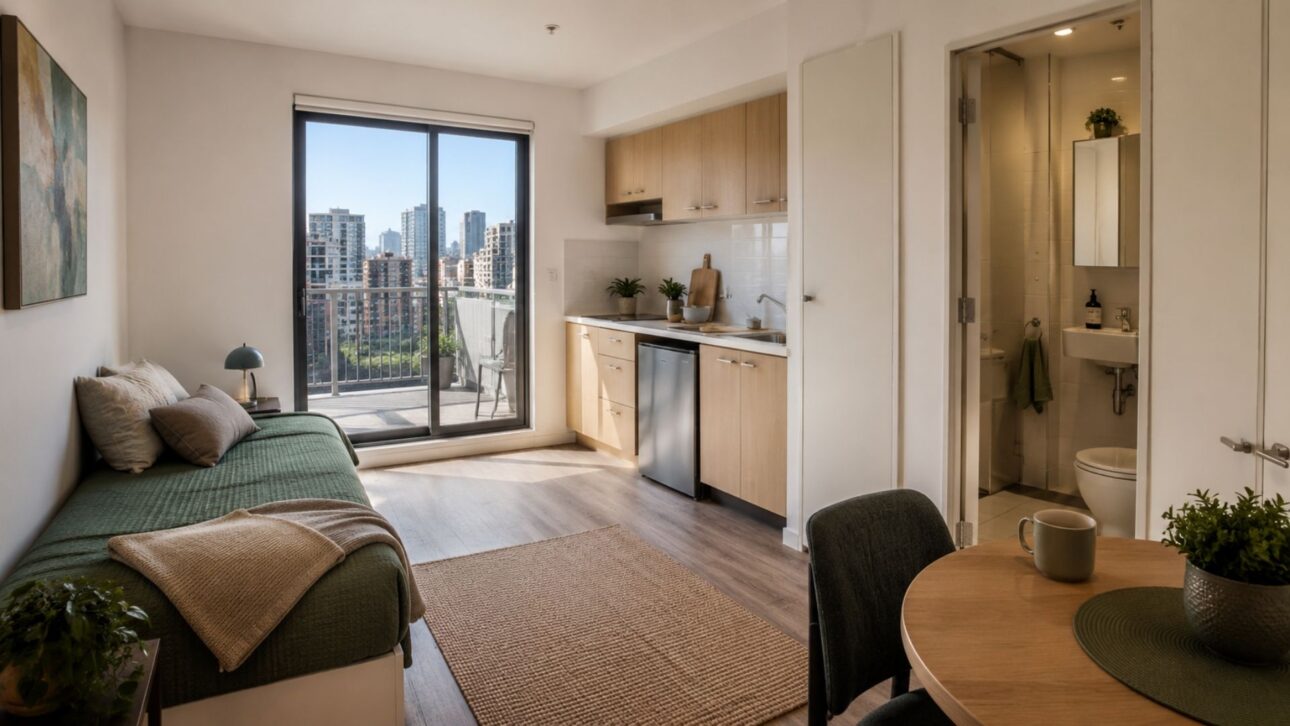
Each resident gets a real home, not a shared room.
The 112 apartments are autonomous, meaning each unit has its own kitchen and bathroom, providing privacy and autonomy to newcomers.
It’s the difference between sleeping in a collective shelter and finally having an address of your own.
The project also considered accessibility. According to the Western Australian government, the apartments follow a combination of accessible design standards, from silver to platinum level, the latter being fully adapted for people with disabilities or reduced mobility.
The idea is for the housing to serve various profiles, without physical barriers.
There is also a structure for socializing and security. Besides the private apartment, the building offers common areas and a reception with 24-hour service, ensuring security and providing a face to the support.
This combination of private and collective space is what transforms the tower into a community, not just a people depot.
Half for those who slept on the street, half for low income
The design of the occupation is intentional. About 50% of the apartments, roughly 56 units, are reserved for people who have experienced long periods of life on the streets, in some cases for years.
The other half is intended for low-income residents, in a social housing model that mixes profiles in the same building.
This mix is not a detail, it’s a strategy. Bringing together those who have left the streets and those who work with low income prevents the building from becoming a ghetto and creates a more balanced neighborhood.
Living with diverse routines helps stabilize those who are rebuilding their lives, a central principle of the model adopted in Perth.
The focus on those who have lived on the street has a public policy logic. The homeless population is usually the most difficult to reach with traditional programs, and guaranteeing them half of an entire building is a direct bet on the most persistent problem. Solving housing for this group is generally the step that unlocks all the others.
The daily support that comes with the key
Handing over the key is just the beginning. The great differential of East Perth Common Ground is the on-site support provided by Mission Australia, which offers individualized assistance to help each resident take care of their health, organize documents, seek work, and keep rent up to date. It’s tailored support, within the building itself.
This support operates 24 hours a day. A permanent team at the reception and support services available ensure that no one is left alone in the face of a relapse or crisis.
For those who have spent years on the street, having help just a few meters from the apartment is what sustains their stay in housing.
The logic is simple and powerful. Providing a roof without support often fails because the problems that led the person to the street remain.
By combining housing and support at the same address, the model greatly increases the chance that leaving the streets will be definitive, not just a pause.
The Common Ground model, born in New York
The idea behind the building has a surname. The East Perth Common Ground follows the Common Ground model, based on the Housing First philosophy, which reverses the order of traditional policies: instead of requiring the person to solve everything before deserving a house, it provides the house first and helps solve the rest afterward.
The concept is neither new nor improvised. It was born in New York over 20 years ago and is now internationally recognized as one of the most effective ways to get people off the streets in a lasting way. Bringing this social housing model to Australia was Perth’s bet to tackle the problem.
The project was also designed by listening to those who understand the subject from personal experience. According to Mission Australia, people who have lived on the streets participated in the building’s conception, alongside housing experts, to ensure the housing truly meets the needs of those who will live in it. Policy made with the recipients, not just for them.
What Brazil Can Learn from Perth
Here, the problem is large and growing. Brazil has a homeless population that has multiplied in the last decade, and the response still relies heavily on temporary shelters, which provide accommodation at night but do not offer a stable address.
The case of Perth shows a different path: treating housing as a solution, not as a favor.
The clearest lesson is about combining shelter and support. Building social housing is essential, but the Australian example reminds us that walls alone are not enough: it is the daily support that keeps people housed.
Brazilian housing programs could gain strength by incorporating this permanent support.
There is also a message about scale and ambition. A single 17-story building concentrates services, reduces costs, and gives visibility to the cause.
For Brazilian cities facing an increase in the homeless population, thinking big, with dignified housing and embedded support, can yield more than dozens of scattered actions.
And you, do you think this would work in Brazilian cities?
The East Perth Common Ground proves that it is possible to tackle street life with a serious project: 17 stories, 112 complete apartments, and 24-hour on-site support, all built as permanent housing for the homeless and low-income people in Australia.
More than shelter, it is a fixed address with support.
And you, do you believe that a social housing model like this, which combines private apartments and daily support, could help reduce the homeless population in Brazilian cities? Share in the comments if your city needs a solution like this and what you think still hinders this type of project here.