Portuguese
  Spanish


Federal Government Reduces ANP Budget and Triggers Suspension of National Fuel Quality Monitoring Program
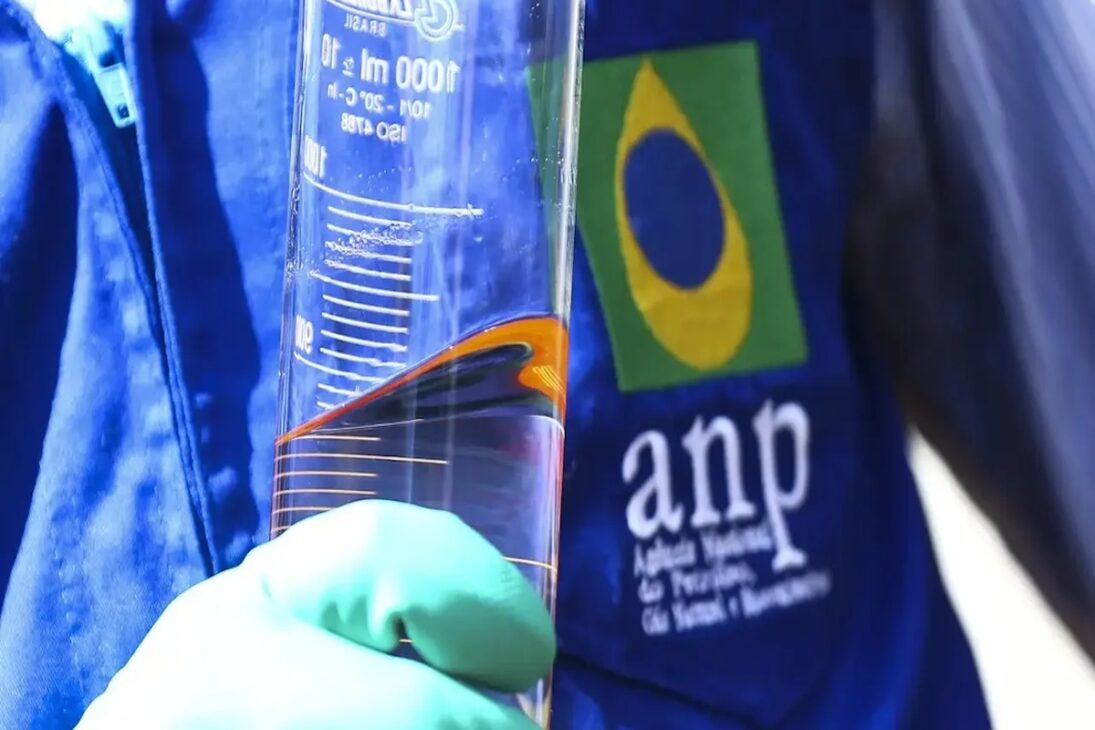
The National Agency of Petroleum, Natural Gas and Biofuels (ANP) announced, on June 23, 2025, the temporary suspension of the Fuel Quality Monitoring Program (PMQC).
This interruption will occur throughout the month of July. The suspension results from budget cuts imposed by the federal government.
Moreover, the scope of the Weekly Fuel Price Survey (LPC) will also be reduced.
-
Drivers are falling for these scams without realizing: operation reveals closed gas stations, adulterated fuel, and hidden losses when refueling.

-
New Fiat EV, priced at R$ 77,000, will bring a reinterpretation of the 147 and a consumption equivalent to 70 km/l.

-
Petrobras surprises the market by cutting diesel by R$ 0.35 per liter, and the decision may ease the tax impact for drivers and transport companies.
-
Gasoline at R$ 4.99 makes drivers wait more than an hour at Havan gas stations in Santa Catarina, during a “zero tax” promotion with a limit of 15 liters per car and 25,000 liters available across five units of the network.





These changes will significantly impact the ANP’s ability to supervise and monitor the national fuel market in 2025.
R$35 Million Cut Leads to PMQC Suspension in July
The suspension of the PMQC was necessary due to the drastic reduction in the ANP’s budget.
The Agency reported that funds available for discretionary expenses decreased by 82% in recent years.
In 2013, the resources amounted to R$749 million, adjusted by the IPCA.
In 2024, these resources fell to R$134 million.
With Decree No. 12,477, published on May 30, 2025, there was an additional blockage of R$7.1 million.
Furthermore, there was a contingency of R$27.7 million.
As a result, the total budget available for this year was limited to R$105.7 million.
Thus, the suspension in July will be an emergency action. This action aims to manage the Agency’s activities in light of the restricted budget reality.
Fuel Price Survey Will Have Reduced Coverage
With the cuts, the ANP also announced a significant reduction in the weekly fuel price survey’s coverage.
Originally, the Weekly Fuel Price Survey would cover 459 municipalities starting in the second half of 2025.
However, due to budget limitations, the survey will only cover 390 cities for automotive fuels.
Additionally, it will cover 175 municipalities for LPG, known as cooking gas.
This reduction could affect the monitoring of price trends in different regions of the country.
There will be repercussions for both consumers and regulatory agencies.
How the Fuel Quality Monitoring Program Works
Created in 1998, the ANP’s Fuel Quality Monitoring Program plays a crucial role in supervising the quality of fuels sold in Brazil.
Each month, samples of gasoline, hydrated ethanol, and diesel fuel are collected from randomly selected gas stations.
These samples undergo detailed technical analyses at the ANP’s Research and Technological Analysis Center.
This center is located in Brasília.
Additionally, universities and research institutions contracted by the ANP also conduct analyses.
Among the main objectives of the PMQC are: to identify products that do not meet the technical specifications set by the ANP.
The program also aims to locate instances of non-compliance.
Furthermore, it supports enforcement actions and other agencies, such as Public Prosecutors’ Offices, consumer protection agencies, and weights and measures institutes.
These agencies work in partnership with the ANP.
Therefore, the PMQC strengthens the quality control of fuels.
It also provides support for legal and administrative measures in defense of consumers.
Impact on Consumers and the Fuel Sector
Due to the restrictions imposed by the reduced budget, the ANP will need to adjust its supervisory and monitoring activities throughout 2025.
The suspension of the PMQC in July and the reduction of the research coverage exemplify the challenges faced.
As a result, consumers may have less access to updated information about the quality and prices of fuels in their regions.
Moreover, the fuel sector will need to redouble its efforts to maintain compliance standards.
This will be necessary even with temporarily limited supervision.
According to official ANP information, new contingency measures may be adopted.
This will occur if budgetary restrictions persist throughout the second half of 2025.