






 Portuguese
  Spanish
  5 min of reading
  0 comments


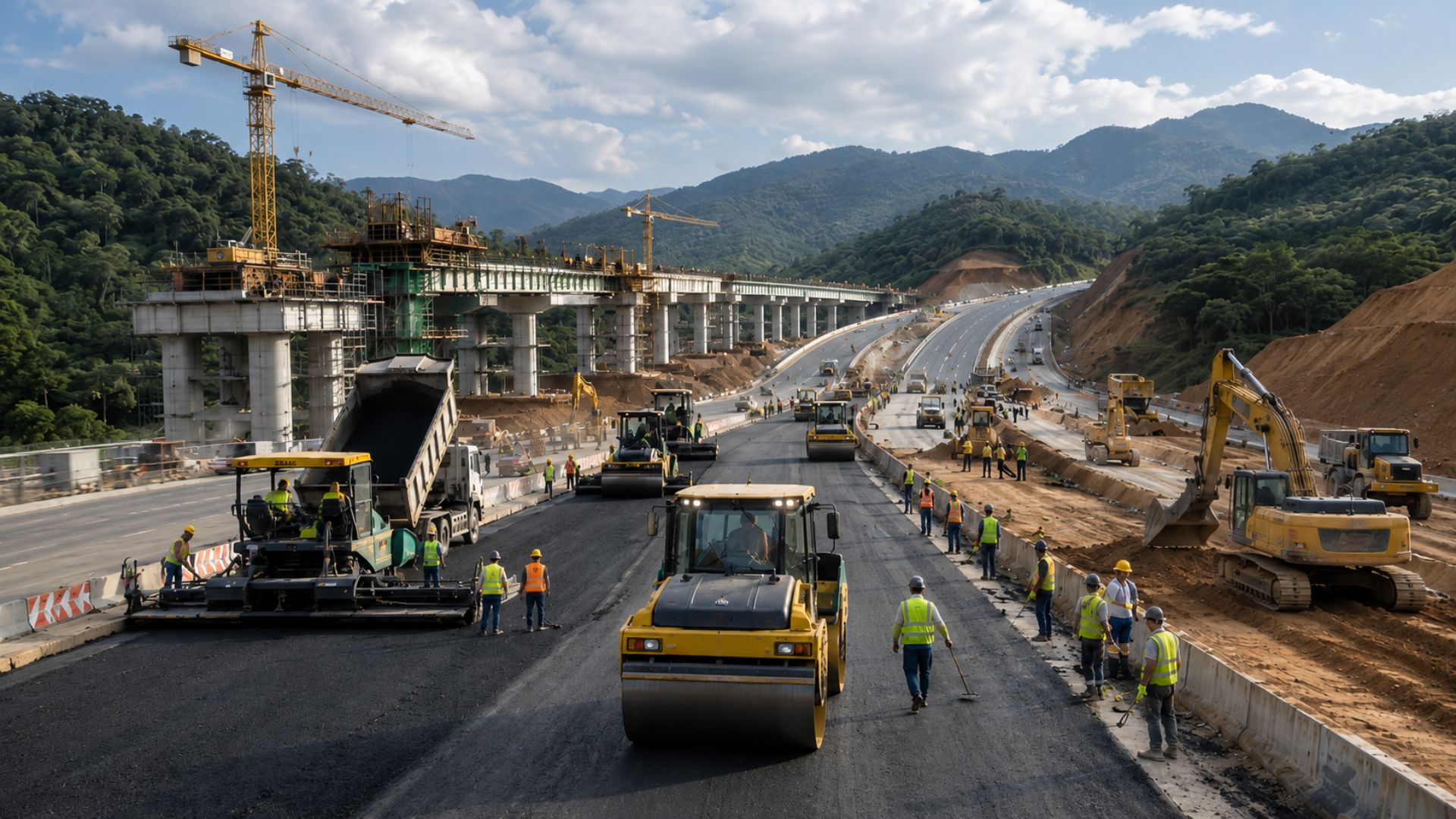
Essential corridor between São Paulo and Curitiba enters a new concession phase, with competition on B3, billion-dollar investment forecast, full sale of the concessionaire, and direct impact on tolls, freight transport, road safety, and operation of BR-116/SP/PR.
With the opening of the competitive process for the sale of 100% of the shares of Autopista Régis Bittencourt S.A., the concession of the Régis Bittencourt Highway, a section of BR-116/SP/PR between São Paulo and Curitiba, advances to a new regulatory stage.
Published by the National Land Transport Agency, the notice defines operational support from B3, sets the price for the full acquisition of the concessionaire at R$ 120 million, and places the largest discount on the basic toll rate as the central criterion of the competition.
In the model released by the federal government, the renegotiation of Régis Bittencourt foresees investments exceeding R$ 13 billion during the new contractual phase, in a 383-kilometer stretch that crosses 16 municipalities between São Paulo and Paraná.
-
Tired of seeing families sleeping on the street, São Paulo delivered 18 m² furnished microhouses and took 888 people off the streets: Vila Reencontro became the model social housing for the homeless population.

-
The hydroelectric plants on the Madeira River, like Jirau, came for the energy, but now the drought wave has reduced artisanal fishing by 39% and emptied the tables of the riverside communities in the Amazon.
-
The Zuluk road has 32 zigzag curves at 3,400 meters in the Himalayas, originated as the Silk Route in Sikkim and became a military border where foreigners cannot pass.
-
Rio de Janeiro receives more than R$ 5.5 billion in sanitation, includes almost 1 million residents from communities in the formal customer base, and brings water, sewage, and proof of residence to regions historically neglected by urban infrastructure.


By connecting two regions of strong economic weight, the highway concentrates an intense flow of trucks, buses, and light vehicles, in addition to serving regional trips, travel between capitals, and long-distance transport operations.
Régis Bittencourt auction will define new control
Planned in a single lot, the full sale of Autopista Régis Bittencourt S.A. will not allow partial purchase of the shares and opens space for the entry of a new controller in the operation of BR-116/SP/PR.
According to ANTT rules, Brazilian or foreign companies may participate alone or in consortium, provided they meet the requirements of the notice, present a proposal guarantee, and submit the documentation within the official schedule.
Exclusively through the B3 auction platform, interested parties must submit proposals before the public session of envelope opening, a stage designed to ensure equality and transparency in the competition.

As part of the preparation, participants will have access to a digital diligence environment, with documents about the concessionaire and necessary information for asset evaluation before the presentation of formal offers.
Discount on toll will be the center of the dispute
Unlike auctions defined by the highest payment, the competition for Régis Bittencourt will be decided by the proposal offering the largest discount on the basic toll rate, as the amount of R$ 120 million is previously fixed.
According to ANTT, the reference rate was set at R$ 0.05912 per kilometer for a dual carriageway, and the winner will be the bidder presenting the highest discount percentage within the rules of the tender.
When there are close proposals, the tender provides for a stage of live bidding to determine the result, a mechanism used to enhance competition in tight disputes between qualified companies or consortia.
The rules also include mandatory financial contributions associated with the offered discount percentage, with progressive values according to the level of discount presented by competitors during the competitive process.
Investments in BR-116 target safety and capacity
Approved by the Federal Court of Accounts, the renegotiation provides for contractual modernization and submission of the concession to a new auction, with a duration of 15 years, considering the remaining seven years of the current contract.
In the agreement approved by the TCU, R$ 7.23 billion in capital investments are planned over the next eight years, in addition to R$ 4.08 billion in operational expenses for road maintenance, monitoring, and operation.
The Ministry of Transport reported that the total package of the new contractual phase exceeds R$ 13 billion and includes works such as lighting in critical sections, third lanes, improvements in accesses, footbridges, bike paths, and wildlife crossings.
Among the interventions mentioned by the ministry are more than 90 kilometers of lighting in areas considered sensitive, especially in mountainous regions, as well as about 60 kilometers of third lanes along the corridor.
Corridor between South and Southeast is important for cargo and passengers
Strategic for national logistics, Régis Bittencourt connects industrial hubs, consumer centers, metropolitan areas, and routes used in the transportation of goods between the Southeast, the South, and countries linked to Mercosur.


In daily operations, pavement quality, traffic flow, user service, and operational safety influence logistical costs, delivery times, and travel time for those who depend on the highway.
In an analysis of the contract, the TCU described the BR-116/SP/PR as one of the main logistical corridors in the country and noted significant heavy traffic, with a direct impact on economic integration between regions.
Besides its economic importance, the highway faces operational bottlenecks in sections with a high presence of heavy vehicles, curves, mountainous areas, and points prone to slowdowns during rainy periods or higher traffic.
Renegotiation seeks to unlock concession obligations
Constructed between the Ministry of Transport, ANTT, and Arteris, within the scope of the TCU’s SecexConsenso, the consensual solution that underpinned the new auction sought to address imbalances and reorganize contractual obligations.
To approve the agreement, the court conditioned the decision on technical analyses, calculation records, and complementary studies, measures aimed at strengthening contract governance and protecting the public interest.
Operational and structural problems were also identified on the highway, including sections with high accident rates, the need for pavement interventions, and challenges related to the heavy flow of vehicles.
The transfer of control of the concessionaire, in this scenario, functions as a step in the contractual reorganization, without removing ANTT’s public oversight or the obligations provided for the continuity of services.
New phase of the concession depends on the tender
After the presentation and analysis of proposals, it will be up to ANTT to approve the result and grant consent to the transfer of control of the concessionaire, with the creation of a transition committee to preserve highway operations.
Under the conditions set out in the tender and regulatory documents, the winner will assume management of the section with rules for operation, user service, compliance with investments, and service maintenance.
For drivers, carriers, and companies using the connection between São Paulo and Curitiba, the definition of the tariff discount will be the immediate change, while the effects of the works will depend on the execution of the new contractual cycle.
Within the federal strategy of optimizing road contracts, the case will serve to renegotiate concessions with technical, financial, or regulatory pending issues without interrupting service provision to users.





Be the first to react!