Portuguese
  Spanish


MS seeks to attract investments in solar energy due to stalled projects in the Northeast and aims for economic expansion with new opportunities in the sector
The dispute for investments in solar energy in Brazil has entered a strategic phase. With several stalled projects in the Northeast, Mato Grosso do Sul is moving to capture billions that are not able to advance in other regions.
According to information from Campo Grande News on April 23, the strategy emerges amidst structural bottlenecks, limitations in the electrical grid, and regulatory uncertainties that have been hindering the sector’s growth, even in the face of increasing demand for renewable sources.
Today, Brazil already exceeds 60 GW of installed capacity in solar energy, with 42.05 GW in distributed generation and 17.95 GW in large plants. Still, a significant portion of the planned investments has not materialized. This scenario has opened space for states outside the traditional axis to try to reposition the national energy map — and that is exactly what Mato Grosso do Sul seeks to do.
-
Giant Batteries Take Center Stage in Chile Auction as Company Offers 960 GWh of Solar Energy for Nighttime Use, Aiming to Stabilize Solar Power Supply

-
World’s Largest Engie Solar Plant in Brazil Highlights Billion-Dollar Energy Waste Issue: Company Considers Batteries and Bitcoin Mining to Avoid Wasting Production

-
Over 60 Tractors Take to the Streets in Lopera as Solar Parks Compete with Olive Groves, Affecting 13,000 to 100,000 Trees According to Conflicting Reports
-
Brazil’s Vitória Airport to Launch Solar Plant Covering Area of 10 Soccer Fields, Boosting Clean Energy and Cutting Costs


Open window: MS tries to capture stalled solar energy in the Northeast
The accelerated advance of solar energy in the Northeast revealed a problem few anticipated with such intensity: the transmission infrastructure did not keep pace with the expansion. The result was an accumulation of stalled projects, many already authorized, but without the technical conditions for full operation.
Given this, MS began to present itself as a strategic alternative. The proposal is simple but ambitious: to offer better conditions for investors facing difficulties in the Northeast and who want to get their projects off the ground.
Economist Jaime Verruck, who headed the Secretariat of Environment, Development, Science, Technology, and Innovation, points out that the moment requires coordinated action. According to him, unblocking projects under analysis and ensuring predictability are central points for attracting new investments.
Mato Grosso do Sul offers attractive conditions, but still deals with stalled projects
The numbers show that interest in the state is already significant. Aneel data indicate that Mato Grosso do Sul has about 1.6 GW in grants for new solar energy plants. However, this volume does not guarantee immediate execution.
As is the case in the Northeast, there are several stalled projects due to different factors, such as technical limitations and economic changes. Still, the growth potential is evident.
Currently, the state has about 2,900 solar enterprises in operation, in addition to 33 projects with granted concessions that have not yet materialized and another 15 under construction. Despite this, the centralized generation capacity is still only around 13.9 MW — a contrast that highlights the room for expansion.
Among the state’s main attractions are:
- Available areas with more competitive costs
- High solar incidence throughout the year
- Strategic location close to major consumer centers
- Synergy with agribusiness
- Possibility of hybrid projects and systems with batteries
Bottlenecks in the Northeast stall billions and redefine the solar energy map
The growth of solar energy in the Northeast has always been driven by privileged natural conditions. However, the lack of proportional expansion of the electrical infrastructure generated a significant side effect.
Among the main obstacles observed are:
- Transmission network saturation
- Curtailment, with cuts in energy production
- Reverse flow in the electrical grid
- Reduction of operational efficiency
These problems have a direct impact on project viability. In many cases, plants operate below capacity, compromising financial returns. Absolar data indicate that, in 2025, approximately R$ 5.9 billion were not invested in the sector, with a strong concentration in the Northeast. Of the 4.6 GW foreseen, only 2.8 GW were effectively installed, equivalent to 61%.
Additionally, 106 authorized plants ended up being abandoned, totaling R$ 14.5 billion in unrealized investments and about 132,000 jobs that were not created. This scenario highlights the size of the opportunity that states like Mato Grosso do Sul are trying to seize.
MS bets on infrastructure to avoid repeating the Northeast’s mistakes
Despite the favorable scenario, experts warn that MS needs to act quickly to avoid facing the same problems as the Northeast. The main concern lies in the capacity to transmit the generated energy.
The government’s strategy involves participating in federal transmission auctions, considered fundamental for expanding the electrical infrastructure. These auctions, scheduled for the coming years, are expected to include important works for the Central-West region.
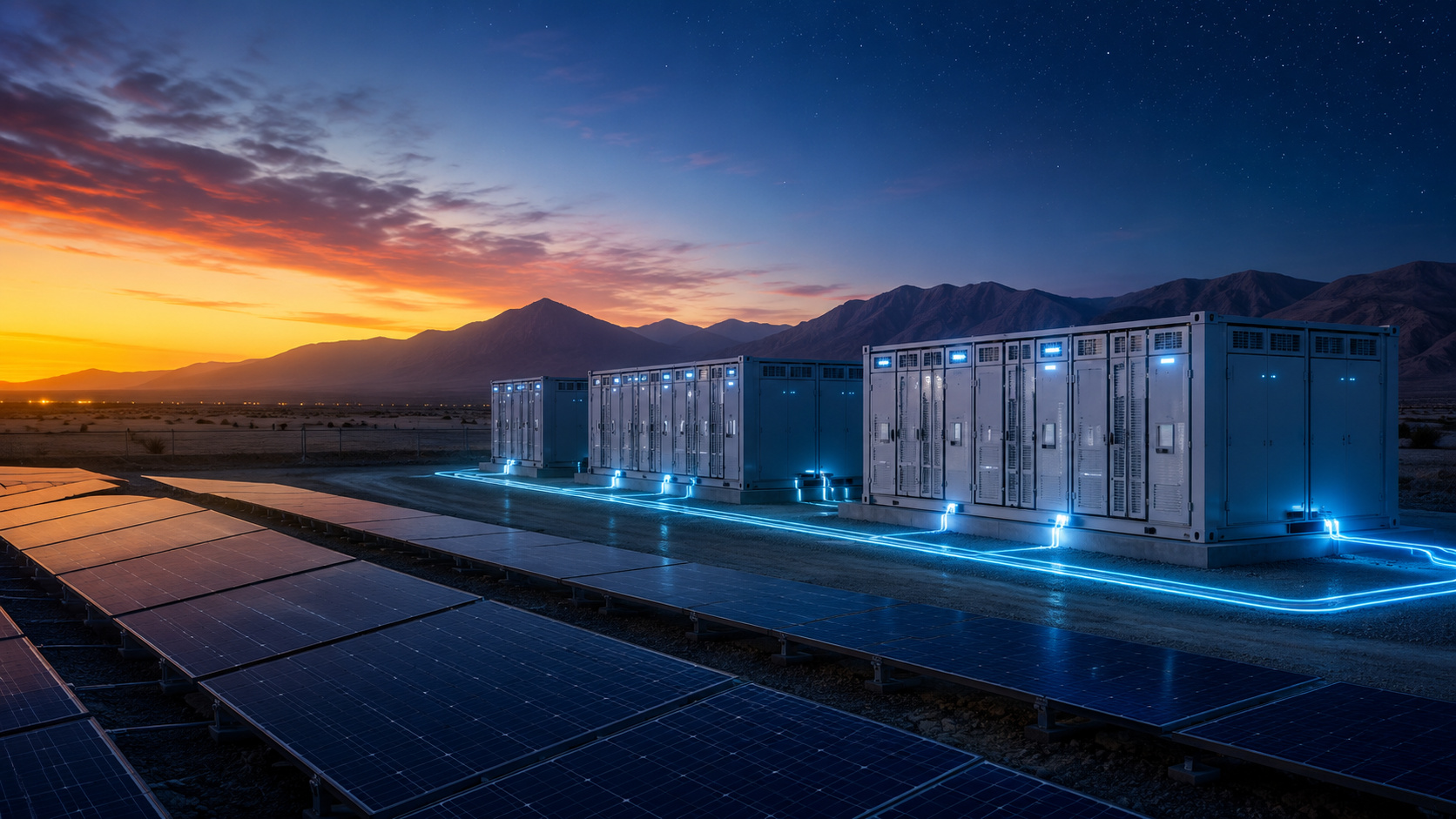
Another highlight is the advancement of storage technologies, especially battery energy storage systems (BESS), which allow storing energy generated during the day for use during peak hours, between 6 PM and 9 PM.
Among the strategic priorities are:
- Expansion of the transmission network
- Greater regulatory predictability
- Tax stability
- Integration between generation and consumption
Without these advancements, the risk of new stalled projects increases, even in regions with high potential like Mato Grosso do Sul.
Billion-dollar investments reinforce bet on Mato Grosso do Sul
One of the main signs of confidence in the state is the investment planned by the company Casa dos Ventos. The company plans to invest R$ 5.2 billion in Mato Grosso do Sul by 2027, with three projects totaling 1.53 GW of installed capacity.
This volume represents more than half of the R$ 12 billion that the company intends to invest in Brazil by 2030, which reinforces MS‘s competitiveness compared to the Northeast.
Furthermore, according to Verruck, the state has been sought after by companies interested in diversifying risks and getting closer to consumer markets in the South and Southeast. The strategic location becomes a relevant differential in this context.
Accelerated growth requires planning to avoid new bottlenecks
The advancement of solar energy in Brazil also brings important structural challenges. The National Electric System Operator already points out that distributed generation is growing at an accelerated pace, including in states like Mato Grosso do Sul.
This growth, while positive, can lead to situations of energy surplus, where production exceeds local consumption. In such cases, energy begins to flow in the reverse direction of the grid, reducing operational flexibility and increasing the risk of generation curtailment.
Without adequate planning, the country could face a repetition of the scenario observed in the Northeast, with an increase in stalled projects and wasted energy potential.
Dispute for national prominence gains strength with new sector dynamics
The movement of Mato Grosso do Sul goes beyond attracting immediate investments. It is a long-term strategy to consolidate the state as a national reference in solar energy. To achieve this, the government is betting on measures such as tax incentives, ICMS reduction for equipment, and simplification of environmental licensing.
Furthermore, an energy transition plan is under development, aligned with the carbon neutrality goal. The combination of these factors strengthens the state’s position at a time when the sector is undergoing reconfiguration.
What is at stake for MS and for the future of solar energy in Brazil
The attempt by MS to attract solar energy investments stalled in the Northeast could mark an important turning point in the Brazilian electricity sector. The current scenario shows that abundant sun is not enough — infrastructure, planning, and regulatory certainty are also needed.
If it manages to advance on these points, Mato Grosso do Sul can not only attract billions in investments but also assume a prominent role in the national energy matrix.
At the same time, the case serves as a warning: without coordination between expansion and infrastructure, new stalled projects will continue to emerge, regardless of the region. Brazil is experiencing a decisive moment in the energy transition. And, in this new chapter, states that manage to balance growth and planning will come out ahead.
With information from Campo Grande News