Portuguese
  Spanish


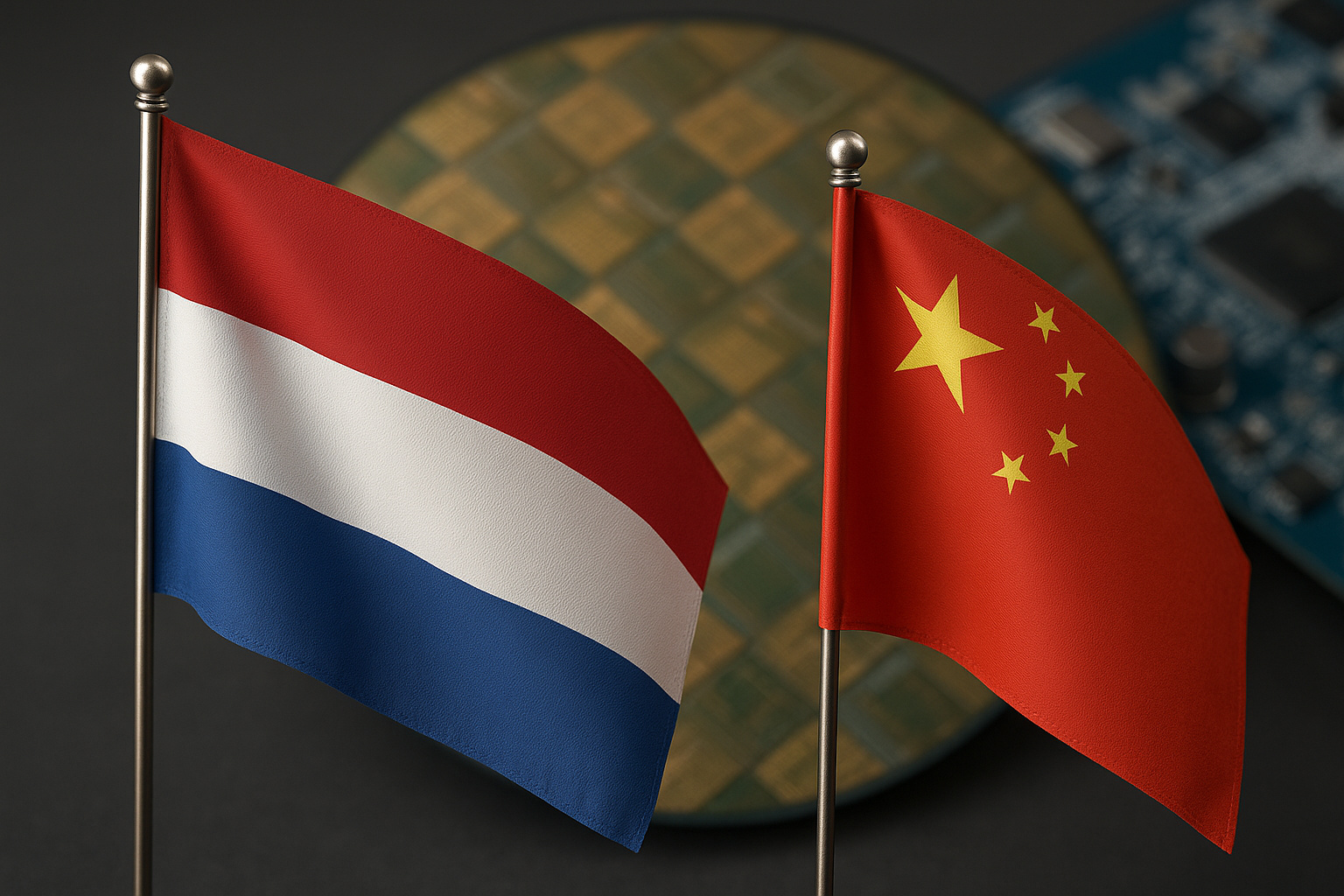


Dutch Government Takes Action to Protect Economic Security and Ensure Strategic Chip Supply on the Continent
The Netherlands government announced on October 12, 2025 that it has taken control of the Chinese semiconductor manufacturer Nexperia, headquartered in Dutch territory.
The action, confirmed by the Ministry of Economic Affairs, aimed to protect national security and ensure chip supply for European industries.
Furthermore, the move was based on preserving the technological sovereignty of the European Union.
Nexperia, founded in 2017, is a subsidiary of the Chinese state-owned Wingtech Technology, one of the largest global semiconductor producers.
Still, the Dutch government considered that the company had “serious deficiencies and administrative failures”.
Therefore, on September 30, 2025, the Goods Availability Act was activated to allow direct intervention in the company.
Netherlands Justifies Intervention as Economic Security Measure
According to the official statement, the decision was necessary to avoid risks to Nexperia’s future in Europe.
Additionally, the government highlighted the importance of the company for maintaining a critical value chain for the continental economy.
-
Ayatollah Ali Khamenei’s Funeral Draws 15 to 20 Million in Tehran, Calls for Revenge Against Trump After Joint Israel-U.S. Attack

-
U.S. Establishes Permanent Embassy in Jerusalem, Reigniting International Debate Over Israel’s Capital
-
The world has nearly 12,000 nuclear warheads, with the majority held by the United States and Russia; see the figures for China, France, and the United Kingdom.

-
Venezuela Faces UN Alert for Hunger, Disease, and Service Collapse After Earthquakes Cause Nearly 2,000 Deaths and $6.7 Billion in Damages


The Ministry emphasized that any internal decisions contrary to European interests may be reversed.
As a result, the administrative control of the company was temporarily placed under state supervision.
According to the government, Nexperia is strategic for European automakers and electronics industries, which is why preserving its operation is essential.
The agency further stressed that business actions detrimental to Dutch and European interests will be immediately blocked.
For this reason, the country classified the measure as “highly exceptional”, justifying its application in defense of economic security.
Market Reacts and Wingtech Shares Plunge After Announcement
Shortly after the announcement, shares of Wingtech Technology fell 10% on the Shanghai Stock Exchange, on October 13, 2025.
The market reacted negatively upon noticing the advancement of European intervention over Chinese companies.
Despite the strong reaction, Beijing has not officially commented on the matter.
The decision comes at a time of tension in trade relations between the European Union and China.
Although European authorities attempt to show balance, the measure reflects the bloc’s effort to reduce dependence on Asian suppliers.
On the other hand, the Dutch government assured that the intervention is not politically motivated, but rather has a technical and economic focus.
Additionally, it guaranteed that the operations of Nexperia will continue to run normally under temporary state supervision.
European Union Seeks to Balance Diplomacy and Technological Security
The measure arises as the European Union tries to reconcile technological security and economic cooperation with China.
Throughout 2025, there have been various divergences in areas such as technology and health, leading to trade deadlocks.
However, at the end of September 2025, a meeting between Chinese Prime Minister Li Qiang and President of the European Commission Ursula von der Leyen indicated a brief easing of tensions.
Even so, the Netherlands’ decision rekindled diplomatic alerts in Brussels and Beijing.
Indeed, the episode reignites the debate about Chinese influence in strategic European sectors.
Thus, experts highlight that Europe seeks to protect its autonomy in advanced technology and strengthen control over critical foreign companies.
Dutch Act Serves as a Warning for the Rest of Europe
European experts believe that the intervention marks a new stage in the European Union’s economic defense policy.
Moreover, it symbolizes the governments’ willingness to act firmly to protect their strategic sectors.
Although the move may temporarily reduce Chinese investments, it reinforces European determination to preserve its industrial sovereignty.
This behavior intensified after the economic security measures adopted by the bloc since 2024.
Thus, the Nexperia case solidifies as a regulatory landmark for the continent’s tech industry.
The decision demonstrates that protecting critical supply chains now outweighs immediate diplomatic interests.