





 Portuguese
  English
  Spanish
  4 min of reading
  0 comments


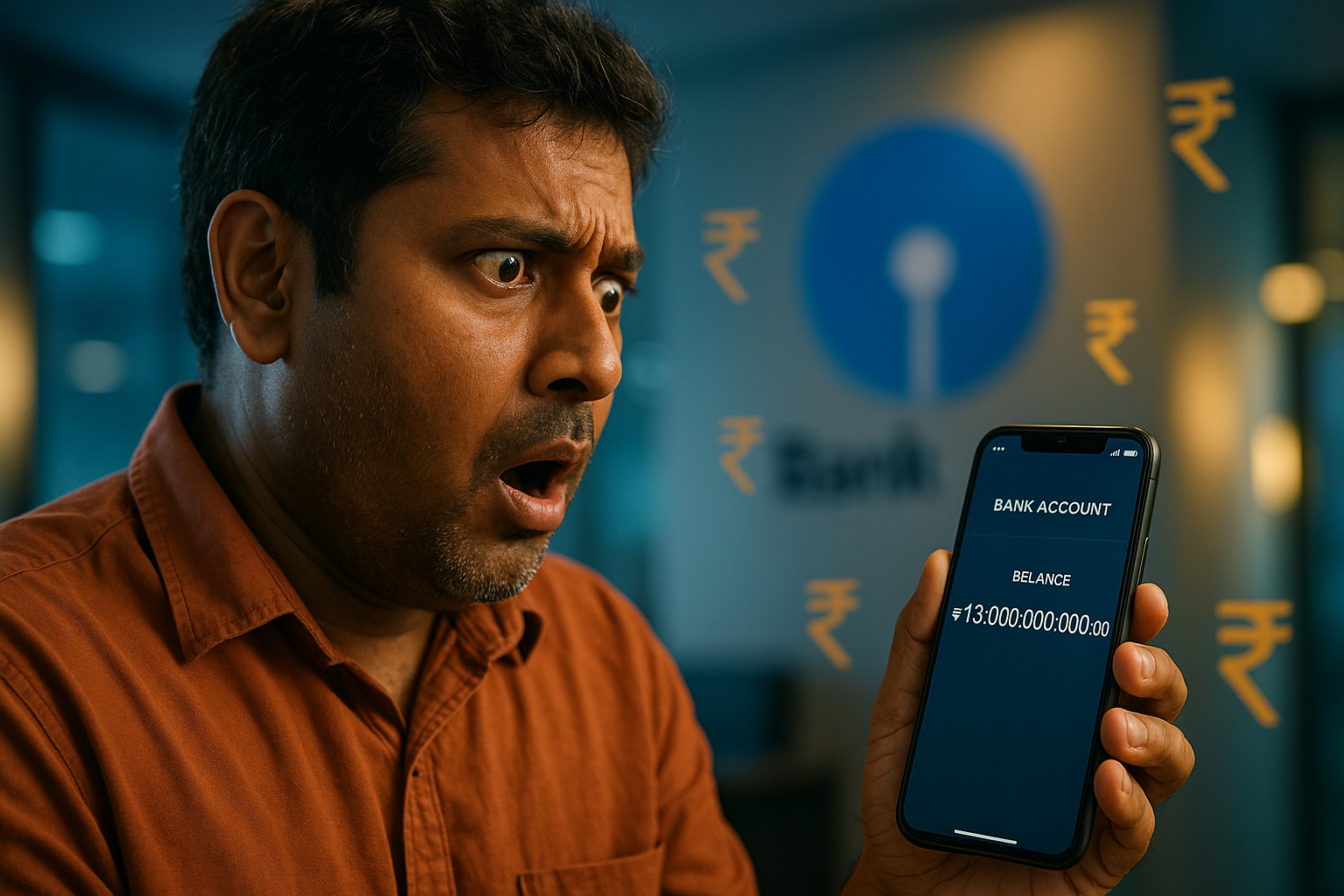
In February 2025, Sanjeev Saxena, a resident of Dankaur, in India, found R$ 13 billion in his account after a banking error, revealing a serious flaw in the system of a state bank.
In February 2025, a resident of the small town of Dankaur, in the Greater Noida region of northern India, experienced one of the most incredible episodes ever recorded in the modern financial system. Upon opening his bank’s app on a regular morning, Sanjeev Saxena was shocked to see a balance equivalent to R$ 13 billion. The absurd figure — around ₹ 1.13 lakh crore — appeared as available for transactions and led the young man to believe that the bank had made a colossal mistake.
The Error That Became A National Case
The episode was confirmed by media outlets such as Hindustan Times, Times of India, and BBC India, which checked with Paytm Payments Bank about the origin of the problem. Sanjeev reported that upon attempting to make a small transactional verification, the system simply froze, and minutes later, his account was temporarily blocked.
According to Paytm, a technical failure during the balance update caused an incorrect reading in the app, replicating unrealistic numbers for a small group of users. The error was identified and corrected in less than three hours, but it was enough to go viral on social media and generate memes, theories, and comparisons to lottery stories and science fiction.
-
Amid the United States’ economic blockade, China delivers 15,000 tons of rice to Cuba as part of a 60,000-ton donation personally approved by Xi Jinping. The package includes 80 million dollars and solar panels for hospitals.

-
For around 200 reais, anyone can buy a kit and have a chip implanted between their fingers to replace cards, keys, badges, and even medical information in case of a hospital emergency.
-
A 600-meter hill in the interior of Santa Catarina hides a volcanic past of almost 600 million years. The Morro do Garrafão in Corupá may have been an ancient extinct volcano, and science now confirms what the residents have always suspected.
-
Family has lived for over 50 years without electricity and running water at home in the South of Minas, 10 minutes from the city, improvising light, bath, and water while facing a lack of basic resources and awaiting property regularization.




Repercussions and Criticism of the Indian Digital System
The incident occurred at a time when India was establishing itself as the country with the highest volume of digital transactions on the planet, surpassing 10 billion monthly operations via UPI (Unified Payments Interface). Experts interviewed by Economic Times stated that incidents like this, while rare, reveal how much the system depends on precise synchronization among banks, servers, and government APIs.
The shock was heightened because the country had already faced a similar situation months earlier: in 2024, UCO Bank, an Indian state bank, had to reverse about ₹ 820 crore (approximately US$ 100 million) mistakenly sent to clients due to a failure in integration with the IMPS system. The 2025 incident reignited pressure on the Reserve Bank of India (RBI) to strengthen audits and automated verification protocols in digital institutions.
The Human Side of the Billion-Dollar Bug
In an interview with Hindustan Times, Sanjeev shared that when he saw the statement, he thought he had fallen victim to a scam. “I was confused, I tried restarting the app multiple times. Only when I went to the ATM did I realize that it was not possible to withdraw. Even so, it was a moment I will never forget,” he said.
On social media, the story became a national joke. Internet users joked that “for a few minutes, India gained a new billionaire.” Others mocked the fact that the young man was unable to “benefit” from the balance, while digital security experts warned that if the system had allowed withdrawals, the bank could have faced one of the largest financial losses in its history.
The Official Response and Containment Measures
Paytm Payments Bank issued a statement saying that the error was caused by a “momentary anomaly in cache servers” and that “no real data was compromised.” The bank emphasized that no actual amounts had been transferred and that all balances were restored to normalcy. Still, the Reserve Bank of India (RBI) demanded detailed reports about the incident and mandated that new redundancy audits be applied to all digital payment institutions in the country.
The repercussions also brought the future of Paytm into question, as it had already been facing regulatory restrictions due to previous compliance failures. The Saxena case served as a new alert for the Indian financial sector, which, although technologically advanced, still suffers from specific vulnerabilities that can lead to instant crises of confidence.
A Portrait of the Digital Age
The incident in February 2025 was marked as one of the biggest errors in bank balance display in recent history, a reminder that even the most sophisticated systems can fail. More than just a curious episode, the case brought to light the importance of transparency and technological oversight in a world where billions of people depend on digital banks and e-wallets for basic daily activities.
For Sanjeev Saxena, the mistakenly made billionaire, everything ended in laughter — but also in a story that made global headlines. “It was like watching my life change in seconds and then go back to normal,” he stated. “For a moment, I believed I had been chosen by destiny. In the end, it was just a bug.”








Be the first to react!