Portuguese
  Spanish


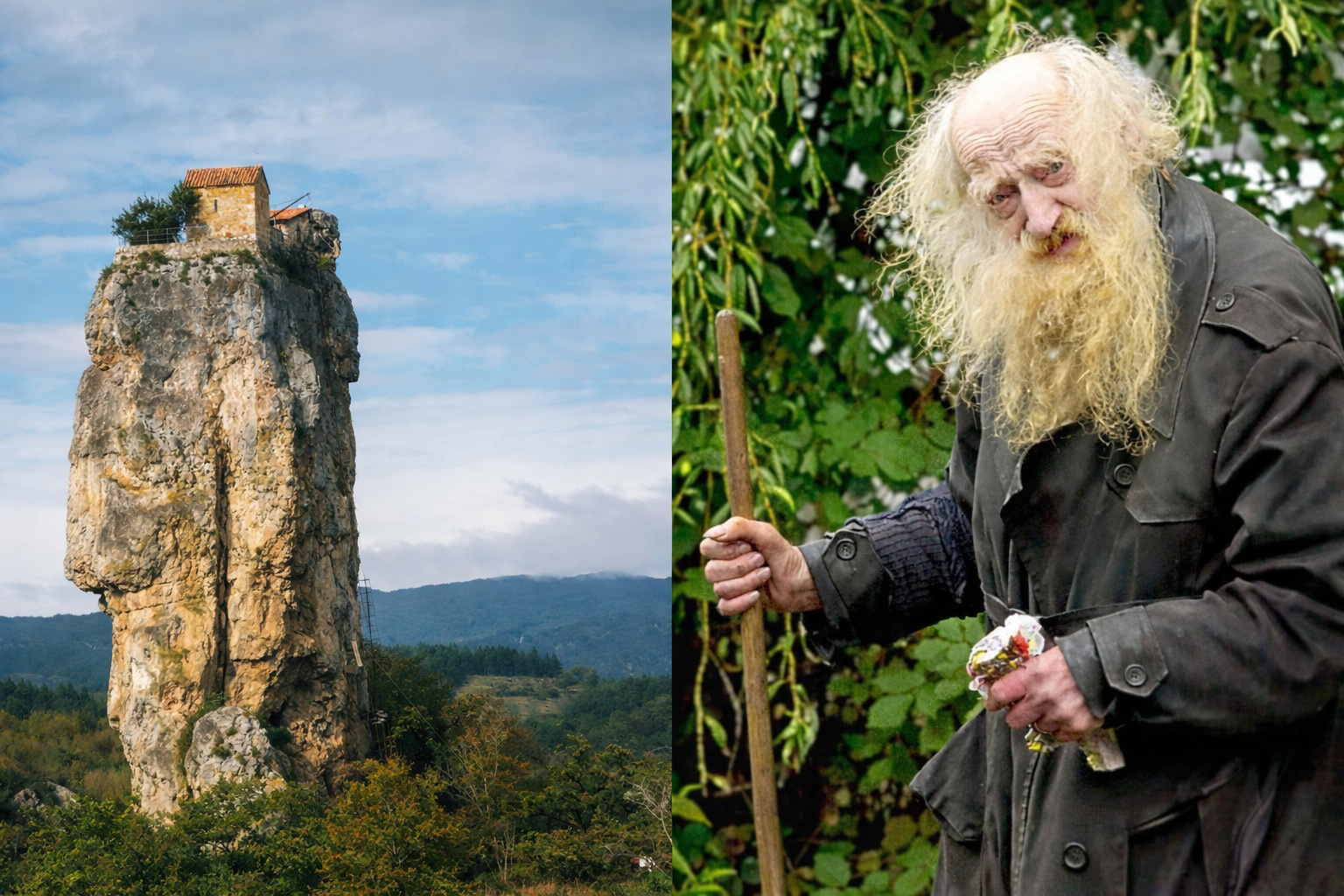

Historical Accounts Show How Individuals Chose to Live Away from Society, Adopting Isolation as a Lifestyle and Awakening Fascination in Different Periods of History
Throughout history, various people decided to live away from society, adopting a lifestyle marked by voluntary isolation.
Thus, in different historical periods, some individuals chose to completely withdraw from social interaction.
While many sought only moments of solitude, others embraced a life of loneliness permanently.
-
Brazilian Designer Turns Broken Umbrella Nylon into Jackets, Employs 101 Seamstresses to Create 19,500 Pieces and Earn R$ 240,000

-
“Dinosaur-Era ‘Zombie’ Tree Rediscovered Alive in Secret Australian Canyon, Astonishing Scientists”

-
Two Design Students from Brazil Turn Recycled Plastic into Fashionable Eyewear, Earning $10 Million in a Year
-
Self-Taught Brazilian Innovator Brings Solar Power to Shantytowns Using Scrap, Solar Panels, and Phone Batteries


This behavior, although uncommon, appears repeatedly in historical records and, therefore, continues to awaken curiosity among readers and researchers.
Voluntary Isolation Appears in Different Moments of History
Historically, many individuals opted to live secluded lives, distancing themselves from the daily activities of society.
Moreover, at different times, some of these people remained isolated for long periods of time.
In some cases, the withdrawal occurred to work with greater concentration or simply to recharge.
However, in other situations, the isolation was not temporary.
On the contrary, it was adopted as a permanent life choice, a characteristic associated with the hermit lifestyle.
The Lifestyle of Hermits
The term hermit has come to be used to identify people who live isolated from society and embrace solitude voluntarily.
Thus, these individuals not only distance themselves for a while.
In fact, they deliberately choose to live far from social life, often in isolated locations.
Consequently, this lifestyle represents an extreme form of withdrawal from the everyday world.
Therefore, over time, stories of hermits have come to evoke historical and cultural interest.
The Man Who Lives on Top of a Pillar
Among the most curious accounts related to extreme isolation stands out the story of the man who lives on top of a pillar.
In this case, the withdrawal is not only symbolic.
On the contrary, the isolation also occurs physically, elevating the individual above the common space of society.
Thus, living on top of a pillar represents a powerful image of complete detachment from the surrounding world.
Consequently, this choice reinforces the idea of voluntary abandonment of social life.
Stories of Hermits Continue to Awaken Interest
As time passes, accounts of hermits continue to spark curiosity in different cultures.
Researchers and readers often wonder why some people choose to live completely isolated.
Moreover, these stories reveal important aspects of the human relationship with solitude, introspection, and social withdrawal.
Therefore, exploring narratives of hermits from the past and present allows for an understanding of how voluntary isolation has marked different historical moments.
Human Curiosity About Voluntary Solitude
Even today, stories about people who live isolated continue to attract interest.
This happens because extreme isolation challenges the traditional form of social interaction.
Thus, accounts of hermits reveal different ways of dealing with the world and with one’s own existence.
In this way, these stories not only record individual choices.
They also show how solitude can become a way of life for some people.
What Leads Someone to Completely Abandon Society to Live in Absolute Isolation?