






 Portuguese
  Spanish


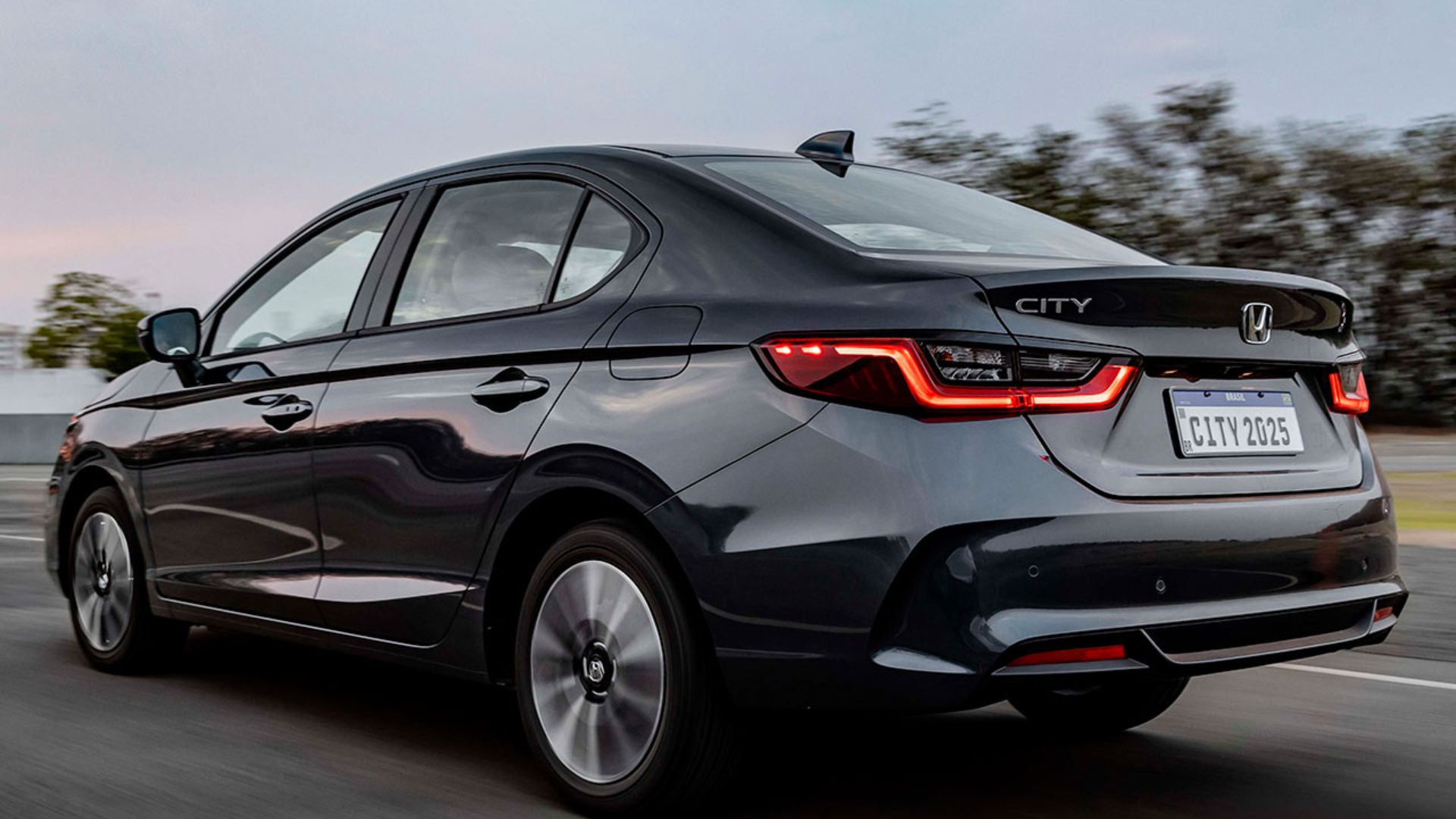


The Honda City 2026 Maintains Low Consumption, Good Interior Space and a Comprehensive Safety Package, But Still Faces Limitations Such as Adequate Performance, Small Tank and Use of a Temporary Spare Tire.
The Honda City 2026 continues the brand’s strategy of offering a compact sedan focused on comfort, interior space, and efficient consumption, but without major changes compared to the latest updates.
With a 1.5 flex aspirated engine of up to 126 hp, CVT transmission with a seven-speed simulation, and a 519-liter trunk, the model competes for customers with rivals such as Chevrolet Onix Plus, Volkswagen Virtus, and Fiat Cronos.
On the other hand, it still falls short in points such as performance, small tank, and use of a temporary spare.
-
Rolls-Royce Turns Heads with 30-Inch Floating Wheels, 6.6-Liter V12 Engine, and 563 Horsepower

-
2019 Kia Sportage EX: A Spacious and Cost-Effective SUV with 2.0 Flex Engine and Panoramic Roof
-
Fiat Strada Becomes Top Seller in June, Surpassing Onix, Polo, Hilux, and T-Cross with 107 HP Engine and 732 km Range.

-
Suitcase-sized hydrogen engine spins at 25,000 rpm, nearly doubling the efficiency of conventional cars and replacing exhaust smoke with water vapor


Evolution of the Honda City in Brazil
Launched in Brazil in 2009, the City has always relied on attributes inherited from the Fit. Among them was the good use of interior space.
The first generation offered a 1.5 flex engine and options for a manual or five-speed automatic transmission.
This combination helped consolidate the sedan among consumers seeking rationality and low operating costs.
Years later, the lineup presented in 2014 maintained the same engine. Honda retired the cold-start auxiliary tank and also introduced the CVT transmission, which began to simulate seven gears.

The change modernized the set and brought the sedan closer to the standard adopted by the brand in other models. The next overhaul occurred in the 2022 range.
The City gained a new look, with the 1.5 flex engine recalibrated to deliver up to 126 hp, both with ethanol and gasoline. The CVT transmission remained the only option.
The most recent visual intervention came at the end of 2024, with the 2025 line. The tweaks were sufficient to keep the sedan among the best-selling in the market.
Even with discreet changes, the model remained among the five best-selling compact sedans in the country.
2026 Lineup and Sedan Versions
The 2026 lineup, presented in August 2025, maintained the known setup, with no significant technical or content changes.
The range continues to be divided into four versions.
• LX: R$ 117,500
• EX: R$ 135,000
• EXL: R$ 142,300
• Touring: R$ 150,800
Even with the new generation expected for 2026, camouflaged units continue to undergo testing in Brazil.

While the new model doesn’t arrive yet, the City continues to be one of Honda’s bets in the segment.
Comfort and Suspension of the Honda City 2026
One of the most praised points of the sedan is the comfort on the road.
Those looking for a compact model, but without giving up comfort, find in the City a suspension setup aimed at smoothness and stability.
The set absorbs bumps, patches, and irregularities well. Inside, the space is an asset.
The wheelbase of 2,600 mm favors those traveling in the rear seat.
The almost flat central tunnel improves the accommodation of those in the central seat, and the model serves families with up to three teenagers or adults of average height well.
Fuel Consumption and Performance
In terms of consumption, the set formed by the 1.5 16V engine and CVT transmission shows balance.
With ethanol, the sedan achieves about 9.2 km/l in the city and 10.5 km/l on the highway. With gasoline, the numbers rise to 13.1 km/l in urban use and 15.2 km/l on highways.

These results place the City among the most economical compact sedans.
On the other hand, the performance is not its strong point. The aspirated engine and the CVT transmission favor smoothness over quick responses.
The 0 to 100 km/h occurs in about 10.6 seconds and the top speed is close to 186 km/h.
Some consumers point out the absence of a turbo engine as a limitation, as rivals already offer supercharged alternatives.
For those who value quick overtaking, this may weigh heavily.
Trunk and Family Space
In addition to good interior space, the trunk is another important argument. The volume of 519 liters accommodates luggage for trips or family routines.
Although it is not the largest in the category, the difference to Virtus and Cronos is small. The compartment keeps the City competitive in the segment.

Equipment and Safety
From the LX version, the sedan brings a comprehensive package.
The model offers six airbags, multi-view rear camera, emergency braking assistant, and tire pressure alert.
It also features an electronic parking brake with Brake Hold function.
Starting from the EX version, the CVT transmission receives paddle-shifts.
They allow simulating gear changes in specific situations, such as descents and overtaking.
Weak Points: Ground Clearance, Tank, and Spare Tire
Although the suspension setup favors comfort, the ground clearance requires attention.
The sedan may scrape on deeper potholes and higher speed bumps. Many owners install a skid plate to prevent damage.

Another point is the fuel tank capacity of 44 liters. Even with good consumption, the reduced volume limits autonomy on long trips.
Frequent stops at gas stations become common. The temporary spare tire also generates criticism.
The narrower wheel is intended for limited use and requires care. With it, grip and stability decrease. The braking distance tends to increase.
Acoustic Insulation and Perception of Refinement
Despite the overall comfort, the acoustic insulation could be better. User reports indicate rolling noise and external sounds entering the cabin.
On rough pavements or at higher speeds, the discomfort increases. This detail may influence those seeking a quieter interior.
The Honda City 2026 fits better for those who prioritize consumption, comfort, and space.
For those who accept average performance, a small tank, and the use of a temporary spare tire, it remains a rational option among compact sedans.
The model caters to its audience, but will these characteristics still be sufficient when the new generation finally debuts?








Só falta um motor decente.
Ótimo motor, acelera bem é só saber dirigir 1 segundo de diferença pra um turbo 1.0 não faz diferença em uma estrada.
Eu tive um 2013, um 2018 e agora tenho um 2026, entre os sedãs médios sempre se destacou e agora com rodas 16 ficou um pouco mais alto, melhorando o problema da distância do solo. A economia compensa o tamanho do tanque, a autonomia é muito melhor que qualquer suv e não gosto do estepe temporário. Câmbio CVT e as “borboletas” são ótimos, a 60 por hora dá pra usar a sétima marcha.
Gosto muinto do carro já é o segundo gue eu tenho o primeiro era 2015 figuei com ele 6 anos não tive nem uma decepção no mês de março deste ano troquei por um 2223 modelo E L X estou mundo feliz agora estou esperando a honda me ofereceu trocar por um zero sem custa pra mim continuar fazendo propaganda pra honda pra min não tem carro nenhum igual
😂😂😂😂 esperando a Honda oferecer sem custo? Mas é um fanfarrão. Gente boa sempre tem bom humor.