Portuguese
  Spanish


Prototype Shown at Japan Mobility Show 2025 in Tokyo Anticipates Low Ergonomics, Adjustable Torque by Axis, and Panel with Cameras Instead of Mirrors; Some Solutions May Migrate to Production Models
The Honda EV Outlier Concept is a laboratory on what it will be like to ride in the next decade, not a finished product. The brand presented the study at the Japan Mobility Show 2025 in Tokyo as a vision “beyond 2030.”
The proposal redefines proportions and dynamics: electric motors on both wheels and a lowered riding position create a new sensation of control and speed. The goal is to rethink from scratch the role of electrification on two wheels.
According to Honda, the concept explores what only electric architecture allows: central battery pack, optimized mass distribution, and fine torque adjustment front/rear directly from the dashboard.
-
2027 Toyota Corolla Cross Unveiled: New Design, Enhanced Fuel Efficiency, Reduced Maintenance Costs, Advanced Technology, Connected Services, and Up to 10-Year Warranty

-
Fiat Cronos Precision 2018: Affordable Sedan with Spacious Trunk and Reliable Maintenance
-
Volkswagen to Cut Production by 1 Million Cars by 2030, Reducing Jobs and Platforms, Focusing on More Profitable Models

-
Toyota Launches First 100% Electric Car in Brazil: bZ4X with 343 HP, All-Wheel Drive, 361 km Range, Priced at $419,990 BRL, Limited to 99 Units



The automaker links the project to goals of carbon neutrality by 2050 and positions it as a design manifesto. Countries and markets will receive echoes of these solutions throughout the decade.
What Honda Showed in Japan


The EV Outlier features in-wheel motors integrated into the hubs, one at the front and another at the rear. This eliminates chains or shafts and frees up new paths for chassis and ergonomics, including a long and low silhouette.
The front suspension adopts double wishbone, an unusual solution for street bikes and more commonly seen in experimental projects. In the rear, the setup prioritizes mass centralization.
The design mixes clean surfaces and exposed mechanical elements, with a continuous LED signature on a minimalist front and rear. The result evokes the “cyberpunk” aesthetic mentioned by international publications.
What Riding Will Be Like in 2030: Gliding, Ecstasy, and Low
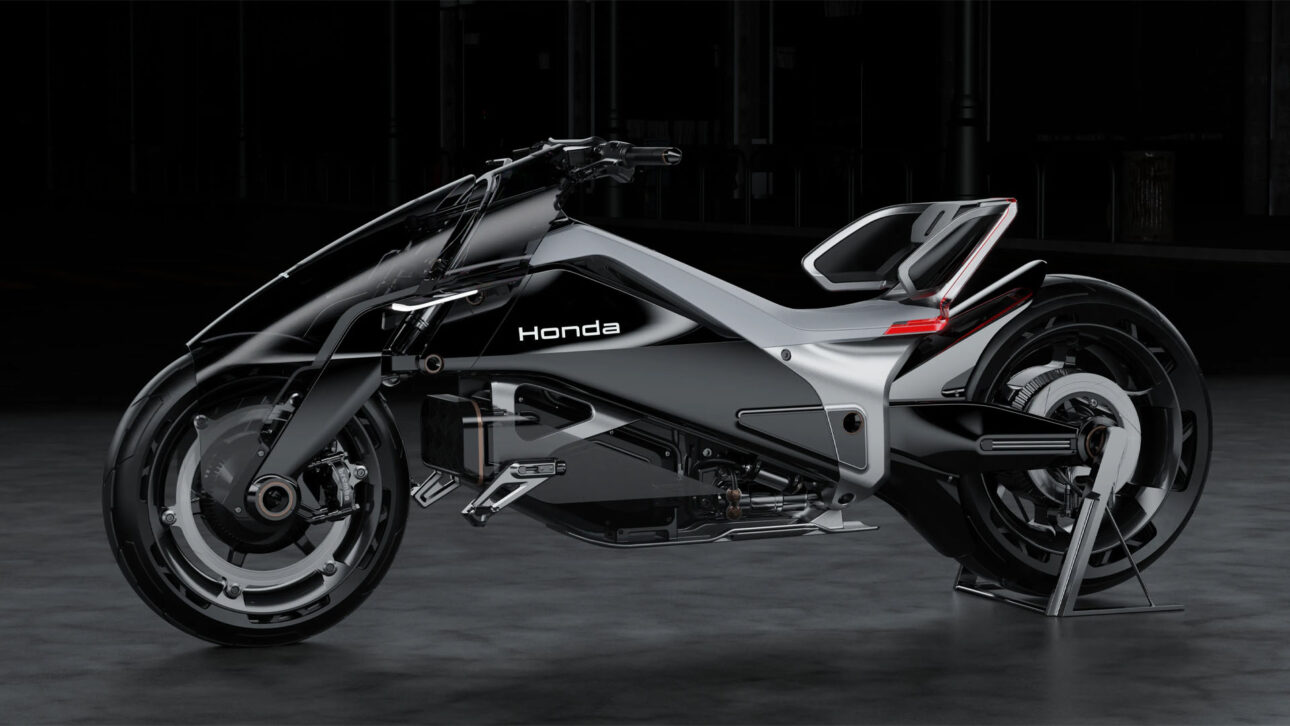
The experience was designed around three sensations. Gliding is to glide in silence, with linear and continuous delivery from the motors, something characteristic of EVs and intensified by all-wheel traction.
Ecstasy comes from instant torque and immediate response. The adjustment of power distribution between axes via the dashboard seeks precision in accelerations and corners, expanding the margin for control.
Low defines the ergonomics: a lowered seat and bucket-style backrest hold the rider in strong accelerations, using the body as an axis for navigating corners with more confidence.
The dashboard features two screens and replaces mirrors with cameras, a common solution in concepts and already seen in cars. The proposal expands the field of vision and reduces aerodynamic drag.
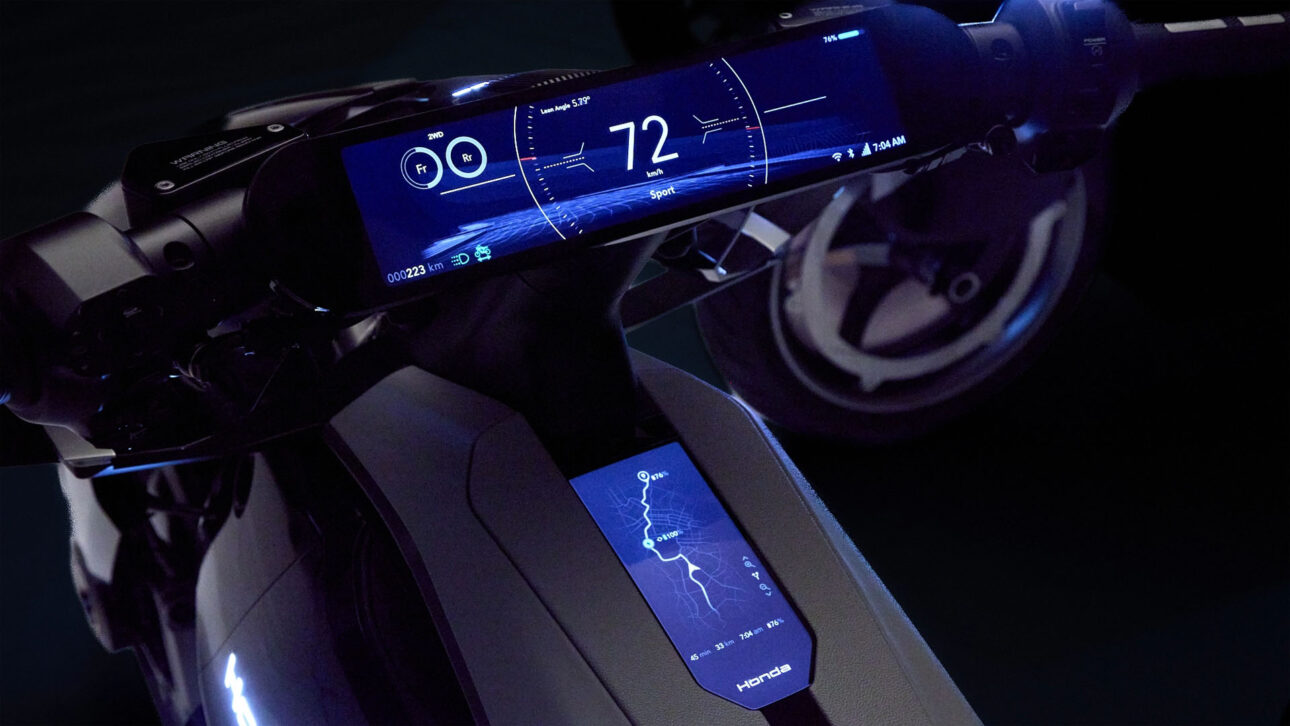
In the cockpit, the control of torque by axis becomes a central function. The interface provides the rider with quick readings of speed, energy, and traction, with dynamic adjustments based on usage.
The combination of silence, a low position, and all-wheel traction suggests a distinct ride from combustion bikes, with stability at low speeds and acceleration that “pushes” without gear changes.
Technology and Design: Why “Outside the Curve” Matters
Led by Yuya Tsutsumi, the team expresses a desire to “reset values” and abandon the constraints of combustion engines. The very name Outlier indicates the intention to break free from the curve.
By embedding motors in the hubs, the project removes intermediate axles and frees up space for a central battery. This facilitates balancing, improves packaging, and reduces mechanical losses.
All-wheel traction can benefit accelerations on uneven surfaces, wet sections, and corner exits by allowing simple torque vectorization between front and rear.
The double wishbone suspension promises a more predictable load reading and stable geometry during braking, although it requires weight and cost solutions for potential production.
The use of cameras instead of mirrors enhances the field of view but depends on local regulations. In Brazil, Contran already regulates safety items, and changes would require regulatory updates.
Overall, the EV Outlier functions as a test platform for ergonomics, digital integration, and electrical architecture, more than just a “teaser” for a single final model. Honda Global
And What This Means for Brazil: From Showcase to Factory Floor
For the Brazilian audience, the message is clear: design and electrification go hand in hand and should influence urban scooters and motorcycles this decade, including future CB/CG electric lines.
The local viability depends on charging infrastructure, incentives, and battery costs. Concepts like the Outlier help to reduce technology costs by gradually migrating to products.
Brands are also evaluating connected services and remote updates. The Outlier’s digital hub anticipates software as a safety and performance differential in two-wheelers.
If adopted in series, dual traction may first appear in limited editions or premium niches, while low ergonomics and LED lighting migrate to urban models.
The discussion involves repairability and technical networks. A bike with motors in the hubs requires specific training, something manufacturers are already mapping during the transition to electric.
For riders and delivery people, range and cost per km remain central. The concept does not provide numbers but signals efficiency gains from lower losses in transmission.
Will It Become a Product? What to Expect from Timelines
Honda treats the EV Outlier as a design and engineering study. Specialized press talks about post-2030 for a derivative to hit the streets, if there is a production decision.
Before that, elements like “dynamic & low” ergonomics, cameras, and torque adjustment may appear in conceptual series and gradually in real bikes.
The company links the program to climatic goals for 2050, using the prototype as a beacon for the electric two-wheeler portfolio, from personal mobility to high performance.
What do you think is most important in an electric bike: real range, entry price, or dual traction technology like that of the EV Outlier? Comment below, defend your point, and say if low ergonomics makes sense on our streets or is just a showpiece.