






 Portuguese
  Spanish


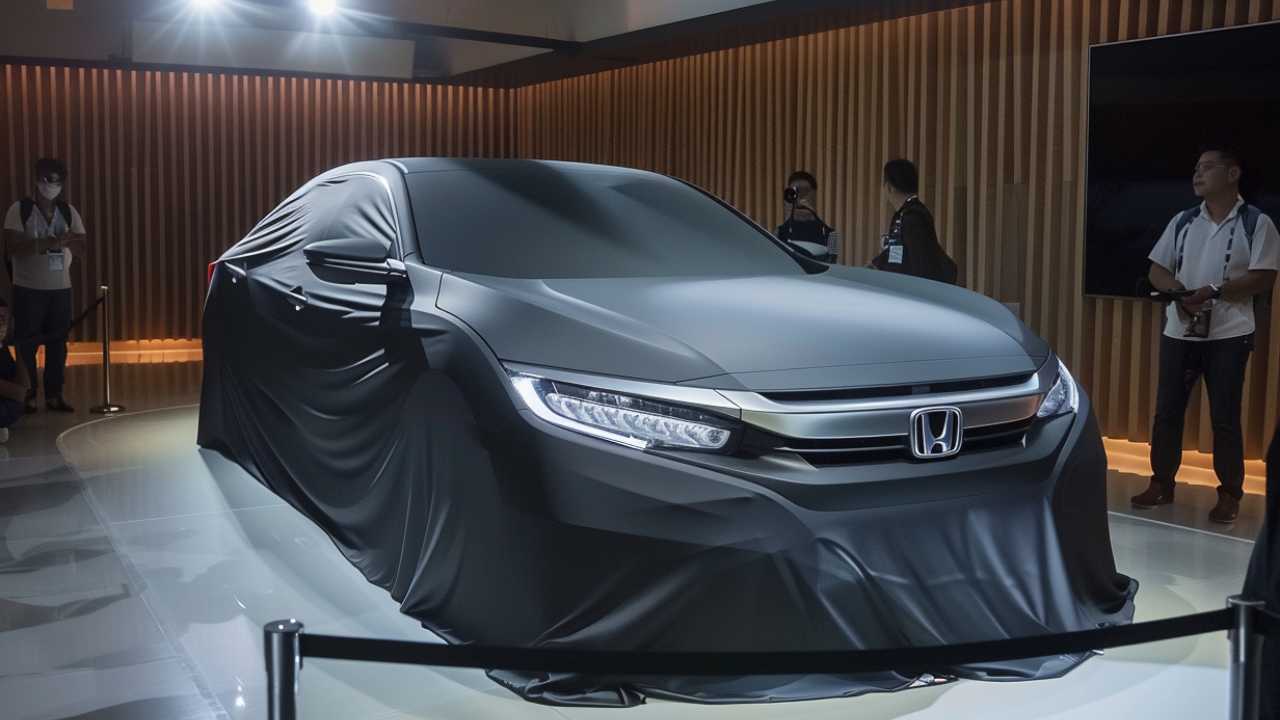


Honda Innovates with Accord and Civic Hybrids, Without Traditional Transmission, Focusing on Energy Efficiency and Electric Driving Dynamics, Promising to Revolutionize the Market with Technology and Fuel Economy of Up to 22 KM/L.
We discovered what Honda has hidden about its latest hybrid sedans, the Accord and Civic for Brazil: both are equipped with innovative electric motor technology that puts them ahead in the hybrid vehicle market. With the electric motor prioritizing traction and the combustion engine serving as a generator, the new Honda models offer an exceptionally enjoyable and economical driving experience, achieving up to 22 KM/L.
Surprisingly, these cars do not have a traditional transmission. That’s right, the new Accord and Civic hybrids operate without a gearbox, a revolution that Honda calls “series hybrid.” While other hybrids on the market, like those from a Japanese competitor, alternate between electric and combustion engines, Honda proposes a purely electric experience, with the combustion engine generating energy consistently, making them more efficient and economical.
Honda Accord and Civic Engine


The engine of the new Honda Accord and Civic Hybrids is part of an innovative system called series hybrid. Unlike traditional hybrid systems, where the electric motor and combustion engine alternate in providing vehicle traction, in the Accord and Civic Hybrids, the electric motor is primarily responsible for traction. The combustion engine does not directly drive the wheels; instead, it functions as a generator, converting fuel into electricity to power the electric motor or recharge the battery.
-
End of an era in Brazil: beloved sedan by Brazilians is discontinued despite having a 2.0 engine with 151 hp, CVT transmission, 466-liter trunk, and up to 650 km of range.

-
New Law Proposal in Brazil Could Heavily Penalize Drivers: Dangerous Overtaking May Become a Serious Offense with Fines Increased Tenfold and a 12-Month License Suspension; Update on 2026 Progress

-
Electric Revolution: Watts W125 Motorcycle Offers 160 km Range, 90 km/h Speed, and Affordable Price Starting at $3,000
-
General Motors Replaces Over a Thousand Workers with 50 Cobots at Electric Vehicle Plant, UAW Union Criticizes Move Amid Industry’s Automation Push



This setup allows the vehicles to operate more efficiently, especially in terms of fuel consumption, with Honda announcing an impressive performance of up to 22 kilometers per liter. This efficiency is achieved because the combustion engine can operate in an optimized rotation range, independent of the car’s speed, reducing energy waste and maximizing efficiency.
And the big news is that the absence of a traditional transmission means there is no need for gear shifts, contributing to a smoother and quieter driving experience. The innovation continues with the feature that simulates the sound of a combustion engine in Sport mode, providing the thrill of engine roar without the environmental and consumption costs associated with the actual operation of a combustion engine at high RPM.
Interesting Consumption
Considering data from the Brazilian Vehicle Labeling Program, the Honda Accord Hybrid presents a consumption of 17.8 km/l in the city and 16.1 km/l on the highway. These figures reflect a remarkable energy efficiency for a large sedan segment vehicle, reaffirming the effectiveness of Honda’s hybrid technology in reducing fuel consumption and optimizing performance.
The Honda Accord Hybrid has higher consumption efficiency in the city, 17.8 km/l, compared to the highway, 16.1 km/l, due to energy regeneration during frequent braking, predominant use of the electric motor at low speeds, and optimized operation of the combustion engine for electricity generation rather than direct traction.
The Honda Civic Hybrid, in turn, has been noted for having an exceptional consumption of up to 22 km/L. This figure indicates remarkable efficiency, especially for a car in its class. The highly economical consumption is a direct result of the series hybrid technology, which allows the car to operate efficiently, maximizing the use of the electric motor and minimizing dependence on the combustion engine.
Design and Innovation
Besides the technological advancement, the new Civic Hybrid surprises with its size, being 4 cm larger than its previous generation, offering more interior space and driving comparable to a BMW 320, but with superior fuel efficiency, even better than a Kwid. The model also features a sound system that, in Sport mode, can convincingly amplify and simulate the sound of a combustion engine, even though it does not possess one.
Honda also innovated in the tactile experience of driving, creating resistance in the shift pedal that simulates the sensation of downshifting, a remarkable feature for a vehicle that technically does not have a transmission. This shows the brand’s dedication to providing not only efficiency but also driving pleasure.
Civic and Accord 2024 Pricing
With prices starting at R$ 260,000 for the Civic and R$ 324,000 for the Accord, these models are not only advanced hybrid vehicles, but also represent Honda’s innovation in offering performance, efficiency, and a unique driving experience.








Muito caro os carros, tem tecnologia satisfatória mas cobram demais por isso
Novo Honda e Acoord virão motores somente a combustão? Não tenho credibilidade que os veículos híbridos e plugin irão dar certo no mercado brasileiro, lembra-se dos motores flexível?
Honda está de Parabens, tenho um g9, adoro esse carro, e quero ficar renovando essa marca na minha garagem, até chegar em um zero km.
Parabens.
Também tenho um g9 a mais de 4 anos e sinto um verdadeiro prazer ao dirigir, pretendo trocar só por outro mais novo.