






 Portuguese
  Spanish




Honda Prepares Electric Version of the Shine 100 with Removable Battery and Affordable Price. Model May Debut as the Brand’s Cheapest Electric Motorcycle, Focused on Urban Mobility and Economy
Honda has filed documents in Brazil revealing the development of an electric motorcycle based on the Shine 100 — a model internationally known for its very low cost. The new electric version is designed with removable batteries and could become Honda’s cheapest electric motorcycle if officially launched, targeting emerging markets with strong demand for accessible mobility.
The project draws attention for utilizing the original combustion Shine 100 chassis, now adapted to accommodate a compact electric motor and removable battery from Honda, which may accelerate its production and drastically reduce the final price. It is speculated that the proposal has the potential to transform the entry segment in the electric two-wheel sector, particularly in countries like India and Brazil.
The Origin of the Shine 100 and Its Success in India
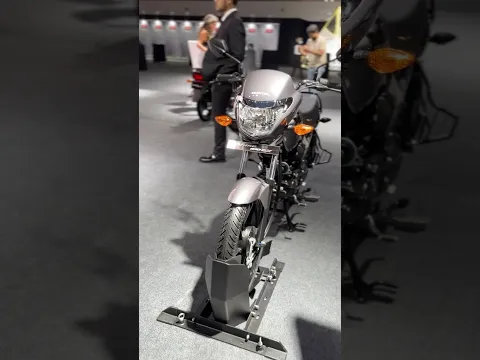
Launched in 2023, the Honda Shine 100 is considered the brand’s cheapest motorcycle worldwide. With a 99 cm³ single-cylinder engine, 7.3 horsepower, and 0.8 kgf·m of torque, the model was designed to cater to the entry segment with a focus on cost-effectiveness.
-
2027 Toyota Corolla Cross Unveiled: New Design, Enhanced Fuel Efficiency, Reduced Maintenance Costs, Advanced Technology, Connected Services, and Up to 10-Year Warranty

-
Fiat Cronos Precision 2018: Affordable Sedan with Spacious Trunk and Reliable Maintenance
-
Volkswagen to Cut Production by 1 Million Cars by 2030, Reducing Jobs and Platforms, Focusing on More Profitable Models

-
Toyota Launches First 100% Electric Car in Brazil: bZ4X with 343 HP, All-Wheel Drive, 361 km Range, Priced at $419,990 BRL, Limited to 99 Units



In India, it sells for about 64,900 rupees — an amount equivalent to approximately R$ 3,800 in direct conversion. Its simple and efficient mechanical setup, with electric start, 4-speed transmission, and alloy wheels, provides sufficient performance for urban commuting and low maintenance costs.
The Shine 100 is covered by a warranty of up to 10 years in the country, reinforcing its appeal to low-income consumers.
Honda’s Affordable Electric Motorcycle May Use the Shine 100 Structure
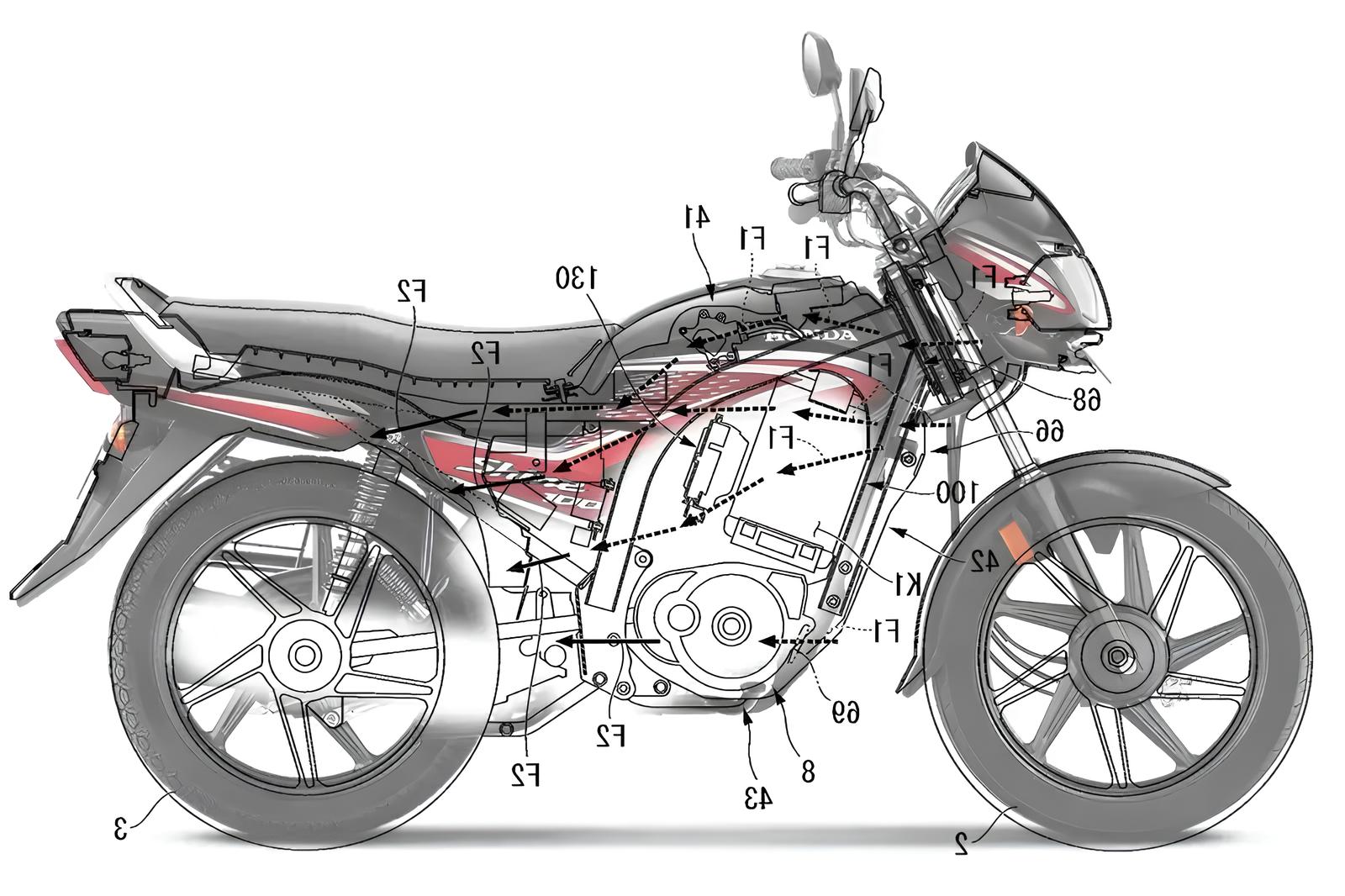
Recently registered patent documents in Brazil show that the new electric version of the Shine 100 will retain much of the original structure of the combustion model. The tubular frame and minimalist design are preserved, with some important modifications to accommodate the new electric propulsion system.

The combustion engine is replaced by an electric motor integrated into the rear wheel, eliminating the need for a traditional chain transmission. Instead of a fuel tank, the motorcycle houses two lithium-ion batteries — both removable, positioned laterally in the chassis.
Additionally, the project includes a passive ventilation system between the batteries, responsible for cooling the electronic control unit. This maintains the system’s temperature under control without the need for radiators or active systems, reducing costs and facilitating maintenance.
The Importance of Honda’s Removable Battery
One of the central points of the new electric Shine is the use of the Honda removable battery, also called “Honda Mobile Power Pack”. This type of solution is already in operation in Indian cities, especially in scooters like the Honda Activa Electric.
Instead of waiting hours for a recharge, the user can simply swap out the discharged batteries for already charged ones at automated stations. This technology — known as Power Pack Exchanger — allows the rider to quickly exchange the modules and continue their journey without prolonged interruptions.
By adopting this format, the electric Shine 100 fits perfectly in dense urban environments with high turnover, such as shopping centers, urban delivery, and short commutes. The expected range with the two batteries, based on current scooters, should be around 70 to 100 km, sufficient for daily trips.
Estimated Price and Market Strategy
Although Honda has yet to disclose official prices, experts estimate that the electric version of the Shine could cost below US$ 5,000 — equivalent to approximately R$ 25,000. If confirmed, this price range would position the model among the cheapest electric motorcycles in the urban category.
The strategy is clear: to offer a simple, lightweight, efficient, and low-maintenance vehicle, with strong appeal in emerging markets. The electric Shine 100 would be ideal for countries in Asia, Africa, and Latin America, where the use of motorcycles is predominant and fuel and maintenance costs weigh heavily on family budgets.
In Brazil, the cheapest Honda motorcycle currently is the Pop 110i, which costs around R$ 9,010. An electric version of the Shine could compete for this space if it has tax exemptions and government incentives aimed at electrification.
Electric Shine 100 and Its Impact on the Entry Segment
The potential arrival of the electric Shine 100 could mark a turning point for the global entry-level motorcycle market. Until now, most electric motorcycles have still had high prices or focused on specific niches, like premium urban scooters or high-performance motorcycles.
With the use of simple components, the leveraging of existing structure, and the popularization of the Honda removable battery, the new model could accelerate the energy transition in regions that rely on motorcycles as a primary means of transportation.
Additionally, the proposal helps reduce pollution emissions and fuel costs. By enabling quick battery exchanges, it eliminates the issue of slow recharging and increases productivity in delivery services, logistics, and urban personal transportation.
Comparison with Current Models
To better understand the impact of the electric Shine, see how it compares to other popular models:
| Model | Propulsion | Estimated Price | Category |
| Shine 100 (India) | Gasoline 99 cm³ | ~R$ 3,800 | Economical Urban |
| Pop 110i (Brazil) | Gasoline 110 cm³ | ~R$ 9,010 | Accessible Urban |
| Electric Shine 100 | Electric with Removable Batteries | ~R$ 25,000* | Affordable Electric Motorcycle (Estimated) |
* Value not officially confirmed, based on market projections and Honda’s strategy for emerging markets.
What to Expect from Honda’s Affordable Electric Motorcycle?
The creation of an electric version of the Shine 100 reflects the growing trend of the industry adapting to meet the demand for sustainable, practical, and economical urban mobility. By utilizing interchangeable batteries and a consolidated mechanical base, Honda can reach new levels of popularizing electric mobility.
The viability of such a model depends on public policies, charging (or exchange) infrastructure, tax incentives, and consumer perception. If well-positioned, the electric Shine has the potential to capture not only developing markets but also consumers seeking economy and practicality in urban areas.
Following the progress of registrations and regulations in Brazil, there is real anticipation that the cheapest Honda motorcycle will reach national dealerships — and with the advantage of already being adapted to our economic and urban reality.








