






 Portuguese
  Spanish


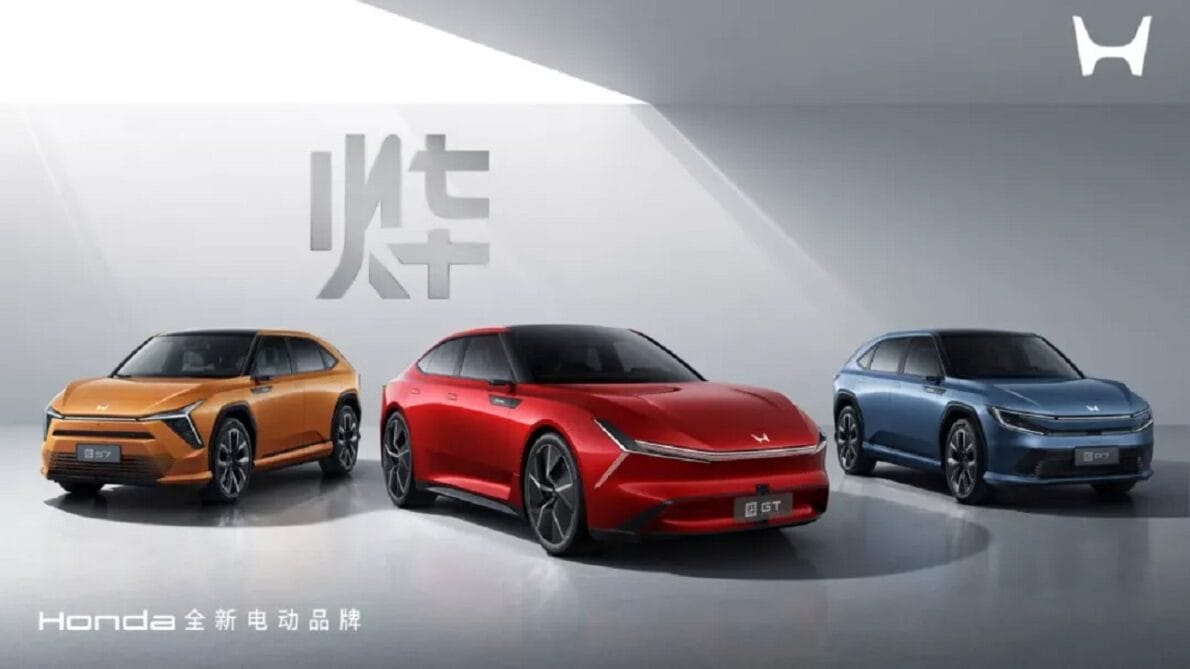

New Honda Factory Opens In China With Capacity To Produce 120 Thousand Electric Cars Per Year, Revolutionizing The Automotive Industry.
The first and new Honda factory dedicated to electric cars has just opened in China. The Japanese automotive manufacturer, in partnership with Dongfeng Motor, inaugurated the facility, which will produce global electric vehicles, in the Wuhan Economic and Technological Development Zone. This is the fourth Dongfeng Honda factory built in the region.
New Honda Factory Will Cover 630 Thousand m²
The new Honda factory for electric cars is located in the city of Wuhan, Hubei province. The factory has a capacity of about 120 thousand units per year and invests around 4 billion yuan, equivalent to US$ 565 million, according to the companies.
In China, the automotive manufacturer promises to launch 10 new electric cars by 2027. The Japanese manufacturer’s goal is to sell only electric vehicles in the Chinese market by 2035.
-
Toyota Launches First 100% Electric Car in Brazil: bZ4X with 343 HP, All-Wheel Drive, 361 km Range, Priced at $419,990 BRL, Limited to 99 Units

-
Chinese SUV Achieves 24.4 km/l, Outperforms Toyota Yaris Cross in Real-World Tests with 224 hp Hybrid System, Offers 51-Liter Tank for Greater Range, and Costs Up to R$ 5,000 Less.

-
Uber Black Revamps Fleet, Drops Ten Car Models and Sets Deadline for Electric BYD Dolphin
-
Chinese Giant Uses Metal Structures and Cranes to Deliver Over 700 Electric Cars to Brazil


The new Honda factory occupies an area of 630 thousand square meters and encompasses complete electric vehicle production processes, such as stamping, welding, general assembly, and inspection of finished vehicles. The automotive plant has an annual production capacity of 120 thousand electric passenger vehicles, with initial models including the Lingxi L and the Ye S7.
Since 2003, when it was established in the Wuhan Economic and Technological Development Zone, Dongfeng Honda has transitioned from a single car model to a complete product matrix. Since 2017, Dongfeng Honda has registered an annual production value exceeding RMB 100 billion for six consecutive years.
Understand Honda’s Expansion Plans In The Automotive Industry
The shift with the new Honda factory aligns with the electrification trend of the Chinese automotive market. Gasoline car brands have faced strong competitive pressure from Chinese brands. Recent data shows that from January to September this year, Honda’s cumulative car sales in China were 588,018 vehicles, a decline of 42.93% compared to the same period last year.
This marks the ninth consecutive month of decline in sales compared to the same period last year for Honda in China since February of this year.
To adapt to the new moment in the automotive industry, the brand has set electric transformation goals, building two new new energy vehicle factories (Wuhan and Guangzhou), with plans to have 10 models of 100% electric vehicles in China by 2027.
At the same time, Honda plans to reduce gasoline car production capacity. On July 25, Honda announced it would close a joint venture factory located in Wuhan and suspend production starting November this year, thus reducing the annual production capacity of gasoline cars in China from 1.49 million to 1 million vehicles.
New Electric Car Platform
In addition to the new Honda factory, the brand also announced its new electric car platform. Tochigi is sacred ground for Honda, so it is natural for the brand to bring various global journalists there to evaluate the first results of its internally developed electric vehicle program: the Honda 0 Series.
Honda has several electric car programs underway at the same time. In Europe and China, there is the E:N architecture, which already has some models on European and Chinese roads, such as the Honda E:NY1. However, this model is unlikely to reach North America.
Mechanically, the platform itself is a big deal for Honda, although if you are an electric vehicle fan, Honda’s new technologies serve as a sort of parity for the course of any new electric vehicle project.


Não tem almoço grátis. O futuro vai mostrar a dificuldade de descartar resíduos de baterias de lítio, sem contar as explosões e consequente aumento no seguro dos automóveis.
O lobby dessas empresas é grande. Penso o mesmo. O ideal são carros híbridos, são melhores para o maio ambiente, a tecnologia muito melhor. Outra coisa tem a tecnologia de células de hidrogênio que também é melhor para o meio ambiente. Mas o ser humano é ganancioso e ****.
Tudo errado, o carro híbrido tem imensos problemas, os do eléctrico, os do motor de combustão e ainda a gestão dois dois em conjunto. para não falar que a maioria das pessoas não necessita, não faz KMS suficientes e transporta peso desnecessário. Hidrogênio no momento é um sonho,. Não e existe hidrogênio verde, tudo é extraído de combustível fóssil, é continuar a poluir. Para não falar em problemas de transporte e avarias recorrentes nos carros.. É desconhecimento e inventar.
Mais uma vítima da espionagem industrial chinesa…🤭🤭🤭
Ah, espionagem industrial chinesa? Deve ser isso! Ou talvez a Honda simplesmente aprendeu a fazer carros elétricos melhores que você 😂.
É revolucionária porquê? Vc é pago pela Honda para escrever isto?