






 Portuguese
  Spanish
  5 min of reading
  0 comments


Natural pines that would go to waste are placed in a U-shape on the beaches of Gulf Shores, where they hold the sand carried by the wind and help form new dunes against storms
What remains from the end-of-year celebrations has gained an unexpected function on the Alabama coast, in the United States. In Gulf Shores, natural Christmas trees discarded by residents are repurposed in a coastal dune restoration program that has been running for almost four decades.
The initiative uses undecorated pines as a kind of natural sand trap. Placed at the edge of the dunes, the branches reduce the wind’s force, trap moving grains, and help create new sand mounds over the months.
The measure draws attention because it transforms a seasonal waste into natural coastal protection infrastructure. Instead of going to landfills, the trees reinforce a barrier that helps protect streets, houses, fragile habitats, and areas near the sea.
-
Seen from above, Brøndby Haveby looks like a science fiction setting, but it is a real community near Copenhagen, with 24 garden circles, 284 plots, country houses, and rules that prevent residents from living there year-round.

-
Facing difficulties in filling positions in stores, distribution centers, and support areas, Carrefour started using the government’s social registry as a basis to recruit workers in vulnerable situations.

-
The man who stopped the desert: a farmer from Burkina Faso defied decades of drought with an ancestral technique ignored by agronomists and transformed dead land into a 40-hectare forest, with more than 60 species of trees, while his village was engulfed by sand in Africa.
-
Beach umbrella with days numbered: well-known beach bans the use of the item, charges a fee of R$ 59 to enter, limits access to only 150 people, and tightens rules after an incident that led to the emergency evacuation of bathers.


According to the Gulf Shores City Hall, in a statement published on January 9, 2026, residents can leave the natural trees on the sidewalk, separated from other waste, or deliver them to the Gulf State Park Beach Pavilion between the end of December and mid-January.
The unexpected destination of the pines begins right after the holidays
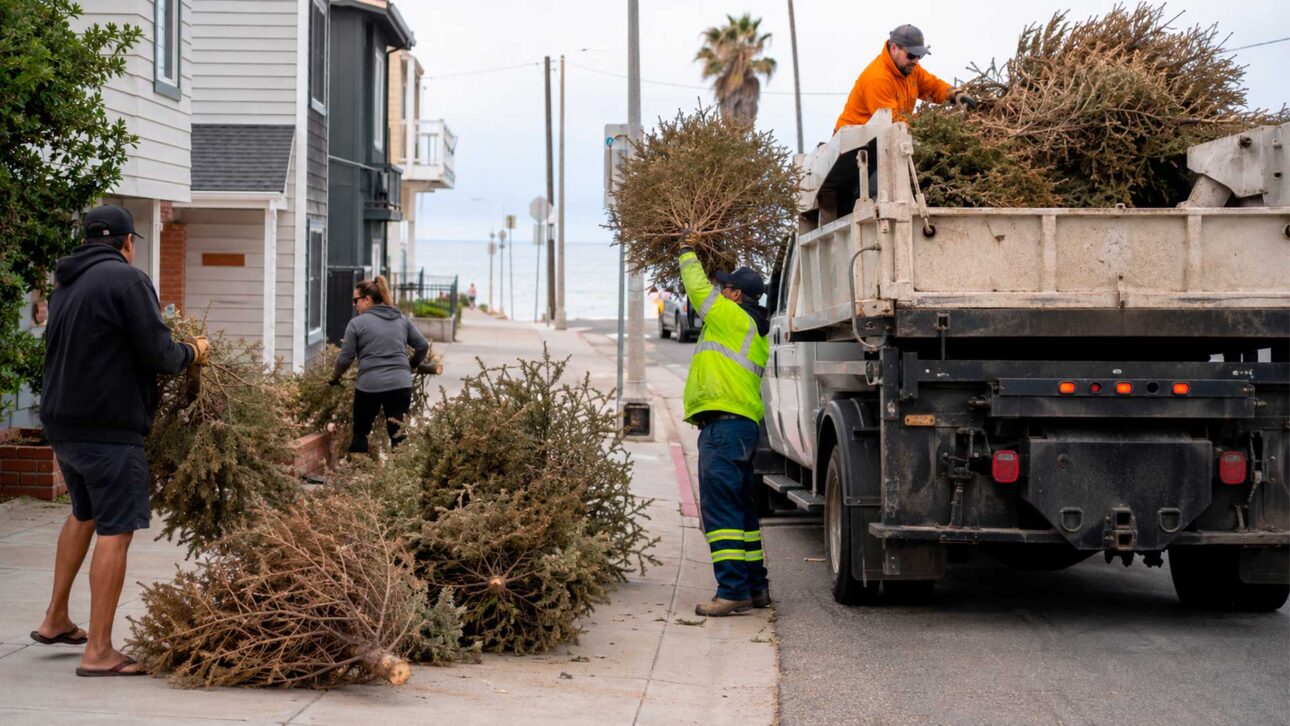
After Christmas passes, public teams collect the natural trees left by residents. The guideline is simple but essential: the pines must be without lights, ornaments, ribbons, or artificial materials, because the goal is to allow the wood to be incorporated into the environment organically.
According to the Gulf State Park, the trees are taken to the beach and positioned at the edge of the dunes in groups of three units. Each set forms a U-shaped structure, designed to capture the sand carried by the wind blowing along the coastal strip.
This type of solution does not attempt to “hold back the sea” with concrete, as walls and rigid structures do. The logic is to work with the beach’s natural processes, creating biodegradable obstacles that help the sand accumulate in the right place.
The U-shaped technique transforms dry branches into sand traps
The main function of the branches is to reduce wind speed near the ground. When the sand moving along the beach encounters these barriers, some grains get trapped between the dry branches and begin to deposit around the trees.
Over the months, this accumulation forms small mounds that slowly grow. Gradually, the pines disappear under the sand, while the surface begins to take on the appearance of a forming dune.
The process can take about three years until the trees covered by sand become part of the dune system. The entity also reported that up to 400 trees per year have been repurposed in the region over the past decades.
In the spring, park teams and volunteers plant native vegetation around these areas. This step is crucial because the roots help fix the sand, reduce erosion, and make the dune more resistant to wind, rain, and the natural movement of the beach.
Why small dunes can make a difference against storms and erosion
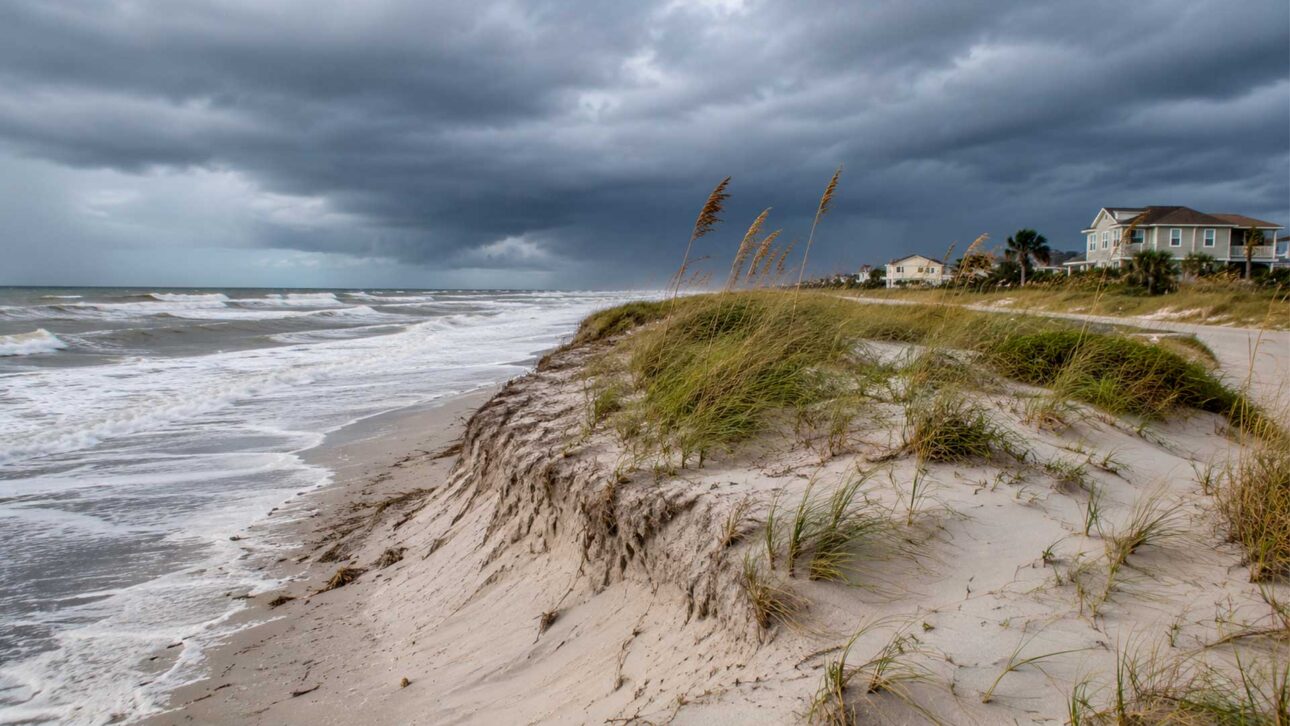
Coastal dunes act as a first line of defense between the ocean and urbanized areas. They do not prevent all damage, but they help absorb some of the energy from waves, wind, and water during storms, reducing the impact on nearby structures.
The United States National Oceanic and Atmospheric Administration, NOAA, explains that dunes are dynamic formations, constantly altered by winds, waves, erosion, and natural recovery. Therefore, projects that favor sand accumulation and native vegetation can improve the coast’s response capacity over time.
In the case of Gulf Shores, the context makes the program even more relevant. The Gulf of Mexico coast is subject to tropical storms and hurricanes, and extreme events can remove sand, damage dunes, and pave the way for flooding.
The park itself warns that pedestrian traffic on the dunes is restricted because open trails in the vegetation weaken the natural barrier. When the dune loses vegetation cover and continuity, water finds easier paths to advance during strong tides and storms.
The project also protects a rare resident of Alabama’s beaches
The dune restoration not only benefits the city. It also helps maintain habitats used by species adapted to this environment, including the Alabama beach mouse, a small mammal that lives in areas of sand and coastal vegetation.
The Alabama beach mouse was included under the protection of the United States Endangered Species Act. The agency highlights that this animal helps disperse seeds, and some of these seeds can germinate into plants that stabilize dunes and contribute to natural storm defense.
Therefore, the presence of this rodent is often seen by biologists as an important indicator of the health of the dune ecosystem. When native vegetation grows and the sand remains stable, the chances of survival for animals that depend on this type of environment increase.
The logic of the program, therefore, goes beyond recycling. By reusing natural trees, the city reinforces coastal protection, reduces waste, and strengthens a habitat that links urban safety, biodiversity, and climate adaptation.
The idea draws attention because it is simple, but it does not solve everything on its own
Despite local success, the reuse of trees is not a magic solution against hurricanes, erosion, or sea encroachment. It works best as part of a larger strategy, which includes protecting sensitive areas, controlling access to dunes, planting native vegetation, and coastal planning.
NOAA Fisheries describes nature-based approaches as alternatives that use natural materials and vegetation to stabilize shores and reduce erosion. This principle helps explain why simple solutions, when well applied, can play an important role in communities exposed to climate risks.
The case of Gulf Shores shows that a low-cost action can gain scale when residents, volunteers, and public authorities work continuously. What would be end-of-year waste becomes part of a natural defense that gradually grows and blends into the landscape.
If discarded trees can help a coastal city protect its beaches, how many other wastes could gain a second useful life in smart environmental projects? Leave your comment and tell us if a similar idea would make sense on the Brazilian coast.




Be the first to react!