






 Portuguese
  Spanish
  5 min of reading
  0 comments


Without formal education and digging hole by hole, Yacouba Sawadogo transformed barren land into a 40-hectare forest and became the man who stopped the desert in Burkina Faso
Yacouba Sawadogo became internationally known as “the man who stopped the desert” after reclaiming a degraded area in northern Burkina Faso with a traditional agricultural technique called zaï. According to Right Livelihood, he began this work around 1980, during a period of severe drought, and transformed previously abandoned land into a forest of nearly 40 hectares, with more than 60 species of trees and shrubs.
The case gained global relevance because Sawadogo did not resort to sophisticated machines or industrial innovation. According to the United Nations Environment Programme (UNEP), he adapted the zaï technique, enhanced the soil’s capacity to retain water, and improved agricultural productivity in a region marked by drought, erosion, and advancing desertification.
Zaï technique transformed hardened soil into fertile area in the Sahel
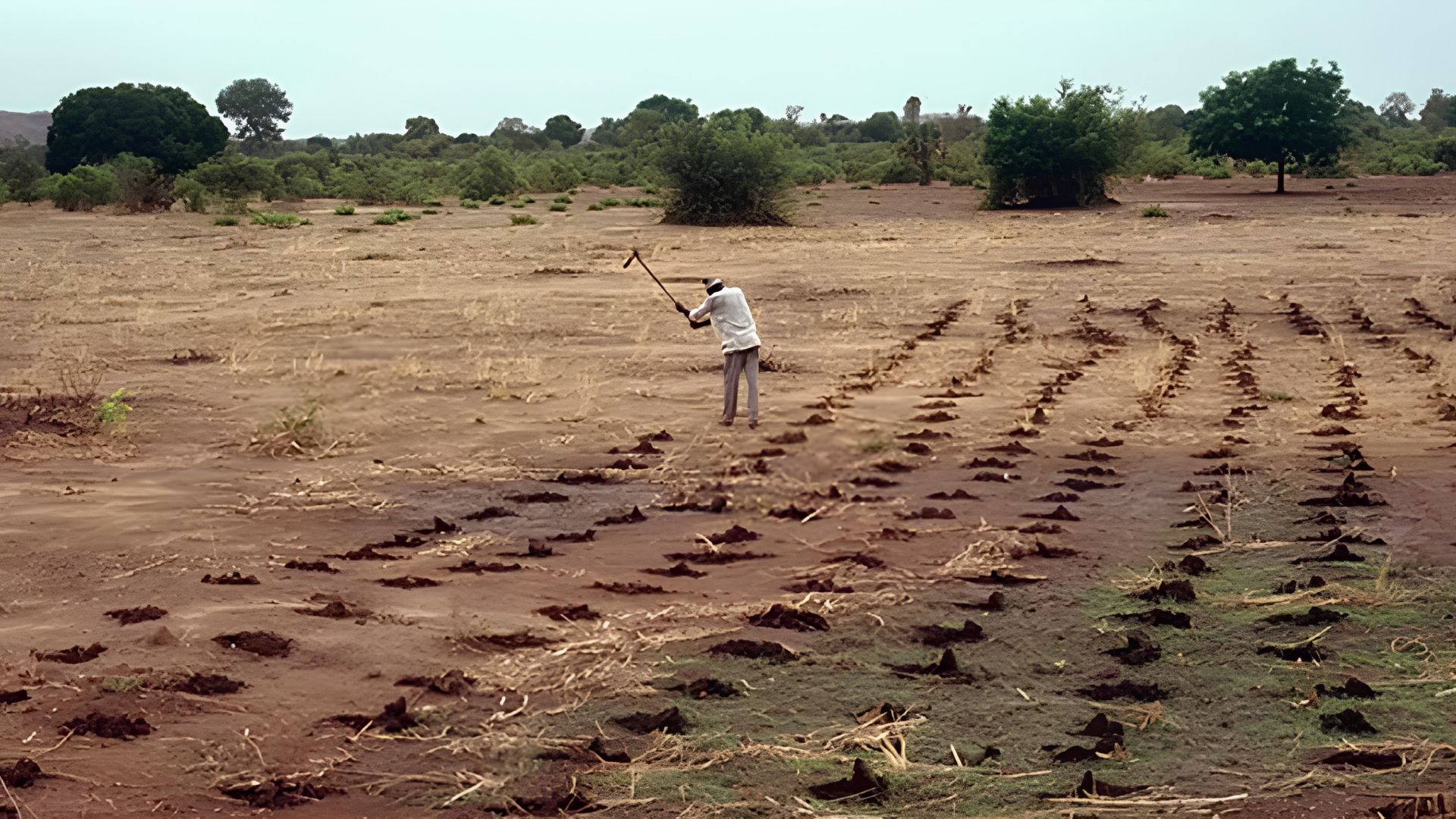
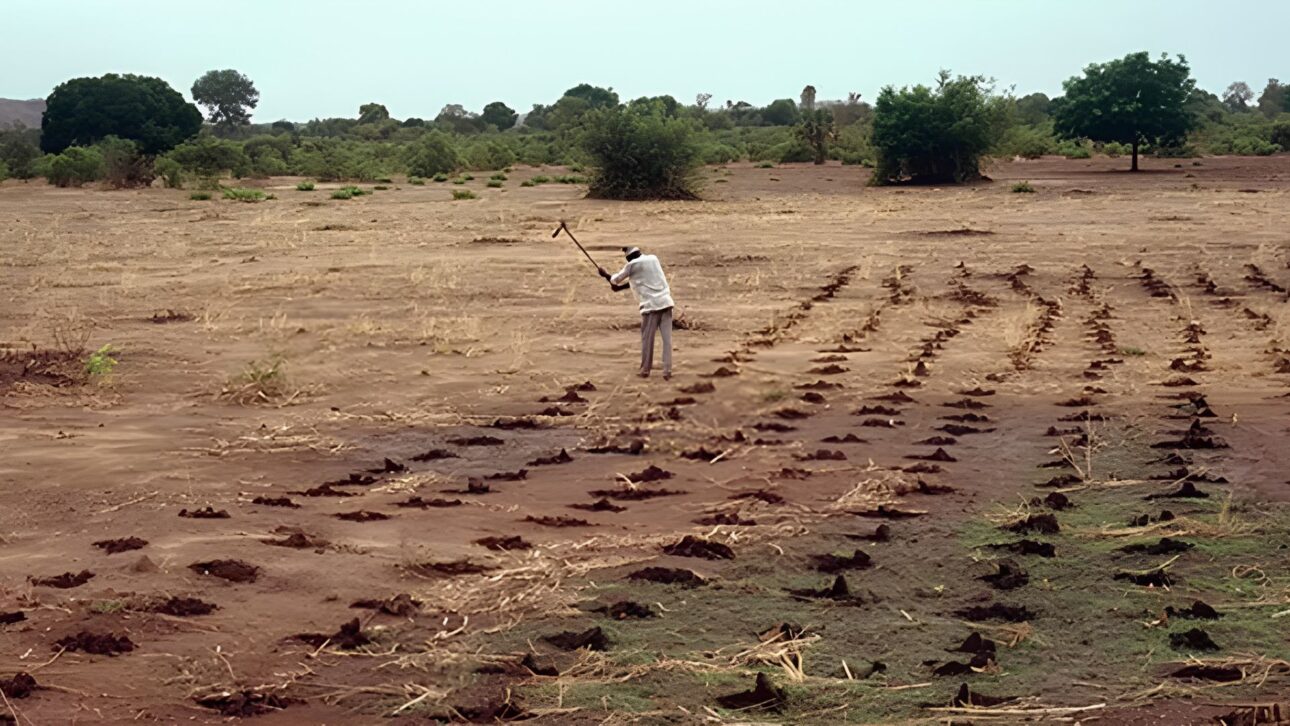
The zaï technique involves digging small pits in degraded or hardened soils to concentrate water and organic matter at the point where the plant will grow. According to the UNEP, farmers place compost or natural fertilizer in these holes, and Sawadogo refined the method with wider and deeper pits, stones to help retain water, and termites to break up compacted soil.
-
Beach umbrella with days numbered: well-known beach bans the use of the item, charges a fee of R$ 59 to enter, limits access to only 150 people, and tightens rules after an incident that led to the emergency evacuation of bathers.

-
Tired of urban life, an English woman left her country, chose a rural plot in Portugal, and transformed clay into a house to live with more autonomy, less consumption, and more contact with nature.

-
China innovates and now uses bubbles in construction to prevent dust and noise pollution, with structures up to 50 meters and 20,000 m² that reduce impacts by up to 90% and also operate with advanced sensors and ventilation.
-
Instead of conventional blocks and concrete, the builder mixes earth, sand, straw, and water to erect a mud house with manually made walls.


As soon as the rain arrives, seeds are planted in these cavities, which then concentrate moisture directly at the root.

This system has a direct effect on productivity. The UNEP states that studies on zaï indicate an increase in yield from 100% to 500%, precisely because the technique acts as a funnel directing rainwater to the plant in areas of low and irregular precipitation.
The weight of the solution lies in the contrast between simplicity and outcome. Instead of relying on large-scale projects, Sawadogo demonstrated that the correct management of water, organic matter, and soil could restore areas previously considered unproductive.
Devastating drought in the 1980s pushed families out of the region
According to the Global Landscapes Forum, Yacouba Sawadogo was born around 1946 in the province of Yatenga, in northern Burkina Faso, studied at a Quranic school in Mali, and then returned to the region to work as a vendor in a local market. The severe droughts around 1980 changed his life and marked the beginning of the response that would make him an international reference.
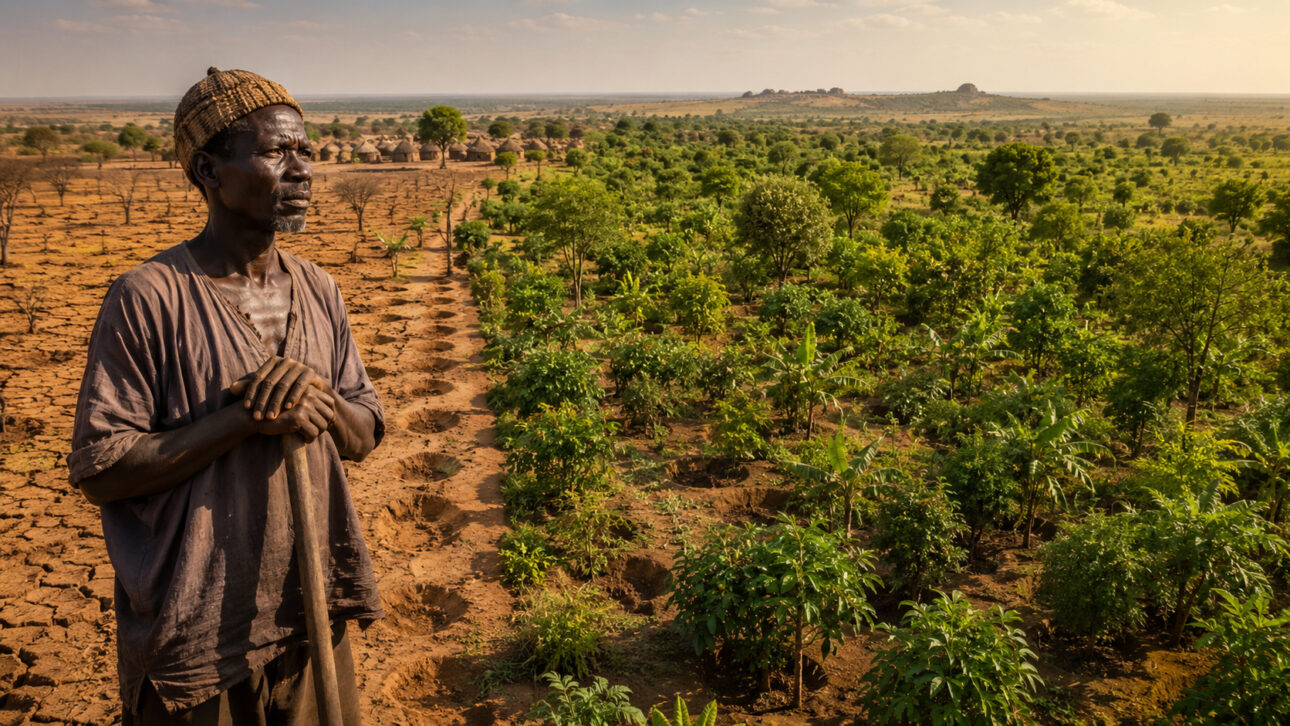
The same profile from the Global Landscapes Forum reports that when agricultural production plummeted and hunger hit the region, many people left the rural areas in search of income in the cities. Sawadogo did the opposite: he returned to his village and decided to try to recover land that was already considered lost.
This choice helps explain why his story gained so much strength. In a scenario of environmental collapse and abandonment of crops, he relied on local knowledge, intense manual labor, and long-term persistence to combat desertification in the Sahel.
40-hectare forest became concrete proof that the desert could retreat
The Right Livelihood states that Sawadogo created a forest of nearly 40 hectares in an area once barren and abandoned. Today, this space houses more than 60 species of trees and shrubs and is described by the foundation as possibly one of the most diverse forests planted and managed by a single farmer in the Sahel region.
The UNEP confirms the scale of this transformation by recording that, four decades after the work began, Sawadogo had created a 40-hectare forest on his property, with more than 60 species. The organization also highlights that he became locally known as the man who stopped the desert.

The strength of the case lies in the fact that the forest did not emerge as a large-scale state project, but as a result of continuous intervention in the soil. Hole by hole, tree by tree, Sawadogo demonstrated that degraded areas could still return to production and sustain life.
Yacouba Sawadogo’s knowledge spread across villages and crossed borders
The work stopped being an isolated experiment and began to attract other farmers. According to the Global Landscapes Forum, Sawadogo started organizing meetings on his land in 1984 to share the technique, and these events grew to gather representatives from more than 100 villages on market days.
The advancement of the practice is also noted in the UNEP information. The agency states that Sawadogo’s technique began to be used by farmers along a stretch of 6,000 kilometers in Africa, reaching Sahel countries and advancing to places like Ghana, Chad, and Kenya.

The agency also reports that zaï is among the indigenous land-use practices at the heart of the Great Green Wall program, an African initiative to combat land degradation, desertification, and drought.
The Global Landscapes Forum adds that by 2016, the technique had already helped restore the productive capacity of tens of thousands of hectares in the provinces of Yatenga and Gourcy, in Burkina Faso. This shows that Sawadogo’s impact was not limited to his own forest: he helped create a replicable model of regeneration in semi-arid areas.
International awards turned a farmer from Burkina Faso into an environmental symbol
International recognition came after decades of work. The Right Livelihood recorded that Sawadogo received the award in 2018 for transforming barren land into forest and demonstrating how farmers can regenerate soil using innovative indigenous and local knowledge.
The UNEP reports that he was one of the laureates of the Champions of the Earth 2020, the United Nations’ highest environmental honor, and highlighted his work as an example of community-led ecological restoration. The Global Landscapes Forum also notes that his journey became the documentary The Man Who Stopped the Desert, released in 2010 and awarded the following year.
The current page of Right Livelihood identifies Yacouba Sawadogo as 1946-2023, which confirms his death in 2023. However, the legacy remains in the recovered soil, the forest created in Burkina Faso, and the dissemination of the zaï technique as a concrete response to desertification in one of the most vulnerable regions on the planet.





Be the first to react!