






 Portuguese
  Spanish
  7 min of reading
  0 comments


The circular city of Brøndby Haveby, near Copenhagen, combines circular gardens, 284 plots, and country houses used part of the year. Created in 1964, the Danish community uses geometric design to bring neighbors closer, preserve backyards, and maintain a green routine without permanent residence all year round.
The circular city of Brøndby Haveby, near Copenhagen, in Denmark, draws attention with a landscape of circular gardens that seems straight out of science fiction but functions as a real community of country houses. Created in 1964, it comprises 24 circles, 284 plots, and controlled use for part of the year.
According to a report published by BrightVibes, the project is attributed to landscape architect Erik Mygind and gained worldwide fame through aerial images showing almost perfect circles seen from above. The model was designed to combine privacy, neighborly interaction, and contact with gardens, backyards, and outdoor spaces.
View from above seems like an impossible scene
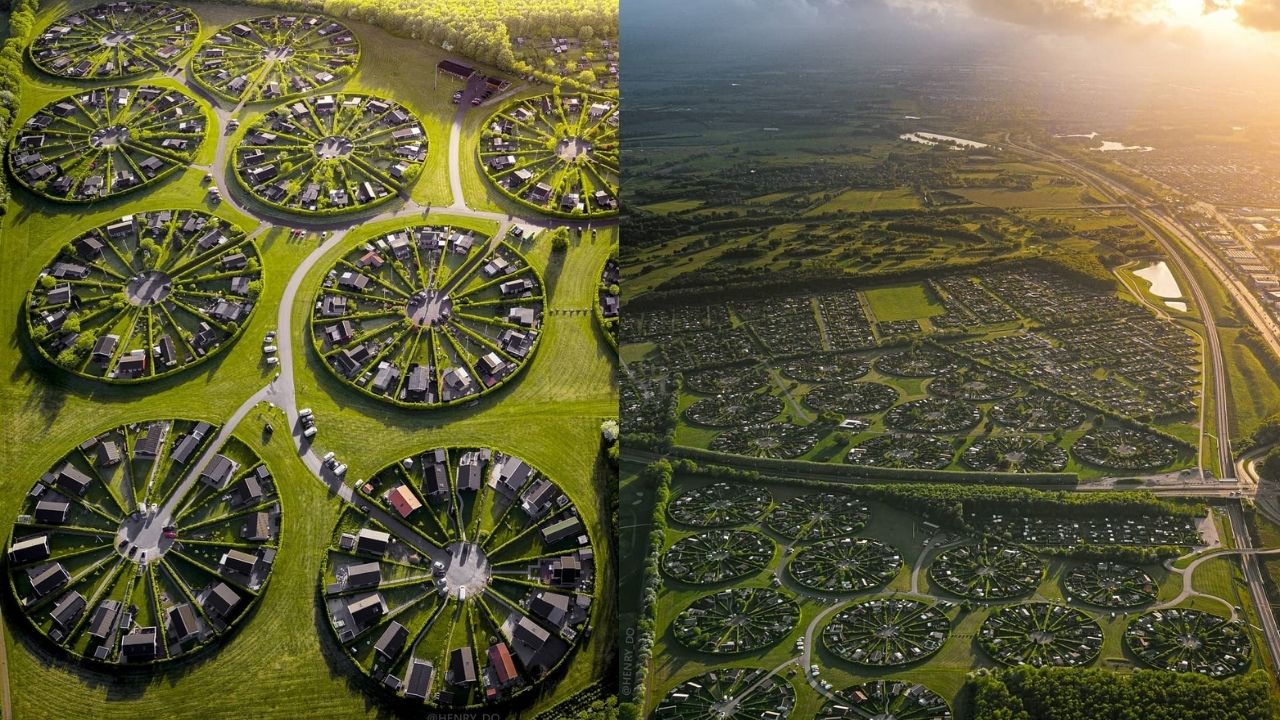
From above, Brøndby Haveby impresses because it deviates from the common pattern of straight streets, closed blocks, and compact neighborhoods. The plots form organized circles, with houses distributed around green areas and internal paths.
-
How discarded Christmas trees are becoming “branch traps” on beaches, holding sand carried by the wind, rebuilding dunes, and transforming festive waste into natural storm defense along the Alabama coast in the USA.

-
Facing difficulties in filling positions in stores, distribution centers, and support areas, Carrefour started using the government’s social registry as a basis to recruit workers in vulnerable situations.
-
The man who stopped the desert: a farmer from Burkina Faso defied decades of drought with an ancestral technique ignored by agronomists and transformed dead land into a 40-hectare forest, with more than 60 species of trees, while his village was engulfed by sand in Africa.
-
Beach umbrella with days numbered: well-known beach bans the use of the item, charges a fee of R$ 59 to enter, limits access to only 150 people, and tightens rules after an incident that led to the emergency evacuation of bathers.



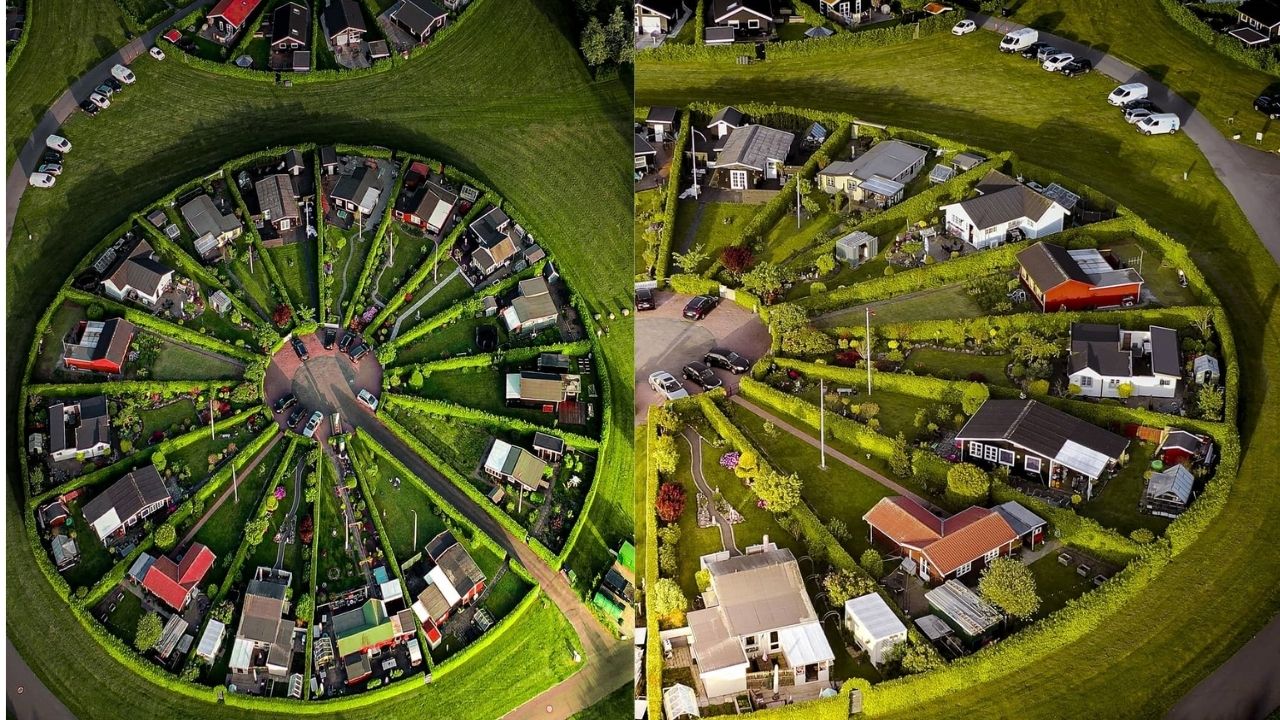
The first reaction is usually one of surprise. The circular city seems like a futuristic design but was born from a simple logic: bringing people, gardens, and community together in a visually striking structure.
Brøndby Haveby is near Copenhagen
The community is located on the outskirts of Copenhagen, in a region that allows urban residents to escape the routine of the Danish capital. The space functions as a weekend retreat, seasonal getaway, and a place to connect with nature.
This proximity helps explain the interest in the place. Brøndby Haveby is not an isolated village in the countryside, but a planned community near a major city, created to offer green respite without completely breaking away from urban life.
Circular city was born in 1964
The community was created in 1964, a period when ideas of urban planning, community living, and seasonal gardens gained momentum in various parts of Europe. The proposal was not to build a common residential neighborhood.
The intention was to create a garden community, with small houses, cultivable areas, and communal spaces. The circular city was born as an alternative to urban rhythm, not as a complete substitute for permanent housing.
Erik Mygind sought inspiration from ancient villages
The design of Brøndby Haveby is associated with landscape architect Erik Mygind. The circular idea resonates with ancient Danish villages, where a central space functioned as a meeting and socializing point.
This reference helps to understand the format. The circle was not used just to create a beautiful image from the sky, but to encourage meetings, circulation, and a sense of community among neighbors.
There are 24 garden circles
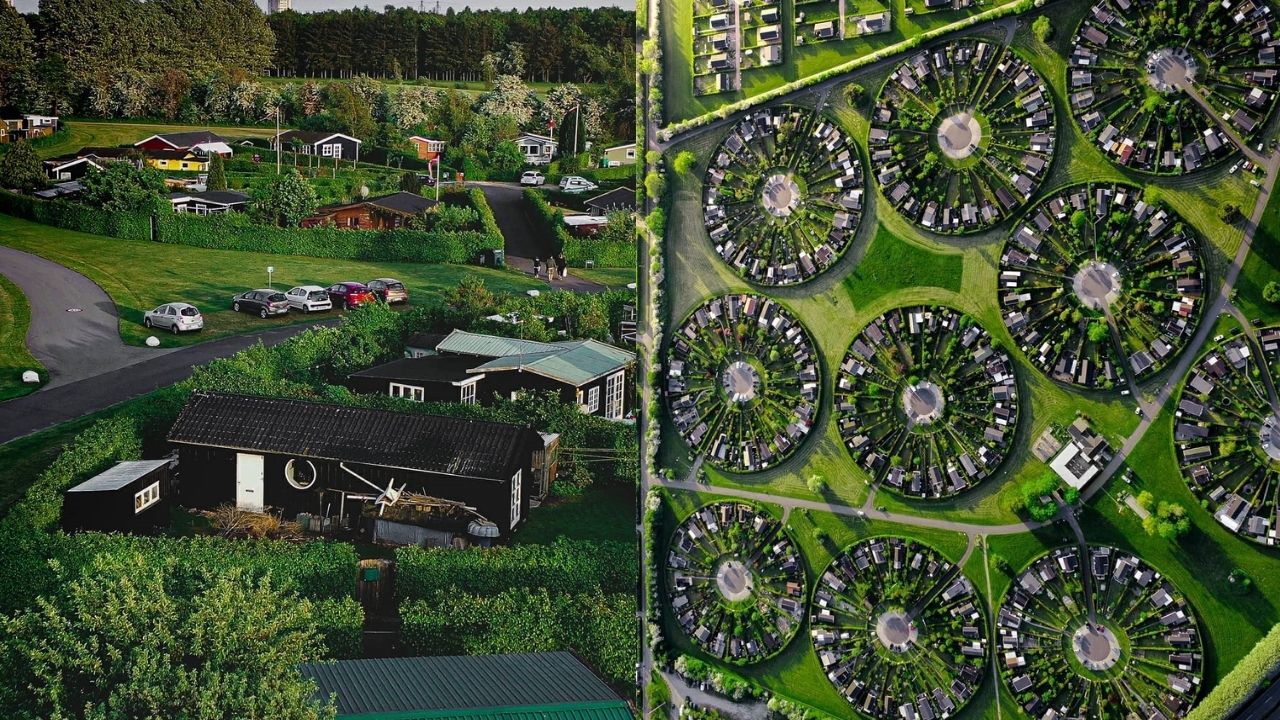
Currently, Brøndby Haveby is described as being made up of 24 garden circles. Each circle gathers plots and houses in an organization that creates its own visual identity within the larger community.
This number reinforces the scale of the proposal. It is not a single isolated experiment, but a circular city composed of several small communities organized around gardens.
Community gathers 284 lots
The complex has 284 lots, according to the source. Each lot combines built area, garden space, and cultivation possibilities, maintaining the logic of a green refuge for those living in an urban environment.
The structure values the relationship between house and backyard. Instead of prioritizing only indoor living, Brøndby Haveby places the garden at the center of the daily experience for those using the space.
Houses are used part of the year
One of the most important rules is that no one can live there year-round. Local regulations prevent permanent occupancy for more than six months a year, preserving the seasonal character of the community.
This detail completely changes the perception of the place. The circular city is not a common neighborhood, but an area of controlled use, designed for rest, cultivation, and socializing during specific periods.
Gardens are part of the local identity
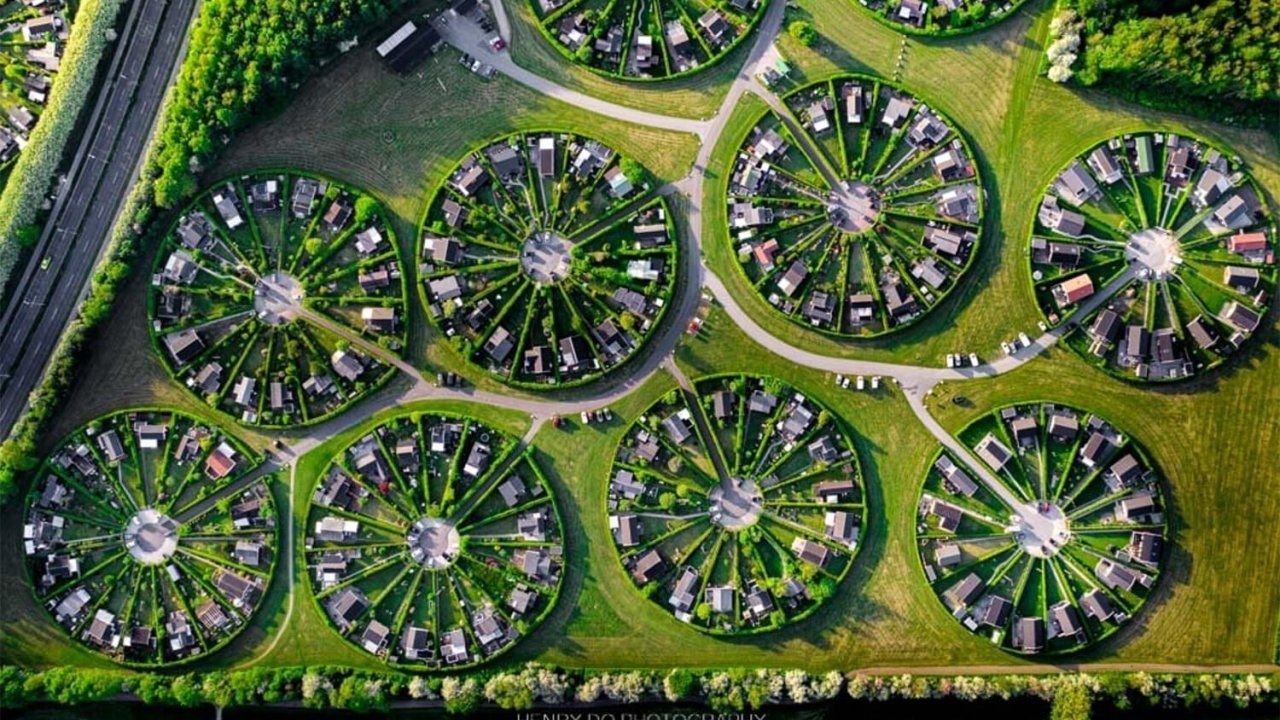
The gardens play a central role in the landscape of Brøndby Haveby. They are not just decoration, but part of the social, visual, and environmental logic of the project, with large backyards and areas dedicated to cultivation.
The source reports that the gardens are rented, while the houses belong to the owners. This combination creates a particular model: private ownership of the building, but regulated use of the green space.
Rules prevent transformation into a common neighborhood
The limitation of annual residency helps prevent the complex from becoming a conventional residential expansion. By preventing permanent occupancy, the rule preserves the function of a country house, garden, and seasonal refuge.
This also maintains the dynamics of the place. Brøndby Haveby remains connected to the culture of leisure gardens, rather than becoming just another suburban neighborhood near Copenhagen.
Circular format brings neighbors closer
The circular design creates more visible paths and meeting points. The houses are oriented towards a composition that encourages the perception of neighborhood and reduces the feeling of total isolation.
At the same time, each lot maintains its own garden. The circular city balances coexistence and privacy, allowing residents to have individual space without losing the community reference.
The center functions as a symbolic point
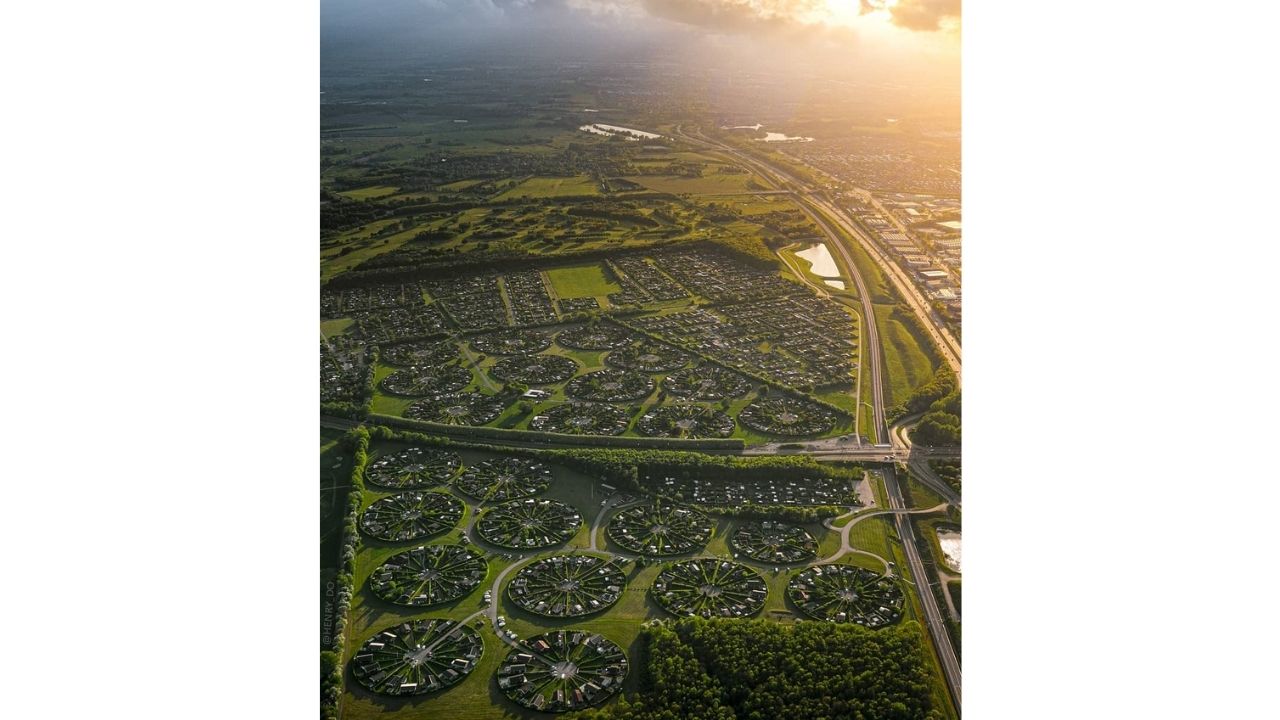
The inspiration from traditional villages appears in the idea of a common center. In ancient villages, the central point could gather news, meetings, and daily interaction among residents.
In Brøndby Haveby, this memory translates into the urban form. Even without exactly reproducing a historical village, the project uses the circle to recover the idea of social proximity.
Small houses reinforce seasonal use
The constructions are described as small country houses, about 50 m² in some references about the place. The size reinforces the function of temporary stay, more focused on rest than on complete residential life.
This scale matches the concept of the ensemble. The house serves as support for the garden, for the weekend, and for the summer, while the outdoor space assumes a role as important as the interior.
Brøndby Haveby went viral due to aerial images
International fame grew with aerial photographs highlighting the green circles amidst the urban grid. The contrast between geometry, gardens, and small houses made the place highly shareable on social networks.
This viralization shows the visual power of the landscape. When seen from the ground, Brøndby Haveby is a community of gardens; when seen from above, it looks like an almost cinematic piece of urbanism.
Circular city mixes order and nature
The most curious thing is the balance between geometric control and organic life. The layout is precise, but the gardens change according to cultivation, season, residents’ use, and individual care of each plot.
This combination gives the place personality. The circular city seems rigid on the map, but gains variation in practice, because each garden reveals different choices, plants, and routines.
Model converses with the Danish cabin culture
Denmark has a tradition of smaller houses used as retreats outside the main residence. Brøndby Haveby fits into this culture, offering a space of pause for those living in urban areas.
The result is a way of living partially in the countryside without leaving the city. The community transforms the weekend, summer, and home cultivation into part of a lifestyle organized by rules.
Not a traditional luxury condominium
Despite the impressive appearance, Brøndby Haveby should not be confused with a gated luxury condominium in the common sense. The focus is less on ostentation and more on gardening, seasonal use, and community living.
This detail is important to not distort the agenda. The strength of the circular city lies in the design, the social use of space, and the relationship with nature, not in mansions or sophisticated buildings.
What the design reveals about urbanism
Brøndby Haveby shows how the shape of a place can influence behavior. By organizing houses and gardens in circles, the project creates a different perception of neighborhood, distance, and meeting.
This type of planning provokes debate. Could neighborhoods bring people closer just by changing the design of streets, plots, and common spaces? Brøndby Haveby suggests yes.
A real community with a fictional appearance
The circular city of Brøndby Haveby proves that a landscape can look futuristic without ceasing to be simple. Near Copenhagen, 24 circles, 284 plots, country houses, and seasonal use rules created a community that combines gardening, relaxation, and socializing.
Seen from above, it looks like a movie set; seen up close, it reveals a practical response to the desire for open air, neighborhood, and urban pause. Would you live a few months a year in a circular community like this, or would you find it strange to live in such a planned place? Share your opinion.



Be the first to react!