Portuguese
  Spanish


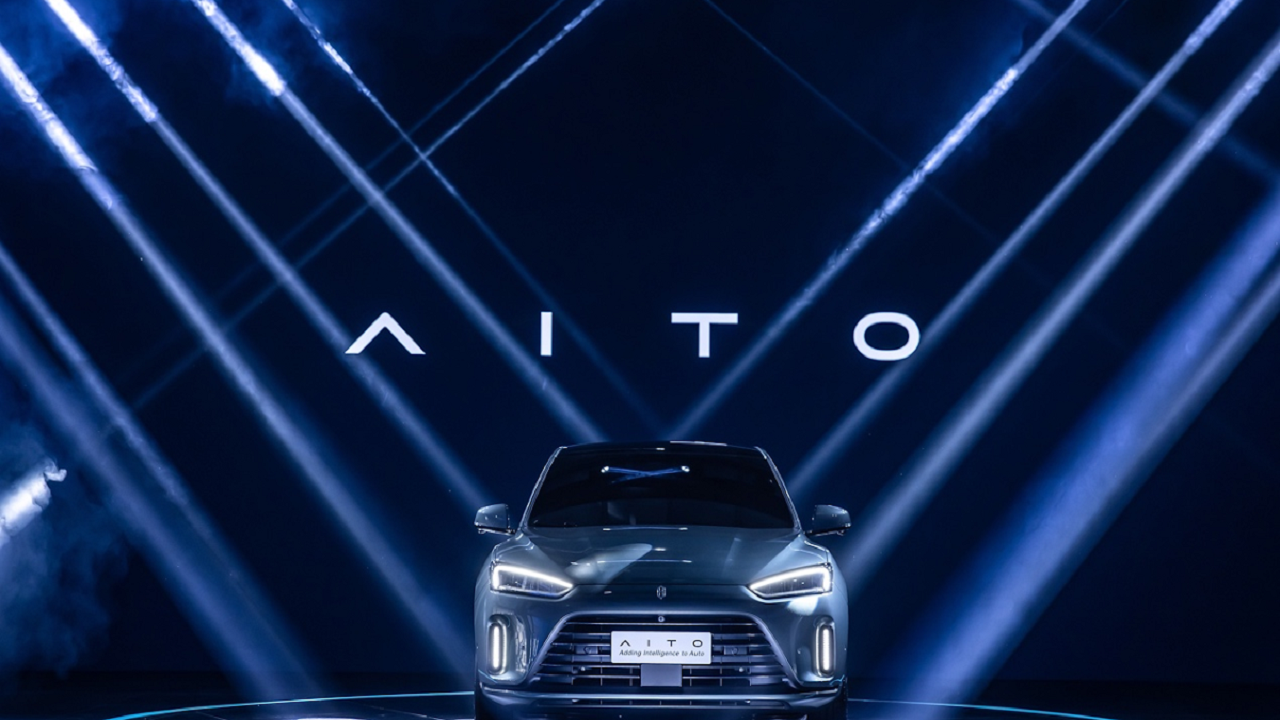

The Huawei Electric SUV Brings Numerous Innovations to the Market, With High Levels of Artificial Intelligence, Being Able to Interact Even in the User’s Home. The Chinese Company Promises Several New Features for the Aito M5, Which Will Be Totally Different From Its First Model, the Seres SF5
Huawei, a company known for its investments in technology and telecommunications, presented this week the electric car Aito M5, a super evolution of the first car model equipped with mechanics developed by the Chinese company, the Seres SF5 model. The electric SUV with artificial intelligence comes with a completely modified operating system and full of innovations, including a high level of autonomy, among other features.
Read Also
Huawei Faces Challenges During Production Phase


Huawei, some time ago, was barred by technology giant Google from using the Android operating system in its manufactured products, due to the economic sanctions imposed by the United States.
However, despite this, the Chinese company decided to study and develop its own operating system, called HarmonyOS. In the Aito M5, Huawei promises a very high level of connectivity and autonomy, thanks to the system developed by the company.
-
End of an era in Brazil: beloved sedan by Brazilians is discontinued despite having a 2.0 engine with 151 hp, CVT transmission, 466-liter trunk, and up to 650 km of range.

-
New Law Proposal in Brazil Could Heavily Penalize Drivers: Dangerous Overtaking May Become a Serious Offense with Fines Increased Tenfold and a 12-Month License Suspension; Update on 2026 Progress

-
Electric Revolution: Watts W125 Motorcycle Offers 160 km Range, 90 km/h Speed, and Affordable Price Starting at $3,000
-
General Motors Replaces Over a Thousand Workers with 50 Cobots at Electric Vehicle Plant, UAW Union Criticizes Move Amid Industry’s Automation Push



Huawei’s Operating System is As Efficient As Android and iOS, Ensuring That the Aito M5 Electric SUV Is Equipped With High Levels of Artificial Intelligence, Providing a Satisfactory Experience for Users of the Company’s New Electric Car Model
Among the various features promised by the Chinese company in the Aito M5, there will be virtual assistants, smartwatches, and customization tools, allowing users to tailor everything to their liking.
The multimedia center will be capable of integrating with the smart systems of the user’s home. An example of this is the ability to turn on the lights in the owner’s home while still inside the car. Although very similar to the Seres SF5 in terms of visual appearance, the Aito M5 has a cleaner and more visually appealing design, as well as the same full LED headlights as the SF5.
The new Huawei line has a frame considered more “normal,” but the front of the electric SUV gained a vertical bar. The creases on the doors remain the same, but the shape of the windows and mirrors has been modified, making it quite different from the Seres SF5. The rear section of Huawei’s new electric car has yet to be revealed.
Other Details About the Interior of the Huawei Electric SUV and the Vehicle’s Autonomy
The interior of the Aito M5 also bears similarities to the Seres SF5, along with a horizontal opening featuring a centrally mounted multimedia center with a 15.6-inch screen.
The instrument panel is digital, with a curved display that can access the entire artificial intelligence system available in the car. Huawei’s new SUV has an incredible autonomy of 1,242 km and – despite being referred to as an ‘electric car’ – cannot be considered a fully electric vehicle, given that it is an “extended range electric,” meaning its gasoline engine serves as a generator for the car’s battery. Regarding speed, the Aito M5 goes from inertia to about 100 km/h in just 4.4 seconds.
Low-Cost Hydrogen Car Goes 400 km on a Single Tank
The Safe Light Regional Vehicle (SLRV), the new and innovative hydrogen-powered car with a futuristic design, has been developed to use a highly efficient fuel cell. Thus, the developers of the SLRV believe that their brand-new electric car will have safe mobility while conserving the planet’s resources. In terms of autonomy, the two-seater SLRV can reach up to 400 km. The new model is aimed at short-distance travel.
The Deutsches Zentrum für Luft- und Raumfahrt (DLR) is responsible for developing the SLRV. According to the Center, the hydrogen-powered car is extremely lightweight and very safe, weighing only 90kg for the chassis and 450kg total weight, with a “sandwich” design that provides a sufficiently cozy interior space.