Portuguese
  Spanish


The four Spot robot dogs from Boston Dynamics will patrol World Cup venues in Dallas, New York, and New Jersey, in the United States. It’s the model’s debut in the tournament, within the largest robotics operation ever assembled by Hyundai, and serves as a test of autonomous technology in crowded public spaces.
Hyundai brought four Spot robot dogs from Boston Dynamics to the 2026 World Cup, which will patrol, inspect, and monitor crowds at tournament venues in the United States. According to the portal interestingengineering, this is the first time this type of robot is used in a FIFA World Cup. The initiative is part of the largest mobility and robotics operation ever organized by the automaker for a global sporting event.
According to the report, the four Spot robots will work at two important tournament locations. Hyundai confirmed that the robots will be at the International Broadcast Center in Dallas and at stadiums in New York and New Jersey. Boston Dynamics is owned by the Hyundai Motor Group, and the automaker acts as the Official Robotics Partner of FIFA, with a fleet exceeding 1,500 vehicles and robots in the United States, Canada, and Mexico.
What the Spot robot dogs will do at the World Cup
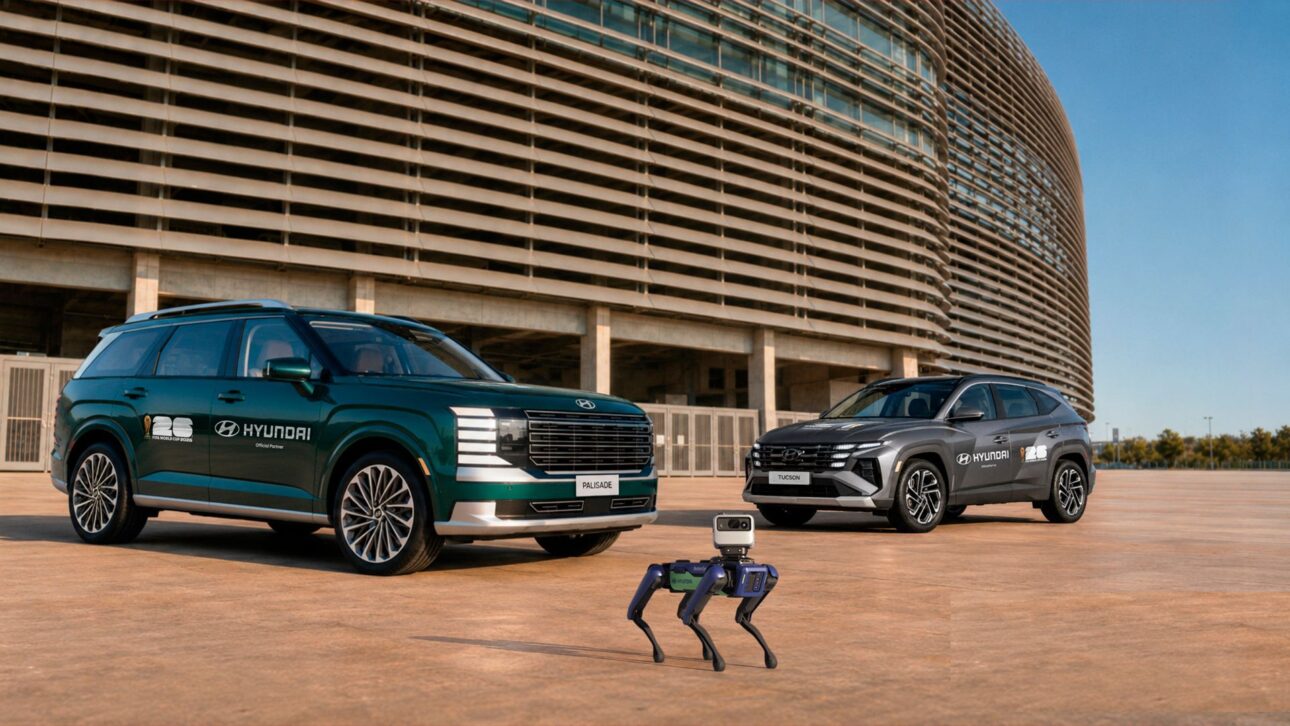
The robot dogs are the technological star of Hyundai’s operation. According to the material, four customized units of the Spot from Boston Dynamics lead the initiative and will operate at two central points of the tournament, the International Broadcast Center in Dallas, and stadiums in New York and New Jersey. Boston Dynamics is part of the Hyundai Motor Group.
-
Brazil’s Highly Anticipated Highway Progresses with 8 Lanes, 24 Overpasses, and 2 Escape Ramps; Project Reaches 70% Completion, Set to Transform Traffic for 390,000 Vehicles Monthly

-
Siblings Leave Retirement and Decades in the Energy Sector to Rank Among Top 10 Efficient Poultry Farms, Plan Expansion in São Paulo
-
Man Compensated After Being Charged Property Tax for Over 30 Years Post-Sale, Court Upholds Decision in Southern Brazil

-
Mediterranean Storm Uncovers 1,800-Year-Old Roman Marble Columns Near Israel, Revealing Ancient Shipwreck and Insights into Imperial Architecture


Their function is to navigate alone through crowded and complex environments. According to Hyundai, the Spot will patrol, conduct real-time inspections, and help monitor areas with a high concentration of people during the games. It is the first time these robotic dogs appear at a FIFA World Cup, which the company presents as a milestone in its status as the Official Robotics Partner of the tournament.
A test of robotics outside the factories
Taking the robot-dogs out of the factory floor is the big challenge. According to the material, industrial robots have long been used in factories, where conditions are well controlled, but event venues are much more unpredictable. The World Cup stadiums and broadcast centers receive thousands of visitors, staff, and journalists, in an ever-changing environment, where robots need to move among people, obstacles, and ongoing activities.
Therefore, the tournament serves as a practical test of autonomous technology. According to the report, it is a scenario where safety, reliability, and constant monitoring are decisive, and the initiative is seen in the material as an important step to place robots in new roles, beyond factories. The presence of robotic dogs watching over crowds also fits into a larger trend of companies bringing autonomous systems to public spaces, something that still needs to prove it can work outside the controlled environment.
The fleet with more than 1,500 vehicles and buses
The robot-dogs are just one part of the operation. According to the material, besides the robotics program, Hyundai manages a large transportation scheme in the 16 host cities, with 994 passenger vehicles and 506 buses. These vehicles transport delegations, tournament officials, press representatives, and operational teams throughout the competition.
The fleet mixes models of different profiles. According to the report, there are various models from the Hyundai and Genesis brands, allowing organizers to choose cars according to each need, and some of them come in hybrid versions, as part of the automaker’s strategy to advance in electrified mobility. It is the less flashy but essential side of the tournament support.
The largest World Cup in history and the future of robots in events
The scale of the tournament helps to explain the size of the operation. According to the material, the 2026 World Cup is expected to be the largest in history, with unprecedented operational and transportation demands across three countries. Coordinating movement between game venues, training centers, hotels, and press rooms requires extensive organization, and Hyundai says that the combination of vehicles and robotics aims to meet this challenge.
The event also serves as a showcase for what comes next. According to the report, the automaker presents the tournament as a demonstration of technologies that may play larger roles in future global events. The open question is precisely how the robot dogs and autonomous systems will perform in real, crowded, and unpredictable conditions, and the advancement of these devices in public spaces is likely to continue raising questions about reliability and control.
In the 2026 World Cup, the Spot robot dogs from Boston Dynamics made Hyundai the first automaker to deploy this type of robot to patrol, inspect, and monitor crowds at a World Cup. Combined with a fleet of over 1,500 vehicles spread across 16 cities in the United States, Canada, and Mexico, they demonstrate the company’s investment in robotics and autonomous mobility. What the tournament will reveal is how well this technology works outside of factories, amidst the unpredictability of crowded stadiums.
And you, do you think having robot dogs patrolling stadiums is a security gain or a step further towards surveillance? Share your opinion and exchange ideas with other readers, respecting different views on the use of robots in public spaces.