Portuguese
  Spanish


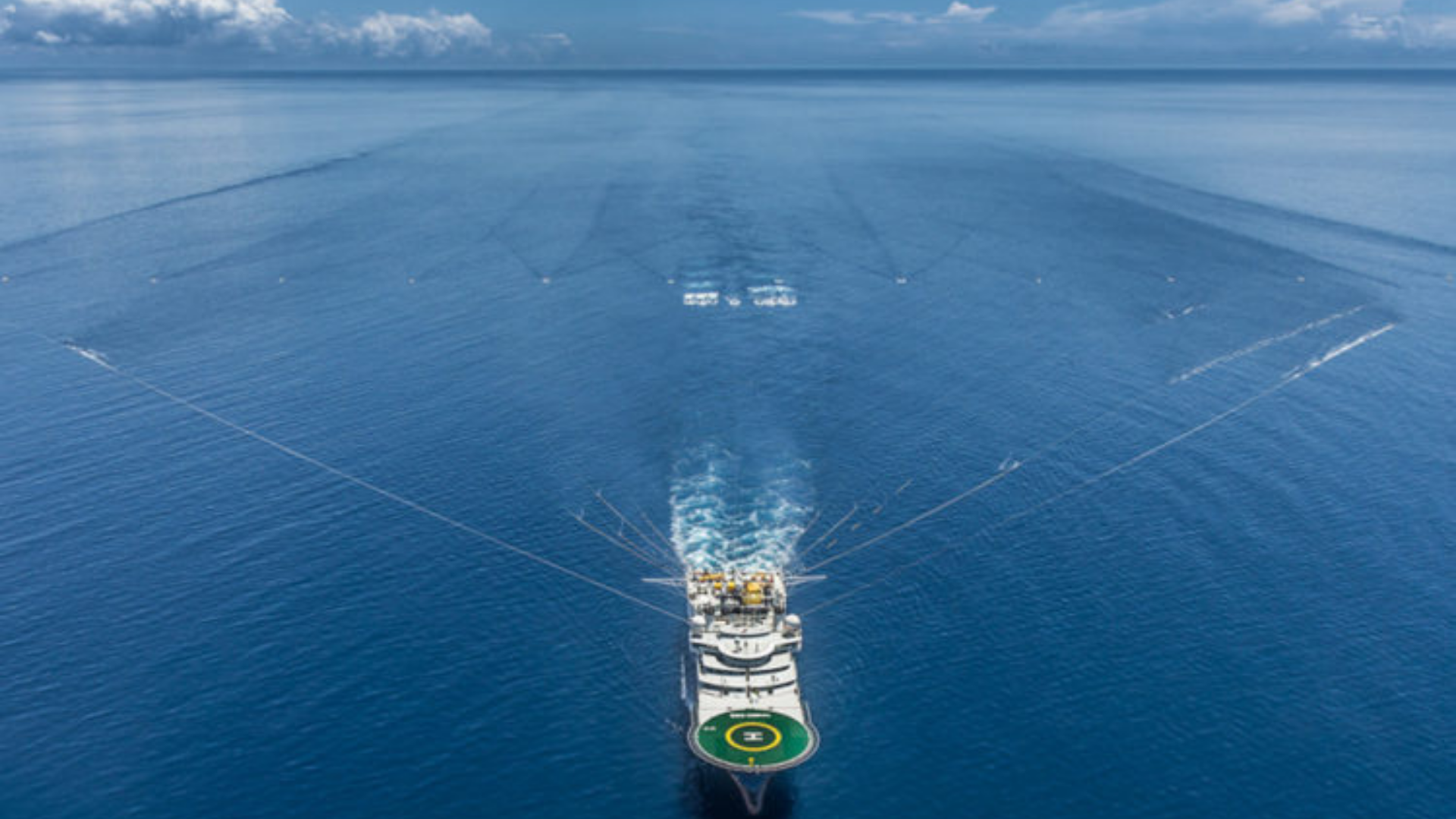

Petrobras Can Perform 3D and 4D Multiazimuth Seismic Research in the Albacora, Marlim, and Voador Fields in the Campos Basin
Petrobras recently received the operating license from Ibama (Brazilian Institute of Environment and Renewable Natural Resources) to conduct seismic research in the Campos Basin. The operation consists of 3D and 4D multiazimuth seismic monitoring in the Albacora, Marlim, and Voador fields, all located in the Campos Basin. The document issued by the national agency will be valid for 4 months. Check out this news: Petrobras Invests in Technology for Remote Monitoring of Platforms in the Campos Basin
- Electric Scooter Capable of Reaching 115 km/h Hits the Market for Under R$ 10,000
- Engie Signs Contract with Fram Capital for Thermal Power Plant in Santa Catarina
- Brazilian Agribusiness Giant Amaggi Heavily Invests to Compete with China and the USA
- 100 Open Positions for Black, LGBTQI, and PWD Students and Recent Graduates on August 31
- Home Office Does Not Relieve Employers of Responsibility in Case of Accidents or Occupational Diseases
The Research That Petrobras Will Conduct on Assets in the Campos Basin
Petrobras’s new research, for which Ibama issued the license, will be conducted using the SW Empress seismic vessel, owned by Shearwater GeoServices. In May, the seismic data acquisition company announced that it had secured this contract from Petrobras for acquiring 3D and 4D data in the Campos Basin.
Irene Waage Basili, CEO of Shearwater GeoServices, stated that Brazil has one of the most advanced 4D seismic monitoring programs in deep waters for reservoir management. This large 4D towed-streamer seismic award from Petrobras adds significant accumulation to the substantial programs already awarded to Shearwater in Brazil, concluded the executive.
-
Oil production grows in Rio, but reserve replacement raises a warning sign

-
Petrobras is expected to complete the drilling of the Morpho well in the Foz do Amazonas in August 2026, the first well in the Equatorial Margin, an oil frontier that the ANP estimates at more than 30 billion barrels and could redraw the map of Brazil.

-
Oil returns to the center of concerns with tension between the US and Iran

-
IEA reduces forecast for global oil demand in 2026 after impacts of the Middle East crisis



The State Company Had Previously Started a Seismic Monitoring Project in the Sapinhoá Field in the Pre-Salt Layer of the Santos Basin
Petrobras recently began the first of two seismic data acquisitions for the monitoring project in the Sapinhoá field, in the pre-salt layer of the Santos Basin. Seismic acquisition is an important tool for managing the reservoir and optimizing production systems, aiming to maximize asset value by increasing recovery factors.
The new surveys by Petrobras in the pre-salt layer of the Santos Basin will utilize a technological solution called Ocean Bottom Nodes (OBN), which allows for better collection of reservoir information from sensors installed on the ocean floor to obtain a better seismic response in geologically complex areas, such as those in the pre-salt layer.
The collection of 3D geophysical data at different times, or 4D acquisition, allows geoscientists and reservoir engineers to monitor fluid displacement, observe variations in oil and water saturation, and identify the effects of rock-fluid interaction and the geomechanical behavior of reservoirs, contributing to better management of oil recovery from the reservoir and development of production in the Sapinhoá field, which is operated by Petrobras.
Check out this news: Petrobras Signs with NOV and Baker Hughes for Supply of Flexible Lines in the Marlim and Voador Fields in the Campos Basin
Petrobras has signed two contracts for the supply of flexible lines to be used in the revitalization project of the Marlim and Voador fields, both located in the Campos Basin. Of the total 448 km of flexible lines in the project, 280 km were contracted with NOV and 168 km with Baker Hughes.
Between March and April, Petrobras signed supply contracts for up to 92 km of flexible lines for gas lift (gasification of the production column) with NOV, and for the supply of up to 13 subsea production and injection manifolds, with 8 from TechnipFMC and 5 from Baker Hughes, in addition to contracts for anchoring materials, subsea equipment, and umbilicals. Petrobras’s initiatives are part of the revitalization project for Marlim and Voador, located in the Campos Basin, which aim to maximize the potential of these assets and promote greater returns for the company and society, creating a virtuous cycle of value generation.