






 Portuguese
  Spanish


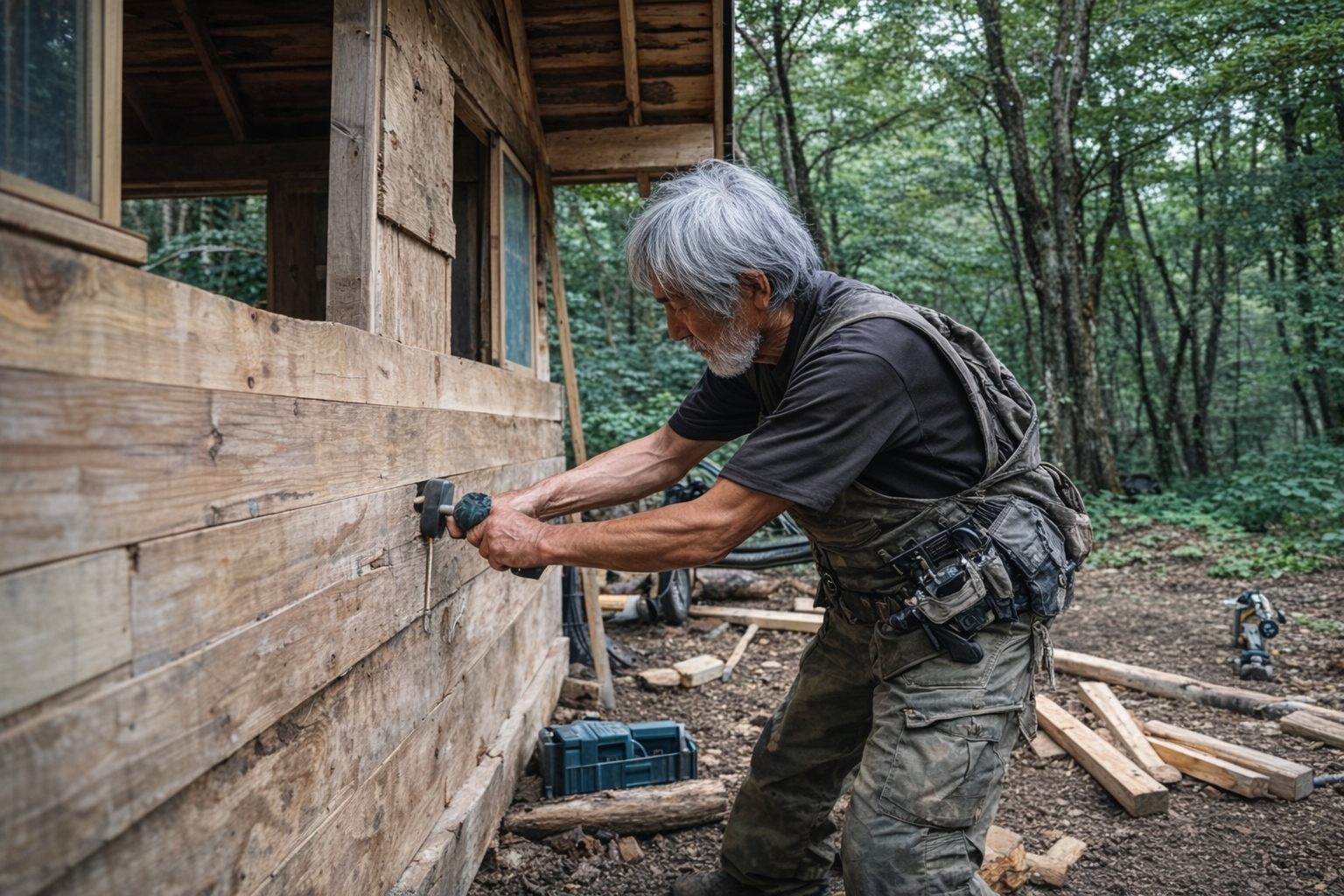


Elderly Person Removes Wood from the Site to Create a Functional Shelter, Causing Complete Transformation of the Land and Catching the Attention of Those Following Manual Constructions.
In the mountains of Japan, a plot covered in vegetation became the base for a construction by a person. The idea was to transform that piece of forest into a simple, functional log cabin, completely handmade.
What was once an uneven ground with visible roots now has a defined perimeter, leveled floor, and walls built with fitted wood. The visual change is clear. Before, a dense forest. After, a complete shelter.
This matters because it shows that manual construction is still viable when there is planning, logical sequence, and correct fitting technique. Nothing industrial. Just wood, earth, stone, and repetition.
-
Workers renovating a playground in northern England uncover 176 World War II bombs buried underground; training artifacts still contained explosives.

-
Brazilian Architect Transforms Waste into Sustainable Homes with Solar Power and Rainwater Systems for 40 Years

-
Security Guard Becomes Doctor at Louisiana Hospital Where He Once Worked, Studied Chemistry Between Shifts

-
Woman Rescued from Luxury Complex in Brazil Worked Without Pay for 55 Years, May Be Entitled to Over $300,000




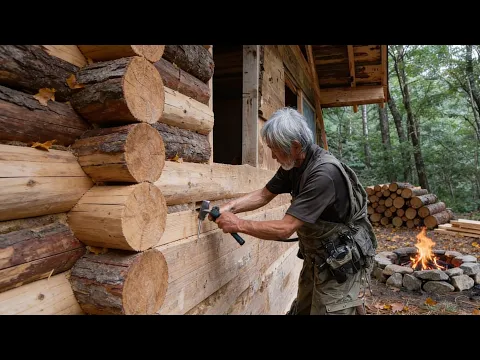

Rented Land in the Mountains Becomes the Base for a Log Cabin Built from Scratch
The decision began after renting a piece of forest on the mountain. The space had no structure, foundation, or prepared access. It was natural vegetation.
The construction started with cleaning, removing branches, stones, and roots. The top layer of soil was scraped until a leveled area was formed. The impact was immediate. The space took shape.
This stage defines everything. Without flat ground, the logs cannot settle. The compacted base ensures that the first row of wood remains stable.
The detail that stands out the most is the organization of the removed material. The excavated earth was piled on the sides, leaving the center clear for construction.
Logs Are Cut and Carved to Create Stable Walls

With the land ready, the logs come into play. Each piece has a similar diameter and preserved bark. The wood is positioned near the marked perimeter.
At the ends, precise carvings are made. These cuts allow one log to fit over the other without slipping. There are no visible metal fasteners.
With each new layer, the wall rises a few centimeters. The weight of the logs presses the lower rows and increases the stiffness of the structure.
What seemed simple gains technical complexity. The crossed fitting at the corners prevents lateral displacement and creates natural locking.
The front opening and closed perimeter define the shape of the cabin in the forest.
During assembly, one face remains open. The rectangular entrance begins to stand out as the sides rise parallel.
The back receives whole logs. The horizontal alignment is constantly adjusted before the next piece is positioned.
The result is visible. The log cabin starts to block lateral wind and delimit internal space. The forest ceases to be an open environment and becomes a protected shelter.
This contrast between the natural exterior and the organized interior is one of the most striking changes in the process.
Inclined Roof with Long Beams Protects Wood Structure in the Humid Forest
After the walls reach the appropriate height, long beams are supported at the top. They create an evident slope.
On top of these beams, smaller pieces of wood are distributed side by side. Branches complement the roofing.
The structural impact is clear. The interior now has superior protection against rain. The slope helps channel the water away from the perimeter.
The difference between thick beams and lighter roofing reveals a division of functions within the structure.
Central Area Prepared in the Soil Turns Cabin into a Functional Shelter

In the center of the cabin, a circular area is prepared. The cavity receives fitted stones forming a continuous ring.
The space around remains clean and leveled. The wood of the walls stays away from the central area.
This choice completely changes the use of the shelter. The central area provides heat and lighting, transforming the cabin into a practical space for occasional use.
The detail that stands out the most is the internal organization. Nothing is scattered. The compacted earth floor reinforces the sense of planning.
House with Light and Demountable Structure Shows Practical Mentality in Manual Construction
The cabin was not designed as a permanent residence. The base is simple. The structure is lightweight. The interior remains rustic and unfinished.
Everything follows a minimalist logic. Just the essentials to function well in the forest.
This practical mentality is what makes the project different. There is no excess material. There is no visible waste.

In the end, what was just forest transforms into a complete, functional, and entirely manual shelter. The transformation is concrete and draws attention because it shows that the basic technique, when well applied, still solves real construction challenges.
Would you take on building a log cabin like this? Share your thoughts in the comments and share with those who enjoy manual projects.


Por supuesto que si me Muy hermosa y yo que soy carpintero no me sería nada difícil
Claro que sim
Antigamente a carpintaria manual de construção de casas móveis era feita no mundo inteiro só depois passou pra cimento e tijolo 🧱 existem muito pouco carpinteiro com abilidades milenar dos tempos antigos aquela abilidades se perdeu muitos carpinteiro correm atrás pra aprender pois é muito raro e móveis e casas que são feitas com essa técnica vale muito dinheiro 💰 atualmente.
Es cierto que se dejó de hacer casas de madera yo estoy por hacer una en un terreno entre unas montañas me gusta mucho