Portuguese
  Spanish




Remote Island in the South Atlantic Has Operations Suspended Due to Security Requirements, Impacting Residents and Visitors, While British Government Sends Team and Creates Uncertainty About Travel, Supplies, and Medical Care
One of the most remote islands on the planet is facing another few days of isolation. Saint Helena, a British overseas territory located between Brazil and Angola, had its only airport closed this week. The information, reported by local media, triggered uncertainty among visitors and residents. Tourists are stranded on the island, with no safe forecast for the resumption of operations.
Decision Based on Safety
According to local authorities, “the decision is based on fixed international safety requirements and a lack of confidence in the operational readiness of the fire trucks, which means that the airport cannot safely support standard flight operations at this time.”
The statement reinforces the cautious tone adopted by the government in the face of technical standards considered non-negotiable.
-
Trump’s 50% Tariff on Brazilian Goods Cuts U.S. Exports by 30%, Brazil Sets Records in 42 Countries and Germany Becomes Top Coffee Buyer

-
Brazil Harvests Record 358 Million Tons of Grain but Lacks Storage for 134 Million Tons

-
A New Bakery Opens Every Six Minutes in Brazil, Highlighting a Surge of 26,400 Small Businesses in Early 2025
-
Brazil’s Lula Government Allocates $463 Million Quota for Electric Car Parts, Waives Import Tax Until December, Sparking Competition Among BYD, Automakers, and Unions as Consumers Question Impact on Prices and Local Industry


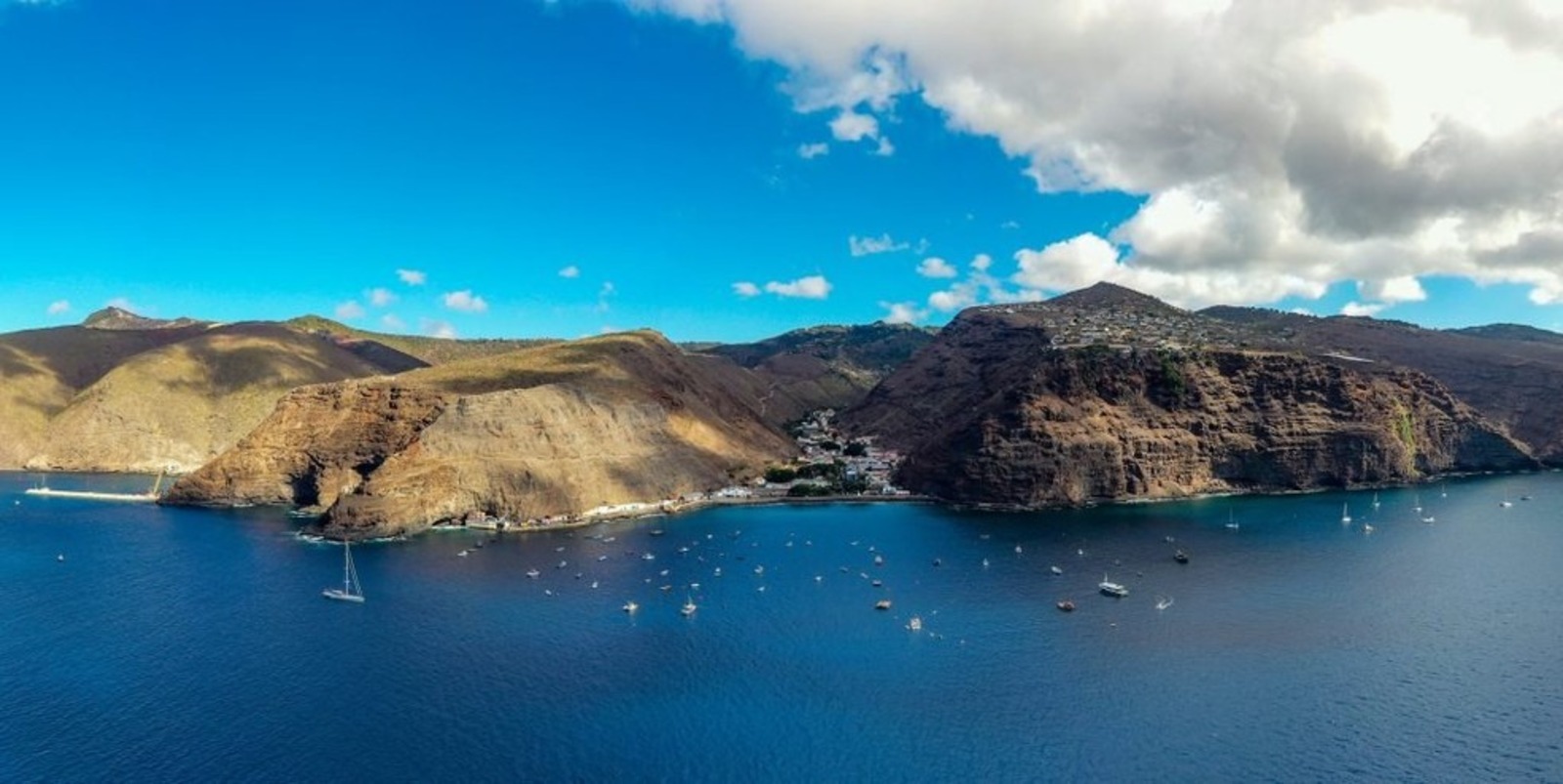
The official expectation is that at least all flights until February 20 will be affected. In practice, the measure alters the routine of an island with an area of about 120 square kilometers and just under 5,000 residents.
Normally, Saint Helena is served by weekly flights to Johannesburg Airport in South Africa, as well as a monthly flight connecting the island to Ascension Island.
Currently, according to the government, yachts and cruise ships also frequent the island, mainly from October to April.
A temporary cargo transport service operates from Luanda, with a route of approximately 21 days, an option far from the speed required for emergencies and commitments.
Historic Refuge and Transformation
Opened nearly a decade ago, the airport put Saint Helena on the world tourist map. Until then, the territory was described as a bucolic island, known mainly for its historical significance.
It was there, 3,000 kilometers from Brazil, that Napoleon Bonaparte was exiled in 1815, after losing the Battle of Waterloo and facing a ten-week ship journey.
Decades later, access was still challenging. In 2017, reaching the refuge of the French emperor took “only” five days of maritime crossing from South Africa.
With the arrival of airplanes, the time was reduced to six hours. The change solidified tourism as a central economic activity, altering expectations and dependencies.
Now, the return to the old routine brings disruptions. “We recognize that this will affect many people, including those with future travel plans, those expecting visitors, and individuals with urgent medical needs that require travel outside the island,” stated the government of Saint Helena this week.
A History of Challenges
This is not the first time that the airport, funded by the United Kingdom, has faced difficulties. Its operations have already been interrupted due to strong winds.
In 2016, the country’s public accounts committee classified the terminal as a “white elephant,” describing the £285 million investment in planning and construction as a “fiasco,” equivalent to about R$ 2 billion today.
In a report, the agency highlighted that the unpredictability of the winds “creates dangerous conditions in the approach to the airport” and noted that the phenomenon was observed in Saint Helena by Charles Darwin in 1836.
“Although the airport has received a small number of flights, wind conditions have prevented the operation of the planned commercial service to the island.”
According to the BBC, the British government has been alerted to the situation, and a specialized team has been established on the island to work on the reopening of the airport.
Meanwhile, amid volcanic landscapes and the quiet streets of Jamestown, the island rediscovers the fragility of its connection to the world, amidst historical memories and logistical challenges that precede the current crisis.
With information from G1.