Portuguese
  Spanish


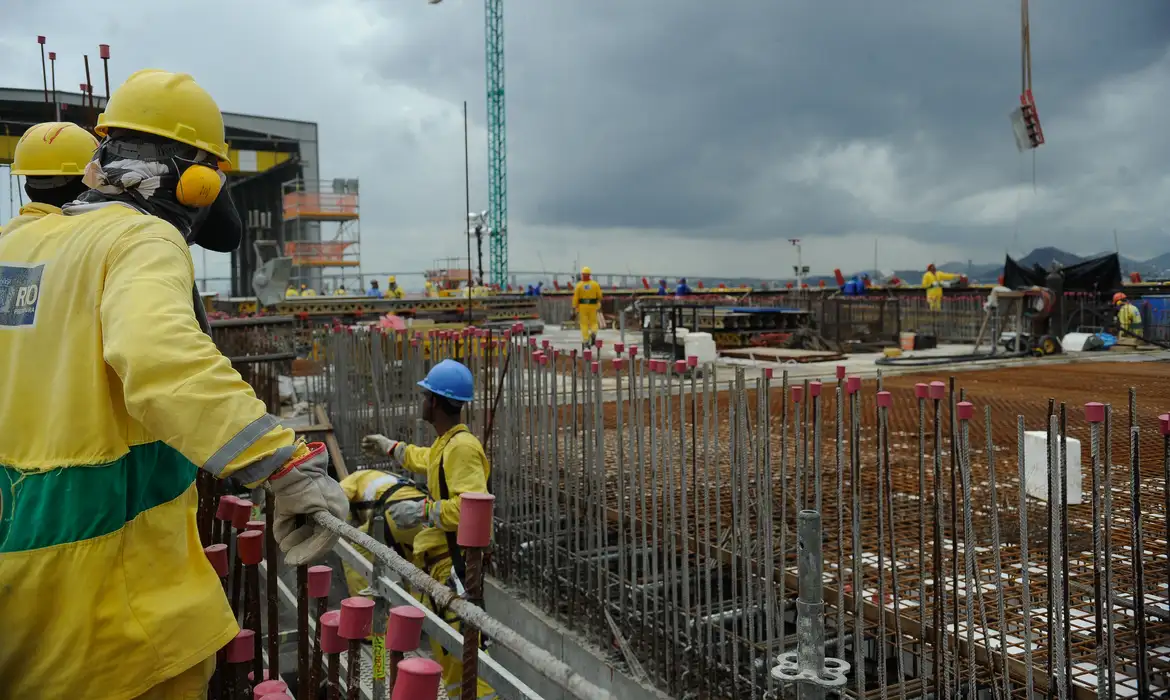

Traditional Materials Remain Essential for the Technological Base of the Sector, Combining Durability, Cost-Effectiveness, and Versatility in Projects of All Sizes
New solutions based on cement and concrete are transforming the construction sector in Brazil. This was the focus of the debate held on Friday (11), during the International Construction Industry Meeting (ENIC), in São Paulo. The event brought together experts and representatives from major construction companies to discuss ways to make construction faster, safer, and more sustainable.
Challenges and Opportunities
The debate was moderated by Eduardo Aroeira Almeida, Financial Vice President of the Brazilian Chamber of the Construction Industry (CBIC). He emphasized that modernization is urgent and necessary at this time of economic recovery.
“Productivity is the great challenge of Brazilian construction, and solutions based on cement and concrete have proven to be fundamental to making the sector more efficient and competitive. We need to look to the future with a focus on industrialization, sustainability, and innovation,” he stated.
-
France Revamps 530 Social Housing Units with Large Balconies and Glass Facades Without Demolishing Existing Buildings

-
Facing high rent, couple transforms parents’ garage into a fully functional apartment, creating a complete home at a fraction of the market cost.

-
MIT Scientists Develop Method to Transform CO₂ into a Construction Ally, Boosting Cement Strength by 13% in 24 Hours for More Sustainable Infrastructure
-
Canadian City Builds 8 Tiny Homes in 72 Hours for Homeless Youth, Plans 40 Affordable Houses for Female-Led Families Amid Housing Crisis


3D Printing with Concrete
One of the technologies that attracted the most attention was 3D printing with concrete, presented by Daniel Katz, CEO of Katz Construções. He explained how this method can be an effective alternative for social housing.
“With 3D printing, we can drastically reduce construction time and material waste. This technology is revolutionizing the way we build, especially in regions that require quick and low-cost solutions,” he said.
Katz provided a practical example: a housing unit built for CDHU, from the State Government of São Paulo, was printed in just four days. The assembly took another two days, and overall, the final delivery was completed in 20 days.
Off-Site Systems and Workforce
Another highlight of the panel was the presentation by Diego Ciola Esteves, head of Engineering and Off-Site Operations at MRV&CO. He talked about pre-assembled kits, constructed off-site and then installed in buildings.
“We are industrializing the construction site. The adoption of hydraulic, electrical, and structural kits brings more predictability, quality, and safety to the construction process,” he explained.
However, Diego pointed out the shortage of qualified labor as a challenge. To tackle this, the company has started investing in public-private partnerships and establishing kit factories in prisons.
The Future of Construction: Prefabrication in Facades
Paulo Koelle, director of Stone Prefabricated, presented examples of prefabricated concrete facades, highlighting the gains in scale and quality of the finish. According to him, depending on the type of concrete, it is possible to create hollow, curved, or even twisted panels.
“Prefabrication is the most efficient way to standardize quality and shorten timelines. Furthermore, it reduces the environmental impact of the construction site,” he stated.
Sustainability as Focus
Representing the Brazilian Portland Cement Association (ABCP), Valter Frigieri highlighted the role of cement and concrete in innovation. He stressed that these materials, when combined with technology, help increase productivity without compromising sustainability.
“These materials have versatility and technical performance that allow for numerous intelligent applications,” he declared.
Construction Project 2030
The panel is part of the Construction Project 2030, from the Commission of Materials, Technology, Quality, and Productivity (COMAT) of CBIC. The project is chaired by Dionyzio Klavdianos and implemented in partnership with the National Service for Industrial Learning (SENAI).
The goal is to accelerate the modernization of the sector and align Brazilian civil construction with best international practices.
Event Structure
The International Construction Industry Meeting (ENIC) is promoted by CBIC in partnership with RX | FEICON. The event is part of the program of the 29th edition of Feicon, held in Pavilion 8 of São Paulo Expo.
The event is supported by the Industry System, SESI, and SENAI. Official sponsors include Caixa Econômica Federal and the Federal Government. Other sponsors include companies and entities such as Saint-Gobain, Sebrae Nacional, Mútua, ABCP, Abividro, Abrafati, Anfacer, Sienge, Apex Brasil, ABDI, CAU/SP, Multiplan, Brain, COFECI-CRECI, CIMI360, Esaf, One, Agilean, Exxata, Falconi, Konstroi, Mais Controle, Penetron, Seu Manual, Totvs, Unebim, Zigurat, and Yazo.
Paths to the Future of Civil Construction
With practical presentations and real examples, the panel showed that civil construction is changing. The combination of traditional materials such as cement and concrete with innovative technologies is allowing for faster construction, with less waste and greater quality.
The industrialization of the sector, combined with innovation, appears as a clear path for the future of construction in the country. And even with challenges, such as the lack of qualified labor, the sector is seeking creative solutions to continue advancing.
The final message emphasized during the meeting is that the future of Brazilian construction depends on the ability to innovate without abandoning the solid foundations that support the sector.
With information from cbic.org.