






 Portuguese
  Spanish
  3 min of reading
  0 comments


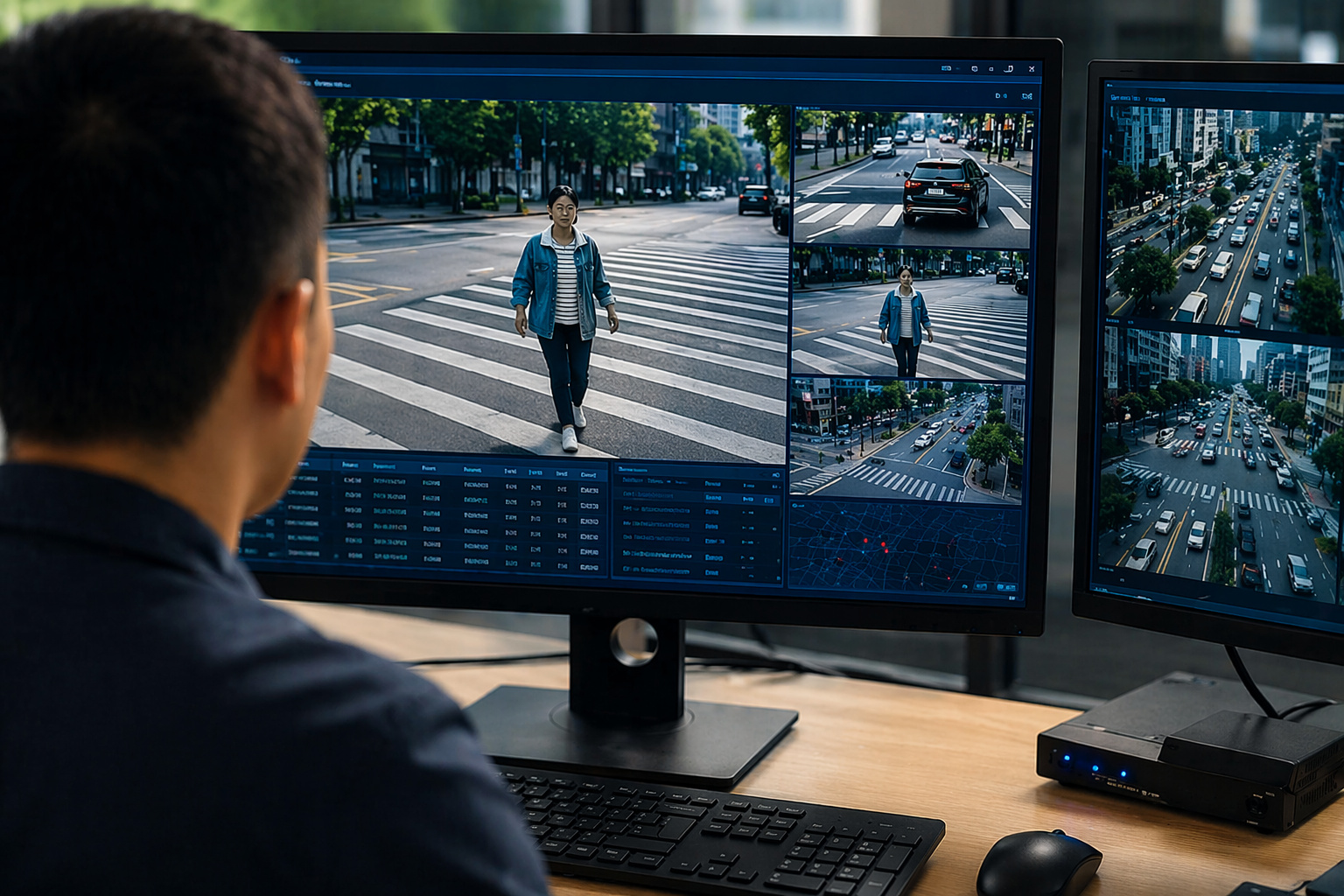
Intelligent traffic light technology with AI already identifies violations before the intersection and applies quick penalties with direct impact on traffic
The intelligent traffic lights with AI in China have ceased to be just stop and go signals. The system can identify drivers and pedestrians, predict violations before the intersection, and issue fines in a matter of seconds, completely changing the dynamics of traffic.
The impact is immediate. Those traveling through these cities face an environment with constant monitoring and quick punishment, which reduces risky behaviors and increases discipline on the roads.
Intelligent traffic lights with AI monitor every movement at urban intersections
Major Chinese cities have adopted systems that transform intersections into points of advanced surveillance. The intelligent traffic lights with AI operate integrated with high-definition cameras and sensors that capture all movements.
-
Oil Company Robots Discover 3,300-Year-Old Canaanite Shipwreck in the Mediterranean, Proving Ancient Mariners Navigated Open Seas by Stars Long Before Historians Thought

-
Facing high rent costs in Brazil, couple swaps apartment for life on a sailboat, reducing expenses significantly.

-
Avoiding the rental cycle, 26-year-old transforms school bus into a solar-powered mobile home for road living, spending up to $35,000 on renovations.
-
Survivor of 1966 SS Daniel J. Morrell Shipwreck in Lake Huron Recounts 38-Hour Ordeal in Extreme Cold


This set allows for the identification of running a red light, irregular crossing, and behaviors outside the rules with high precision. Monitoring begins even before the vehicle or pedestrian reaches the critical point.
BBC News, an international news agency, published reports showing how facial recognition technology has become part of urban routine in China, including in traffic systems.
Artificial intelligence can predict violations even before the complete error
One of the most impressive points is the ability to anticipate. The artificial intelligence in traffic analyzes speed, direction, and the posture of the driver or pedestrian.
When a vehicle approaches at high speed or a pedestrian shows intent to cross outside the crosswalk, the system identifies the risk. This means that the violation can be detected even in the early phase.
This logic transforms traffic into a more controlled environment, where enforcement is no longer just reactive but becomes preventive.
Fines are issued in seconds after the automatic identification of the offender
As soon as the violation is confirmed, the system performs the automatic identification of the driver or pedestrian. This occurs through facial recognition or license plate reading.


The data is connected to official databases and the penalty is recorded quickly. In many cases, the offender receives notification almost immediately.
This model reduces the time between error and punishment, which increases the efficiency of enforcement and directly influences behavior in the traffic.
Images of offenders may be displayed on public screens in real time
One of the most striking points is the public exposure. At some intersections, large screens show images of those committing violations, such as crossing outside the crosswalk or disregarding the signal.
This practice reinforces the educational effect and creates an immediate impact. The possibility of being seen publicly makes drivers and pedestrians adopt a more cautious attitude.
The Guardian, an international newspaper with global coverage, highlighted the use of smart cameras for monitoring behavior in traffic and pointed out the Chinese model as one of the most advanced.
Constant monitoring reduces violations but raises debate about privacy
The presence of smart traffic lights with AI contributes to the reduction of violations and improves vehicle flow. Continuous control generates more organization and safety on the roads.
On the other hand, the use of facial recognition and large-scale data collection raises important discussions. The topic involves privacy, surveillance, and limits on the use of technology.
This balance between security and freedom is still debated in various countries.
Smart traffic light technology with AI shows what traffic will look like in the future
The advancement of artificial intelligence indicates a clear path. Smart traffic lights with AI are becoming central urban control tools, going beyond their traditional function.
They can monitor, analyze, and punish behaviors in almost real-time, creating a more automated and data-driven traffic system.
The trend is for this model to expand to other regions, with adaptations according to the legislation of each country.
What do you think of this type of system? Leave your opinion in the comments and share this content with others.
“`


Be the first to react!