






 Portuguese
  Spanish
  5 min of reading
  0 comments


3,300-Year-Old Shipwreck Found 1.8 km in the Mediterranean Challenges Theories on Bronze Age Navigation and Preserves Intact Cargo.
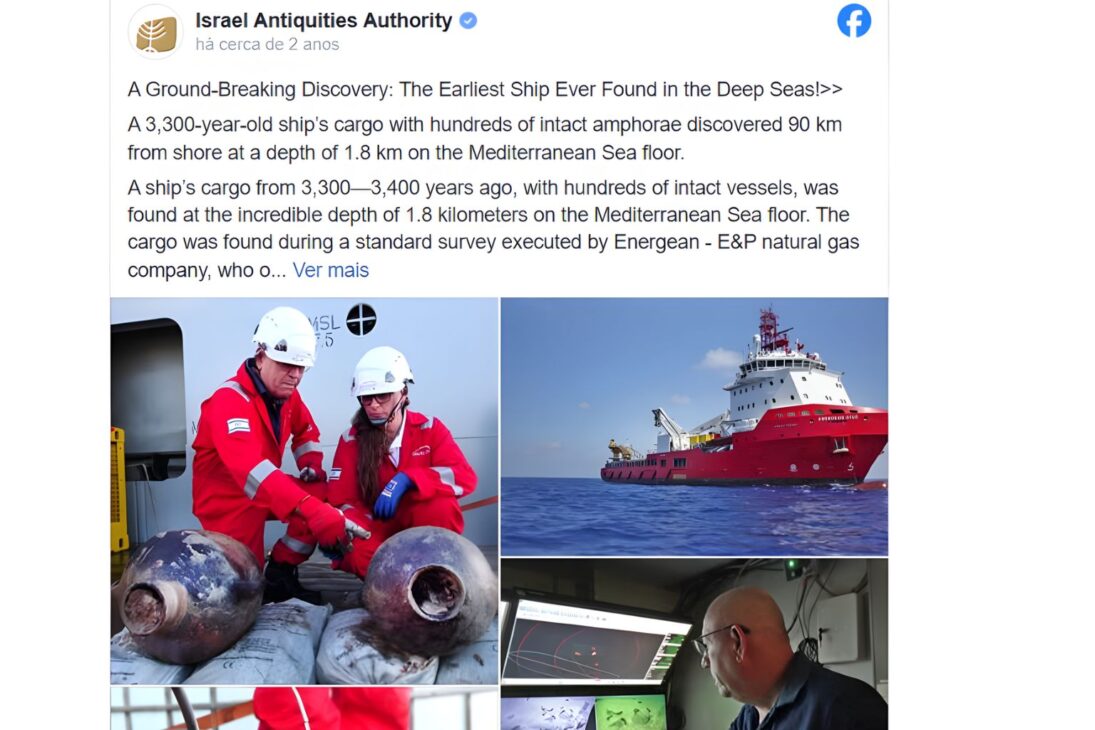
During a routine inspection on the bottom of the Mediterranean Sea, the company Energean identified a submerged anomaly off the coast of Israel and recorded images of partially buried ceramic containers. The material was sent to the Israel Antiquities Authority, which identified the collection as the cargo of a Bronze Age ship, approximately 3,300 to 3,400 years old, preserved at a depth of 1.8 kilometers and about 90 kilometers from the coast.
The discovery drew attention because the archaeological site contains hundreds of intact amphorae at a depth far beyond the reach of divers and conventional excavations. For archaeologists, the find is not only rare: it changes the scale of what was known about ancient navigation in the Mediterranean and about the preservation of maritime cargoes from the Bronze Age.
Discovery in the Mediterranean Occurred During Technical Inspection and Revealed Almost Intact Cargo
According to the release by the Israel Antiquities Authority, the material found was recognized as a collection of Canaanite storage vessels from the Late Bronze Age. The ship was at the bottom of the sea in a deep and dark area, preserved by conditions that left it practically untouched by currents, waves, and fishing activity over millennia.
-
Helicopter Drops 180 Tons of Sand and Gravel on Swedish River to Revive Ecosystem Damaged by Decades of Exploitation

-
Brazilian Company Launches Retro Smartphone with 48 MP Camera, T9 Keyboard, and Privacy Features for Social Media-Free Use

-
Self-Taught Chinese Farmer Builds 5-Ton Submarine from Scrap, Launches It in Anhui River
-
Invisible Induction Technology Enables Wireless Power for Blenders, Coffee Makers, and Air Fryers, Reducing Countertop Cables





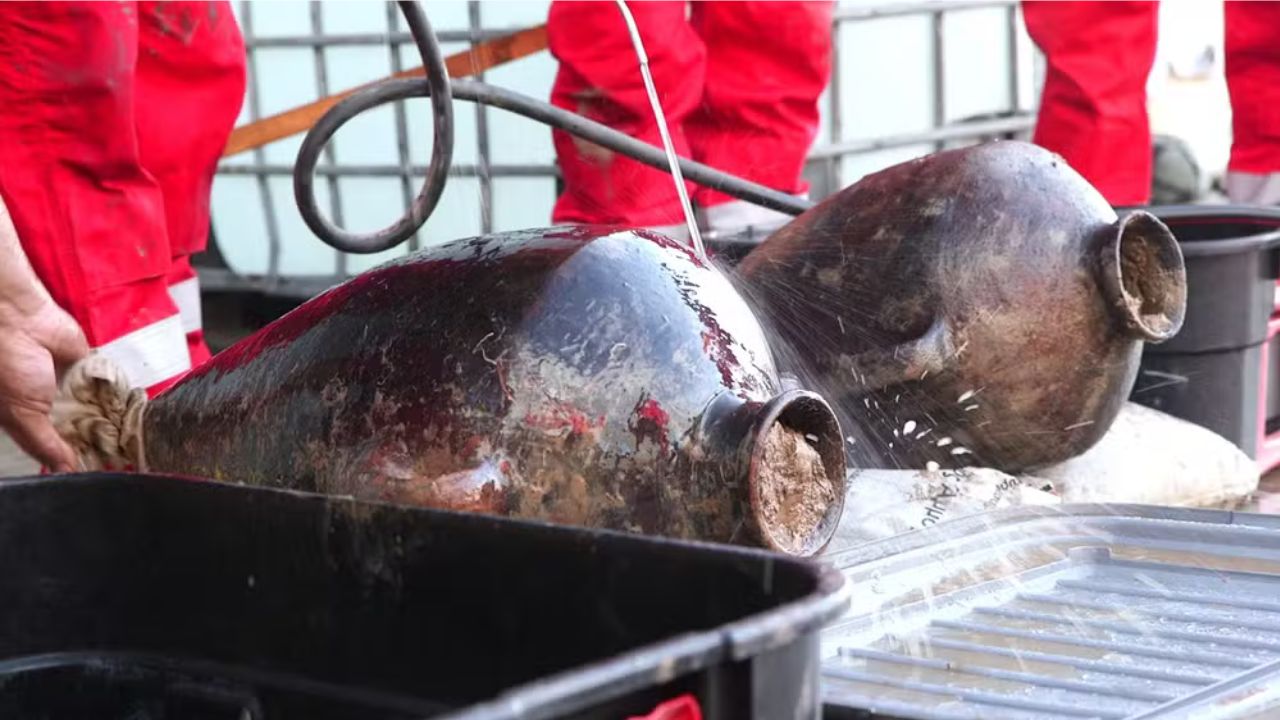
The initial images showed a row of containers scattered over the sediment, but without the typical dispersion pattern of a violently overturned shipwreck. This reinforced among experts the perception that the sinking occurred abruptly and that the cargo remained preserved in a relatively stable position at the bottom of the Mediterranean.
Shipwreck 90 km from the Coast Challenges Traditional Theory on Bronze Age Navigation
The most surprising aspect of the find is not just the age of the vessel, but its location. The Israel Antiquities Authority reported that the ship was found about 90 km from the coast, in an area without a line of sight to the mainland, which contradicts the idea that navigators of the Bronze Age were limited to coastal routes.
According to the report reproduced by the Associated Press, Jacob Sharvit, head of the marine unit of the Israel Antiquities Authority, stated that this is the first ancient vessel found so far from the coast and without any line of sight to land. The archaeologists’ interpretation is that sailors of that period were already capable of making deliberate crossings in open sea, possibly guided by the Sun and the stars.
This point changes the understanding of the nautical capabilities of the peoples of the eastern Mediterranean at the end of the Bronze Age. Instead of relying solely on the proximity of the coast, these navigators may have mastered more sophisticated navigation techniques than previously thought, which enhances the historical significance of the find.
Hundreds of Canaanite amphorae preserve a rare cargo from ancient maritime trade
On the surface of the sediment, robots recorded hundreds of storage jars arranged in relatively preserved layers. These containers, identified as Canaanite amphorae, were used to transport goods such as wine, olive oil, and other commercial products, making the site a direct window into the maritime trade of the eastern Mediterranean in the Late Bronze Age.
The exceptional depth helped protect the archaeological set. According to the Associated Press, the great distance from the surface kept the site free from the action of waves, stronger currents, and human interference, which increased the scientific potential of the shipwreck. Two containers were removed for study, while most of the cargo remained at the bottom of the sea.
Sudden sinking still intrigues archaeologists between storm and pirate attack
The arrangement of the cargo led specialists to consider that the shipwreck occurred in a crisis situation and quickly.
According to the Associated Press, one of the interpretations made by archaeologists is that the vessel may have sunk after a sudden storm or during an attempted pirate attack, hypotheses compatible with the maritime context of the Mediterranean at the time.
The absence of clear signs of jettisoning the cargo reinforces the thesis of an abrupt event. In maritime accidents, it was common to throw part of the merchandise overboard to lighten the ship’s weight, but the preservation of the ensemble suggests that the crew may not have had time to react before the sinking.
Comparison with Uluburun shows why the new find is so important for maritime archaeology
Until now, the most celebrated example of a cargo ship from the Bronze Age in the Mediterranean was the Uluburun shipwreck, off the coast of Turkey. According to the Institute of Nautical Archaeology, the site was discovered in 1982 and excavated over 11 seasons, between 1984 and 1994, with more than 22,000 dives. The cargo included copper, tin, ceramics, and luxury items destined for an elite of great economic power.
The main difference is that Uluburun was close to the coast, while the ship found off the coast of Israel was in open sea and at great depth. Therefore, the new find not only expands the set of evidence about maritime trade of the time but also reinforces the idea that Canaanite sailors were capable of navigating much further than previously imagined.
Shipwreck remains at the bottom of the Mediterranean and may preserve answers for decades
Despite the scientific relevance, the archaeological site is not expected to be fully excavated in the short term. The depth of 1.8 km makes any operation extremely complex, expensive, and technically delicate, which makes preservation in place the safest option at this time.
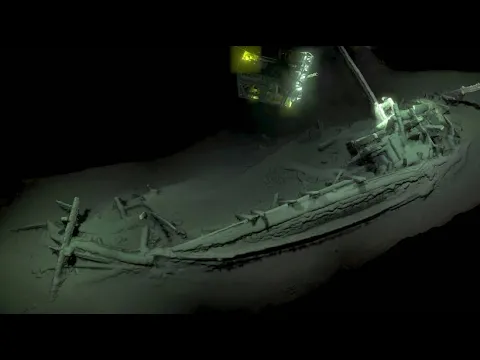

Thus, the oldest ship ever identified in deep waters in the Mediterranean remains where it sank more than three millennia ago. Even without a complete removal, what has already been documented is enough to place this discovery among the most important recent maritime archaeological finds and to reopen the debate about the real reach of ancient navigation.





Be the first to react!