





 Portuguese
  English
  Spanish
  5 min of reading
  0 comments


Cardboard collection in South Korea exposes poverty in old age, insufficient retirement, and a recycling chain that relies on the elderly in heavy, poorly paid, and little-recognized jobs on the streets
In one of Asia’s most modern economies, elderly people push giant cardboard carts through the streets, revealing a harsh side of South Korea. The scene occurs amidst buildings, strong commerce, and technology, but shows older people trying to earn income with recyclable material.
The information was released by Reuters, the international news agency of Thomson Reuters. The survey showed that about 45% of South Koreans over 65 years live with less than 50% of the median disposable income.
The data helps explain why the image causes such an impact. The issue is not just about garbage or recycling. It speaks of poverty in old age, informal work, insufficient retirement, and a chain that relies on invisible people to keep functioning.
-
24 m² house where a cleaning lady raised 3 children was loaned to shelter a pregnant young woman and returned destroyed; in 50 days, an architect changed everything, expanded the space, created ventilation, and returned to Vânia the dignified home she had waited for years.

-
Supermarkets with new hours on Sundays! Agreement provides for a fine of R$ 500 per employee, union inspection, and penalties that can reach R$ 50,000 for companies that do not comply with the rules in Goiás.

-
The road that crosses 8 states, spans almost 4,000 km, and has become a symbol of the United States: Route 66 connects Chicago to California and preserves a century of history in the USA.
-
Brazilian truck drivers begin to be released after a standoff that halted cargo for more than 20 days and exposed a problem involving nearly 1 million records.



Why so many elderly collect cardboard in South Korea
Cardboard collection appears as an option for elderly people who cannot live solely on the available income. For these people, the cart on the streets is not a light choice. It represents a way to try to pay bills, buy food, and maintain some independence.
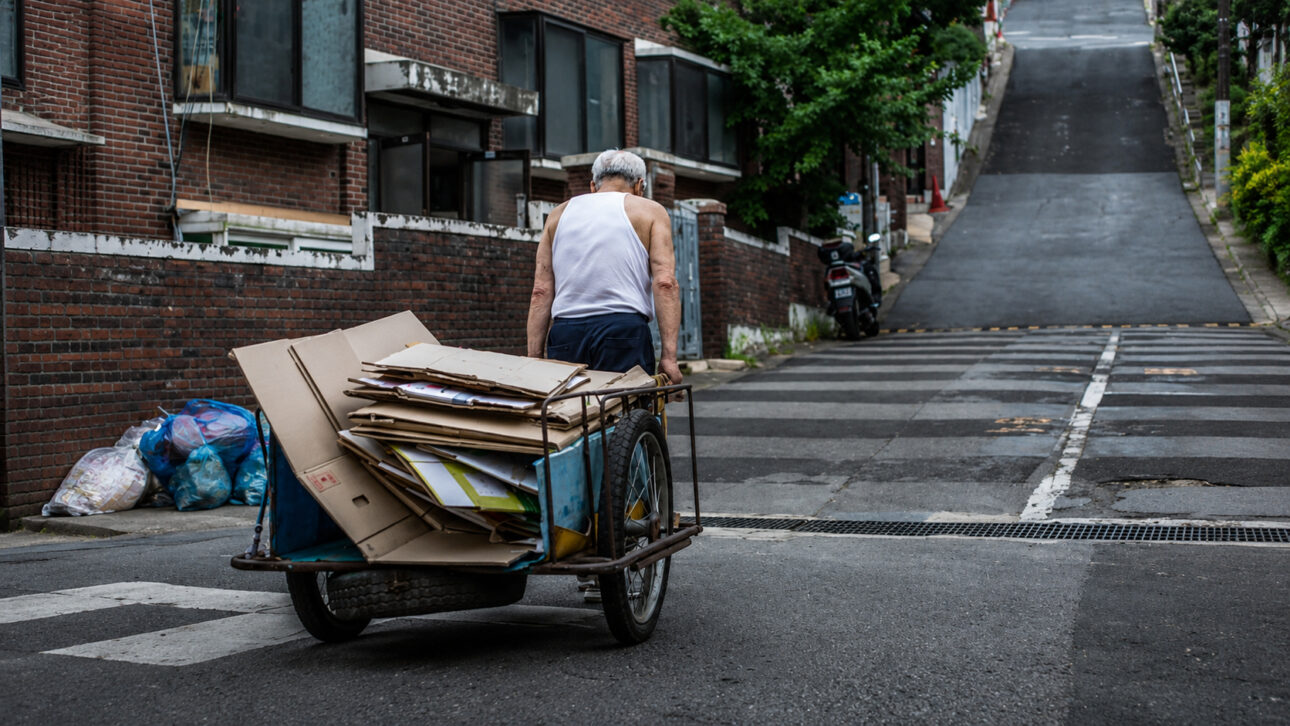
This work requires physical effort every day. The elderly person walks, gathers boxes, separates material, carries weight, and pushes the cart through busy streets. Even so, the activity has become a visible part of urban routine in South Korean cities.
The contrast is strong because the country is seen as modern and rich in technology. But the presence of elderly cardboard collectors shows that economic growth alone does not eliminate the lack of protection in old age.
How much this work reveals about poverty in old age
Poverty in old age appears when people over 65 years continue doing heavy work out of necessity. The problem is not an elderly person wanting to work. The problem is not being able to stop because the income does not cover the basics.
Reuters, the international news agency of Thomson Reuters, reported that South Korea had an unemployment rate of 2.7% until February, with almost half of the employment increases driven by people aged 60 or older.
This point changes the interpretation of the data. Low unemployment may seem like a sign of a strong economy, but it can also hide fragile, temporary, and poorly paid jobs. Thus, the statistic improves, while many elderly people continue in jobs that do not guarantee security.
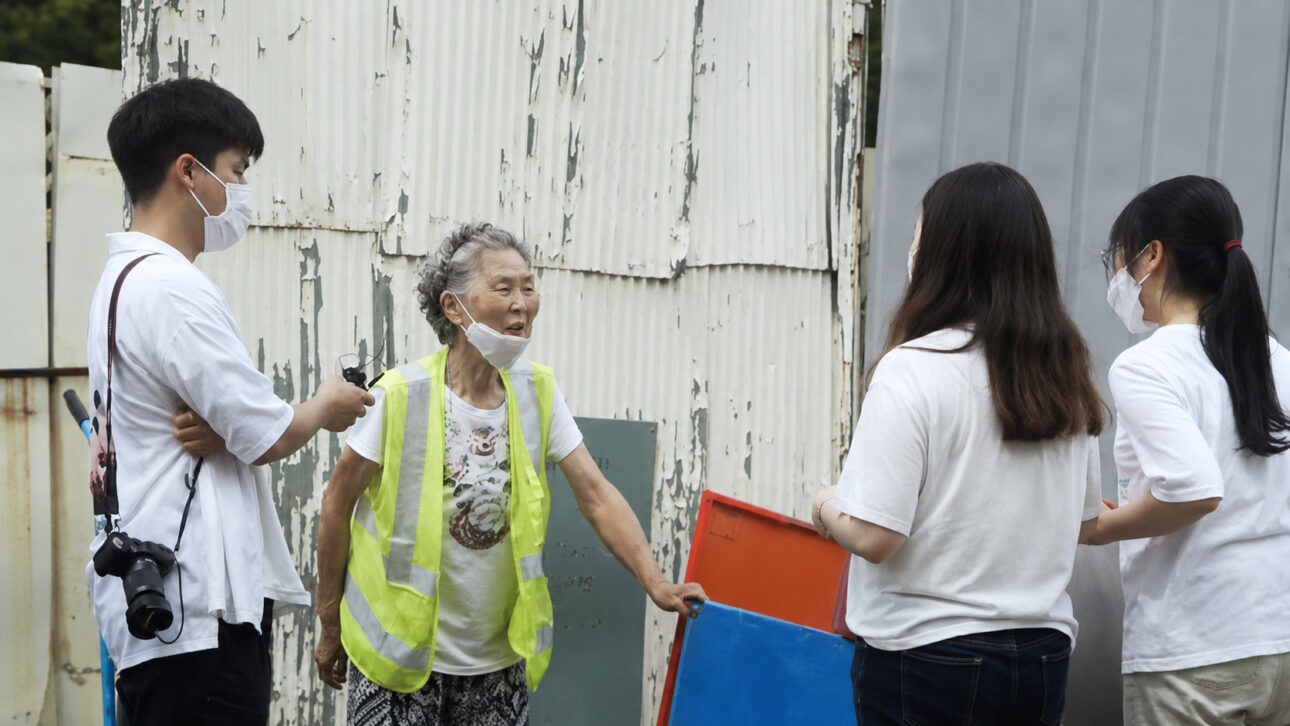
Economist Yoon Jee ho, from Citi, stated that people over 65 years in Korea tend to have a higher income poverty rate compared to other major economies, partly due to insufficient pension system coverage and lack of sufficient private savings.
How recycling depends on invisible labor
The cardboard that leaves the streets enters the recycling chain. Before becoming a reusable material, someone needs to collect, carry, separate, and deliver it. This effort almost never appears to those who only see a cleaner city.
That’s why the scene of the carts is so symbolic. Recycling may seem like just an environmental action, but it also involves heavy human labor. In the case of these elderly people, the service becomes even more sensitive because it combines sustainability and poverty.
Invisible labor supports a part of material recovery. Cardboard has value because someone walks the streets and does the initial work. Without this step, the waste could simply take up more space in cities.
When society only looks at the recycled material, it forgets who carries the weight. When it looks at the collector, it understands that recycling also depends on dignified income, social protection, and recognition.
What changes when the collector is recognized as a resource recovery worker
Calling the collector a resource recovery worker changes the way the activity is viewed. The person is no longer seen just as someone handling waste but is understood as part of a useful chain for the city.
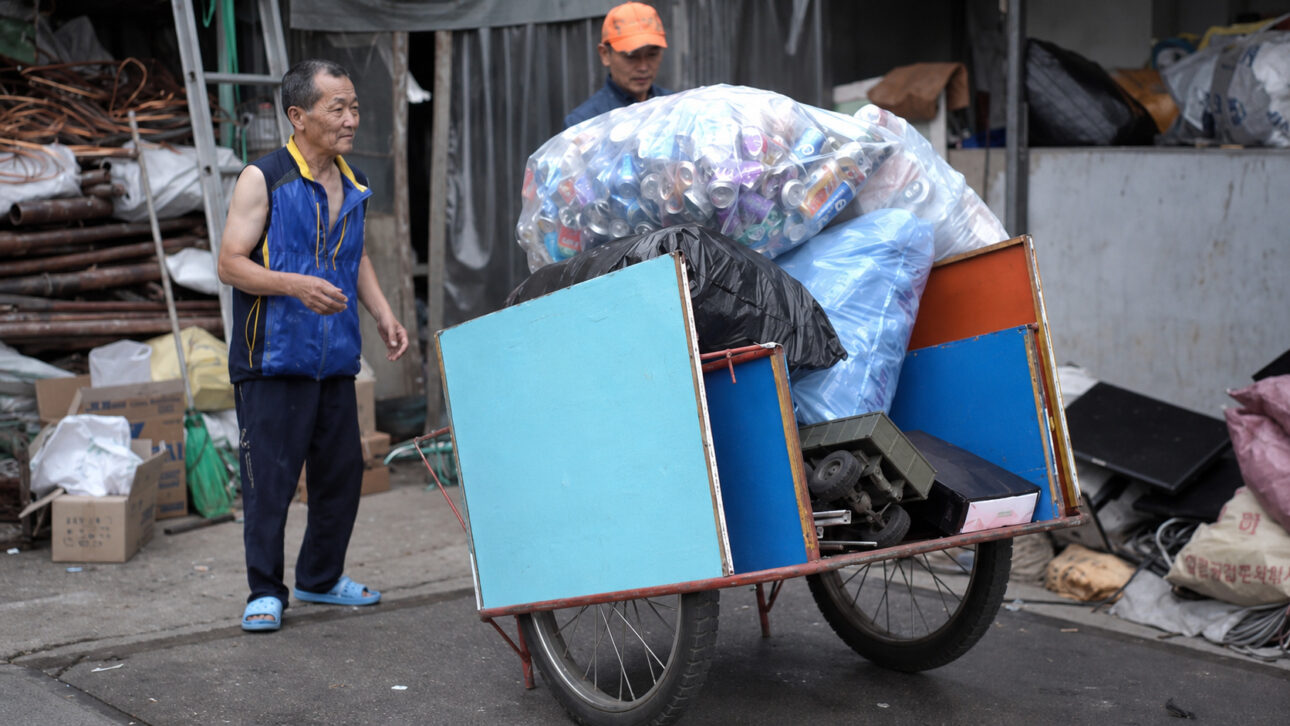
This recognition alone does not solve poverty in old age. Even so, it helps bring the work out of invisibility. It also shows that collecting cardboard requires time, strength, knowledge of routes, and physical endurance.
When this worker is ignored, the city benefits from the service without realizing who performs it. When recognized, it becomes easier to discuss income, respect, and protection for those who keep this stage of recycling active.
In South Korea, this debate is even more significant because many of these workers are elderly. The loaded cart ceases to be just a symbol of recycling and becomes an image of survival in old age.
The scene challenges the image of a modern and fully protected country
South Korea has become known for large companies, technological advancement, and highly urbanized cities. Even so, the cardboard carts show that a modern economy can also coexist with poor old age.
The worker Kim Jung mi summarized this insecurity when talking about retirement: “Retirement? I don’t know if I’ll ever be able to do that; I’ll probably work as long as I can.”
The phrase shows the fear of stopping. For some elderly, resting does not appear as a natural stage of life, but as a risk. Without sufficient income, continuing to work becomes a necessity.
That’s why the image is both moving and disturbing. It combines modern streets, huge cardboard carts, and elderly who still need to seek income in heavy tasks.
Cardboard on the streets has become a symbol of a social account that has not yet been settled
The cardboard carts in South Korea show a reality that goes beyond recycling. They reveal the pressure on the elderly, the fragility of retirement, and the reliance on undervalued work.
The data of about 45% of those over 65 years living with less than 50% of the median available income helps to understand why this scene is so powerful. It is not just an environmental issue. It is a social issue.
When the collector is seen as a resource recovery worker, the discussion shifts. The question is no longer just where the cardboard goes but who carries this weight every day.
If a wealthy and technological country still relies on the elderly pushing cardboard to survive, what does this scene reveal about the true cost of recycling and impoverished old age?





Be the first to react!