Portuguese
  Spanish


Discover Route 66, the legendary road that stretches almost 4,000 kilometers, crosses eight states, and keeps an important cultural legacy alive.
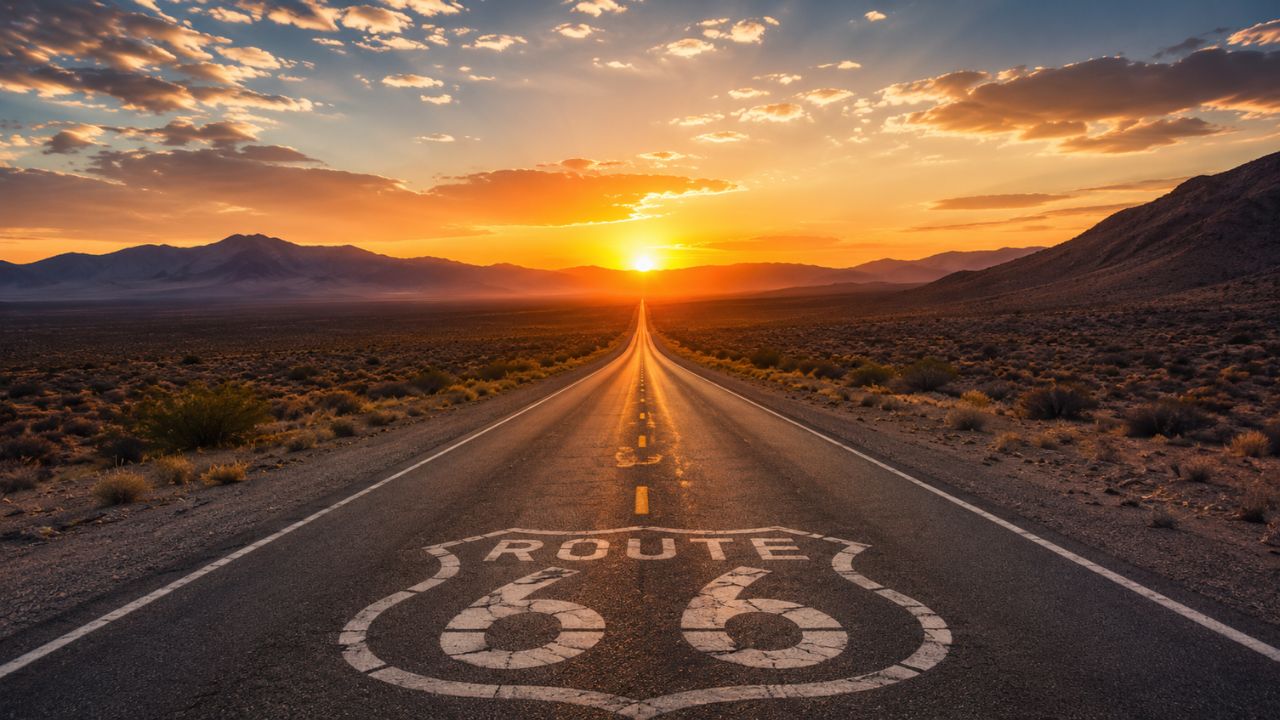
Route 66 remains one of the most recognized symbols of the United States’ road culture. Even after officially leaving the national highway system in 1985, the route continues to attract visitors interested in traveling almost 4,000 kilometers between Chicago and the California coast. Inaugurated on November 11, 1926, the road marked the expansion of land transport in the country and played an important role in the development of numerous communities along its path.
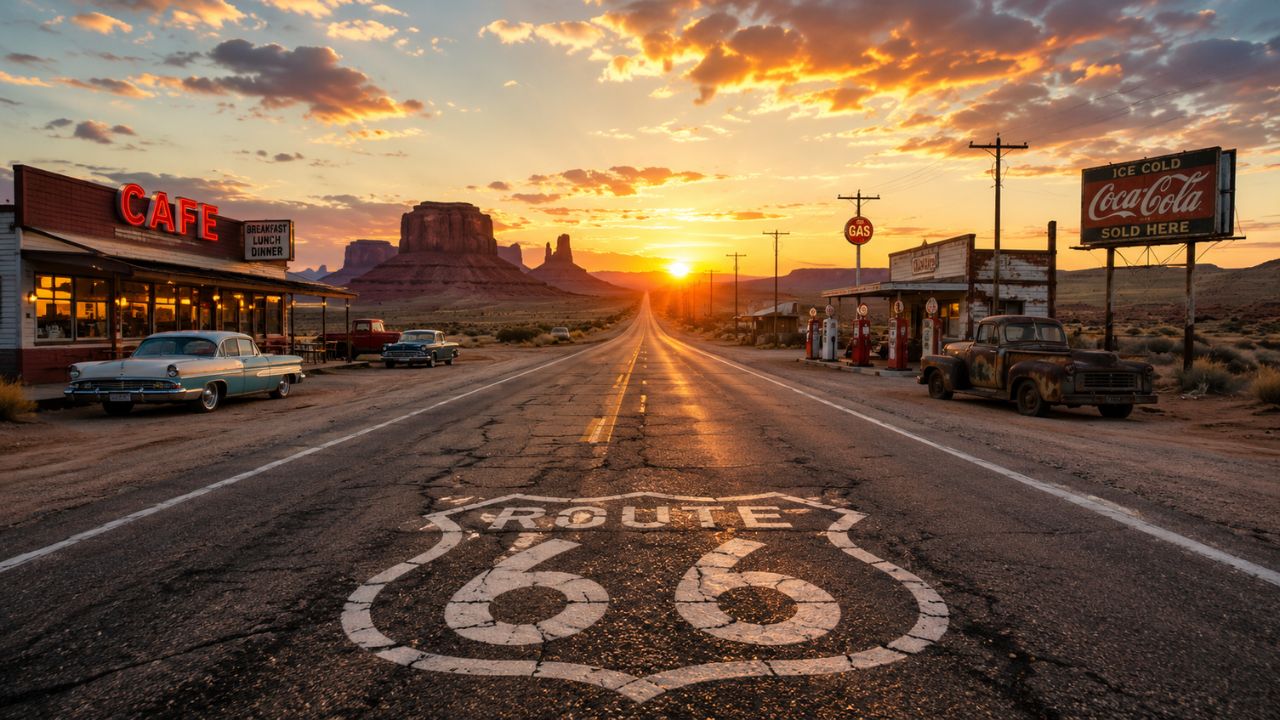
Currently, the historic route functions as a sort of open-air museum, gathering elements that help preserve the memory of different periods of American history. Neon signs, traditional establishments, and old buildings have transformed the route into one of the most sought-after destinations for those seeking experiences related to nostalgia and cultural tourism.
How Route 66 became a historical landmark
Over the decades, the road gained prominence for connecting the east to the west of the United States. Its role was especially relevant during the Great Depression, a period when thousands of people used the route to migrate in search of new opportunities.
-
For nearly 35 years, a famous luxury hotel in the United States concealed a secret bunker with a 25-ton door, over a thousand bunks, a dining hall for 400, and space designed to save the entire Congress from nuclear war.

-
China Invested 17 Billion Yuan to Build a Desert City with Museums and Theaters for 1 Million, but Only 28,000 Moved to Kangbashi Initially

-
Mother and Daughter Convert Small Garage into Full Apartment to Save Money and Stay United
-
Woman Leaves Restaurant Job to Become a Builder in Brazil, Launches Her Own Construction Brand “Construcida”



This movement contributed to the economic growth of small towns located along the highway. For this reason, Route 66 was nicknamed the “Main Street of America,” an expression associated with its importance for mobility and regional development.
Although modern interstate highways have taken over most of the national traffic, the historical value of the old road has remained preserved.
Data that helps understand the scope of Route 66
The length of the route is impressive and requires careful planning from travelers who wish to traverse it in its entirety.
| Feature | Information |
| Inauguration | November 11, 1926 |
| Original length | 3,940 km (2,448 miles) |
| States crossed | 8 |
| Official deactivation | 1985 |
| Starting point | Chicago |
| Final destination | California Coast |
The states crossed by the road are:
- Illinois
- Missouri
- Kansas
- Oklahoma
- Texas
- New Mexico
- Arizona
- California
Besides the long distance, the route crosses three different time zones and presents significant climate changes between its ends.
Route 66 offers different experiences in each state
One of the most striking features of the historic road is the diversity of landscapes encountered during the journey.
While some regions are formed by agricultural areas and vast plains, others feature arid landscapes typical of the American Southwest. This geographical variety gives each section its own identity.
The climate also changes considerably along the route. According to official data cited in the source, travelers can face anything from low temperatures in the Chicago area to intense heat in the desert areas near the Mojave Desert.
Main attractions along the route
Part of the tourist success of Route 66 is related to the points of interest scattered along the road. Many of them have become true postcards of the United States.
Among the locations highlighted by the National Park Service (NPS), are:
- Cadillac Ranch (Texas): art installation consisting of cars partially buried in the ground.
- Wigwam Motel (Arizona): lodging known for its teepee-shaped structures.
- Grand Canyon (Arizona): a tourist detour frequently included in travelers’ itineraries.
- Santa Monica Pier (California): considered the official end of the journey to the Pacific Ocean.
These destinations help explain why the road continues to spark interest even decades after being replaced by modern highways.
Planning is essential to travel the historic road
The complete crossing of the route can take two to four weeks, depending on the number of stops, attractions visited, and detours made along the way. The choice of vehicle also has a direct impact on the travel experience.
Those who choose a car or motorcycle have greater ease in accessing historic centers and urban tourist spots, although they need to frequently book accommodations. Meanwhile, travelers who take the route in a motorhome (RV) can save on food and lodging, but face challenges related to parking and navigating smaller towns.
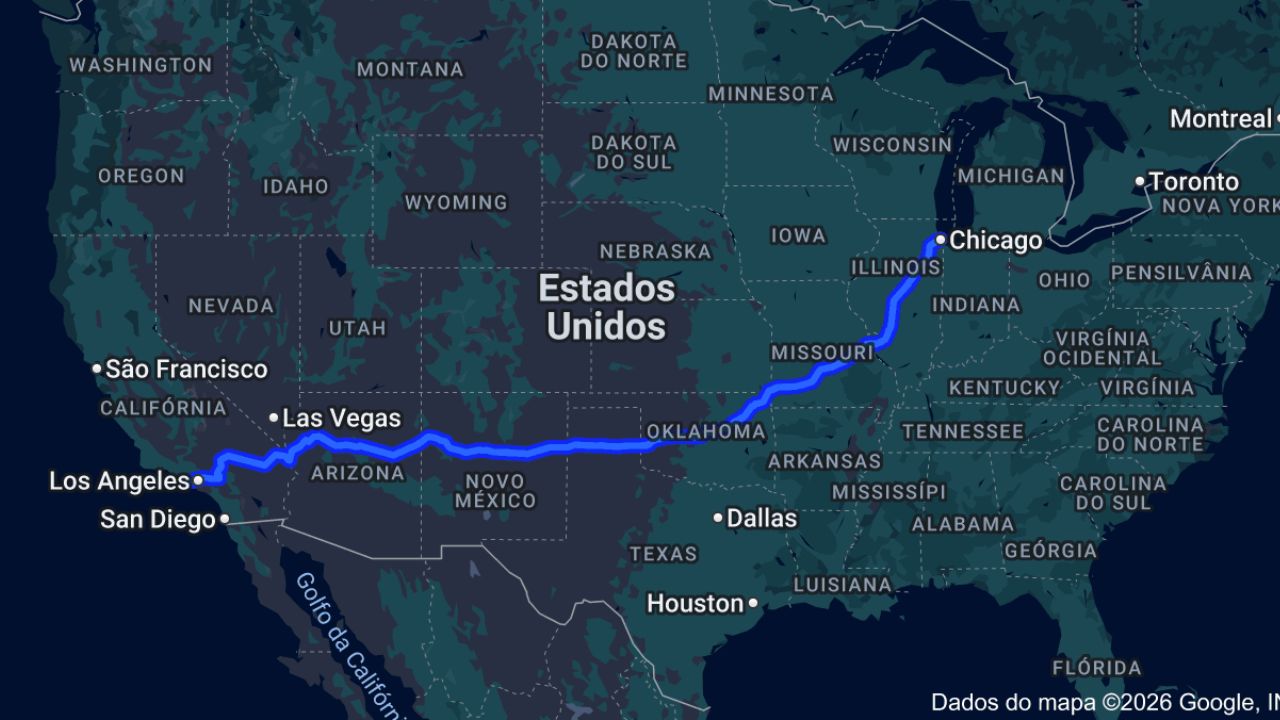
Additionally, some preserved segments of the original road require special attention during navigation. According to BM&C News, certain stretches may require physical maps or GPS systems specifically configured for the historic route.
Best time to visit Route 66
Weather conditions have a strong influence on the trip. According to BM&C News, the months of May, June, and September usually offer more favorable conditions for traveling the road. During these times, temperatures tend to be more balanced throughout much of the route.
On the other hand, summer can bring intense heat in desert regions, while winter poses a risk of snow in areas of the central-northern United States. Even without serving the same logistical function as in the past, Route 66 remains a reference in the history of American road transportation.
The preservation of family businesses, old buildings, and traditional attractions keeps the identity of the road alive. The result is a route that combines historical heritage, tourism, and cultural memory into a single experience.
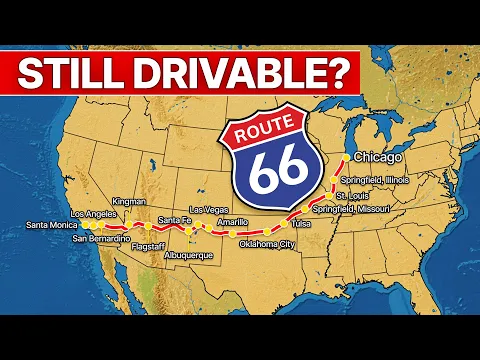

Decades after its removal from the official highway system on June 27, 1985, Route 66 continues to connect visitors to an important chapter in the history of the United States, turning each kilometer into a journey through time.
With information from BM&C News