






 Portuguese
  Spanish


On the oil platform, drinking water is born from seawater through desalination and reverse osmosis, sustaining isolated crews. The system filters, pressurizes, adjusts minerals, and disinfects the water, but reveals why turning the ocean into a faucet still depends on energy, maintenance, logistics, and high constant operational costs at sea.
On an offshore oil platform, the drinking water used by onboard workers is produced from seawater through desalination systems, such as distillation and reverse osmosis. The process takes place within the structure itself, during the routine operations that keep teams isolated in the ocean for weeks.
In a video released on Gabe Oliveira’s channel on YouTube, published on May 24, 2026, the topic shows how this system serves workers living on board in embarkation cycles, often hundreds of kilometers from the mainland, without access to rivers, wells, or urban supply networks. The water captured from the sea passes through filters, membranes, chemical treatment, remineralization, and disinfection before reaching the taps, kitchens, showers, and service areas.
Platform in the middle of the ocean needs to function like a small city
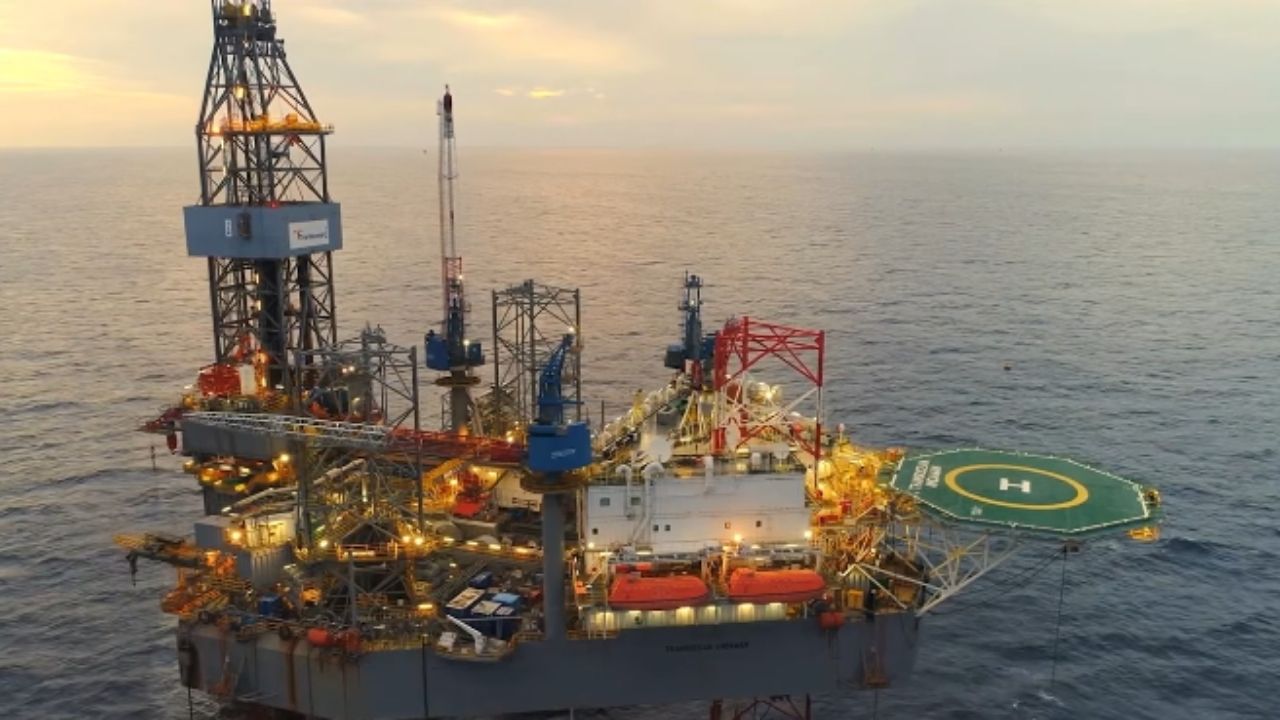
An oil platform is not just a workplace. For those who embark, it also functions as accommodation, cafeteria, operational center, rest area, and survival structure. During the offshore cycle, the crew sleeps, eats, showers, does laundry, and works without setting foot on solid ground.
-
METTL3 Protein Found to Play Crucial Role in Breast Cancer Metastasis, Surprising Scientists

-
Brazil’s Gaming Market Reaches $2.5 Billion, But Country Plays More Than It Produces

-
35-Ton Giant Robot Revolutionizes Solar Farm Construction with AI-Driven Precision

-
Son’s Journey to Care for Mother with Alzheimer’s: Finding New Ways to Preserve Memories



This isolation completely changes the logic of supply. Food can arrive by support ships, parts follow specialized logistics, and teams are transported by helicopters. As for drinking water, due to the volume needed every day, it must be produced or stored with extreme control on board.
In large-scale operations, the crew can gather from 150 to 300 people, depending on the structure and phase of the activity. When considering drinking, cooking, hygiene, cleaning, and bathing, the daily consumption becomes too high to rely solely on external transport. If water runs out, the operation becomes not just uncomfortable: it becomes unfeasible.
Therefore, the production of potable water within the platform is part of the essential engineering of offshore life. It does not appear to those who look at the structure from the outside, but it is as decisive as electricity, sewage treatment, operational safety, and communication with land.
Sea water seems abundant, but it cannot be drunk without treatment
The irony is that the platform is surrounded by water on all sides. The problem is that ocean water contains a large amount of dissolved salts, as well as particles, microscopic organisms, and possible contaminants. On average, seawater has about 35 grams of salts per liter, a concentration too high for direct human consumption.
Drinking saltwater does not hydrate. On the contrary, it forces the body to spend water trying to eliminate the excess salt through the kidneys. In practice, seawater increases dehydration instead of quenching thirst. That is why it needs to go through a technical process before becoming potable water.
On platforms, this transformation depends on systems prepared to operate continuously in an aggressive environment, with sea spray, vibration, operational pressure, and the need for redundancy. The captured water cannot simply enter a machine and come out ready to drink. Before that, it needs to be protected against sand, organic matter, incrustations, and microorganisms.
This care explains why offshore desalination is not just “removing the salt.” The process involves capture, pre-filtration, chemical control, salt separation, mineral adjustment, disinfection, storage, and internal distribution. Each stage reduces a different risk.
Distillation uses heat that already exists within the platform
One of the technologies used to obtain potable water at sea is distillation. The logic is ancient and relatively simple: saltwater is heated, evaporates, leaves the salt behind, and then the vapor is condensed back to the liquid state. The result is water without the salt load that originally existed.
On a platform, this process can take advantage of heat generated by engines, generators, and other equipment. The strategic point is to reuse thermal energy that, otherwise, could be wasted. Thus, distillation ceases to be just an expensive boiling process and becomes part of the energy logic of the operation itself.
Even so, distillation has limits. It depends on available heat, robust equipment, and constant maintenance. In certain operations, it can be efficient; in others, it may not deliver the necessary volume to meet the crew’s entire routine on its own.
For this reason, many offshore structures also resort to another method: reverse osmosis. This technology has become one of the most important solutions for transforming saltwater into potable water in isolated environments, ships, islands, coastal cities, and industrial facilities.
Reverse osmosis pushes water against high-precision membranes
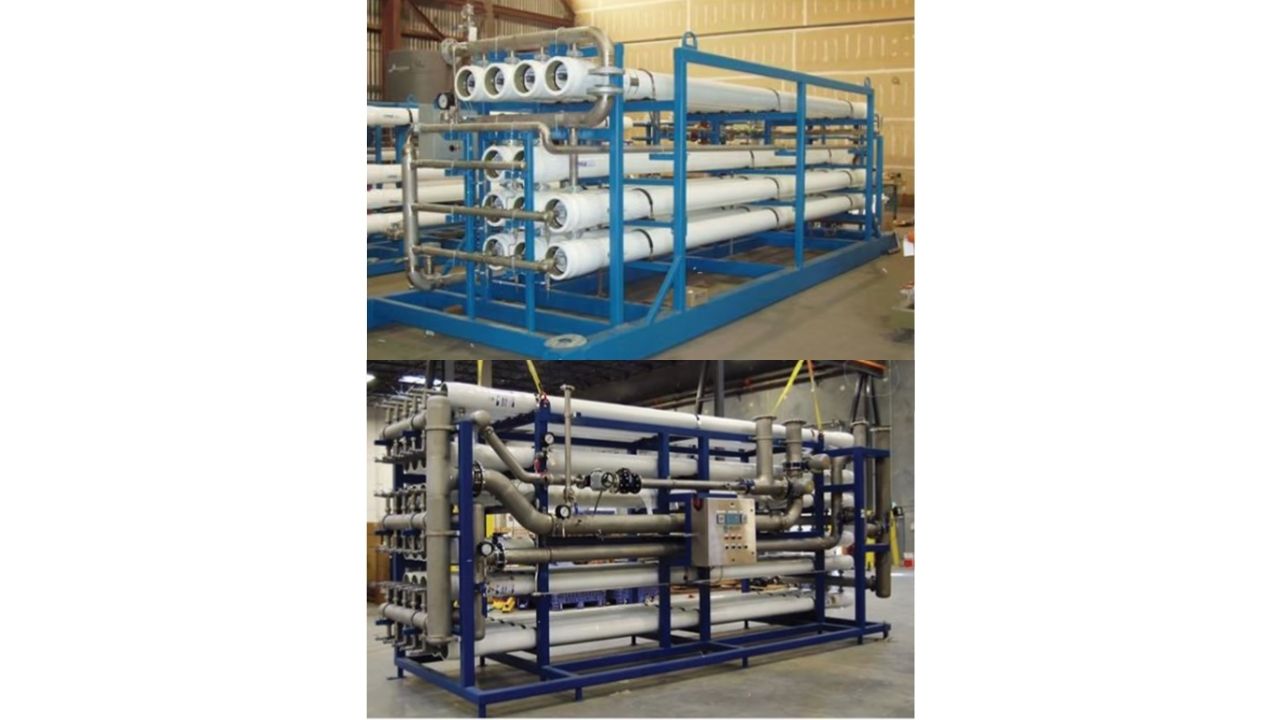
Reverse osmosis works differently from distillation. Instead of evaporating the water, the system pressurizes seawater against special membranes. These membranes allow water molecules to pass through but retain a large portion of dissolved salts, particles, microorganisms, and other undesirable elements.
For this to happen, high-pressure pumps come into action. The saltwater needs to be forced to cross the membrane in the opposite direction of the natural osmosis phenomenon. It’s a silent but intense engineering: the platform’s faucet depends on pressure, filters, membranes, and chemical control working in sequence.
Before reaching the membranes, the captured water passes through coarser filters and then through finer filtration stages. This pre-treatment prevents sand, algae, sediments, and organic matter from damaging expensive components. Without this protection, the membranes could quickly lose efficiency.
After separation, the resulting water is still not ready for consumption. Being very pure, it may need mineral adjustment to improve taste, stability, and suitability for continuous use. Then, it undergoes disinfection, which may involve chlorine, ultraviolet light, or a combination of methods, before proceeding to storage tanks.
Potable water needs to be safe, stable, and distributed on board
Producing potable water on a platform does not end when the salt is removed. The water needs to be stored in appropriate tanks, protected against contamination, and distributed through a reliable internal network. This includes quality control and monitoring routines because the crew depends on it every day.
This care applies to the water used in the kitchen, drinking fountains, showers, and cleaning activities. For those working on board, the water that comes out of the tap seems ordinary, but it carries a complex technical chain behind it. It started in the ocean and went through several barriers before becoming safe.
The invisible part of this system is precisely the most important. Pumps need to work, filters need to be replaced, membranes need to be protected, tanks need to be sanitized, and quality parameters need to be monitored. At sea, simple failures can turn into major logistical problems.
That’s why offshore potable water is treated as a critical operational item. It is not a luxury, comfort, or detail: it is a basic condition for keeping people living and working in an isolated structure, with long shifts and intense routines.
If the technology exists, why hasn’t it solved the world’s thirst?


The strongest question arises precisely from the success of the platforms. If it is possible to produce potable water in the middle of the ocean, why do so many regions still suffer from a lack of safe water? The answer lies less in the existence of the technology and more in the cost of applying it on a large scale.
Desalinating water requires energy, equipment, maintenance, parts, chemicals, qualified technicians, and distribution infrastructure. On an oil platform, this cost can be absorbed because the operation already demands a large energy structure and involves high values. In poor communities or regions without a reliable power grid, the equation changes completely.
Reverse osmosis has evolved greatly and become more efficient, but it still depends on high-pressure pumps and well-maintained systems. Distillation can also work, especially when heat is available, but it does not eliminate the economic challenge. Turning the ocean into a source of urban supply requires scale, planning, and money.
There are initiatives that combine desalination with solar energy and other decentralized models, especially for isolated communities. Even so, these solutions face limits of capacity, initial cost, maintenance, and continuous operation. The technology exists, but it does not reach everyone with the same ease.
Offshore engineering shows a real, but not simple, solution
The production of potable water on oil platforms reveals a powerful contradiction. The sea, seen for centuries as unsuitable for drinking, today supplies workers who live far from any natural source of fresh water. The difference lies in the engineering applied between the capture and the tap.
This reality also shows that the water crisis is not just a matter of quantity on the planet. There is an abundance of water, but much of it is not ready for human consumption. The challenge is to transform physical availability into safe, affordable, and continuous access.
In the offshore environment, this problem is solved because the operation requires autonomy. The platform needs to produce energy, treat effluents, receive supplies, maintain communication, ensure safety, and generate potable water every day. It is an industrial structure that functions like a compact city at sea.
But bringing this same standard to cities, villages, and vulnerable regions requires a different kind of response. It’s not enough to just copy the technology: it’s necessary to adapt cost, scale, maintenance, energy, and distribution. That’s where the solution goes beyond being just technical and becomes social, economic, and political.
A common faucet hides an entire chain of survival
For the crew, the routine can make everything seem normal. The worker wakes up, brushes their teeth, takes a shower, fills the bottle, and heads to the shift. The water is there, like in a regular house. Except, in that case, it came from the sea and went through an entire system to become potable water.
This naturalness might be the most impressive point. What seems simple at the faucet’s end depends on reused heat, industrial pressure, filters, membranes, tanks, sensors, and maintenance. At sea, every liter consumed is the result of an invisible operation that cannot fail.
The technology used on platforms does not eliminate the complexity of the global water crisis, but it helps explain why desalination is one of the most important alternatives for the future. It proves that transforming saltwater into potable water is possible, although it still costs a lot and depends on sophisticated infrastructure.
In the end, the platform in the middle of the ocean functions as a real laboratory of modern survival. It shows that engineering can overcome salt, distance, and isolation, but also reminds us that no technical solution solves everything alone.
Do you think desalination should receive more public investment to supply cities in the future, or do the energy and maintenance costs still make this solution distant from Brazilian reality? Leave your opinion in the comments.


