Portuguese
  Spanish


Almost entirely dependent on foreign fertilizer, the country bets on a megamine in Autazes to produce at home an input that agribusiness cannot live without
The world’s largest agribusiness has an uncomfortable secret: it depends almost entirely on foreign sources to fertilize its crops. Brazil imports practically all the potassium it uses, one of the essential nutrients for soybeans, corn, and coffee, and this dependency has become a strategic risk. Now, a megamine in the Amazon wants to start changing this game.
The potassium project in Autazes, Amazonas, anticipates an investment of US$ 2.5 billion and promises to reduce the import dependency that keeps agribusiness awake at night. The idea is simple and powerful: to produce domestically part of the fertilizer that today arrives by ship from the other side of the world, shortening an expensive and vulnerable supply chain.
Brazil imports 95% of the potassium it uses
The size of the dependency is alarming. According to AgFeed, Brazil imports about 95% of all the potassium it consumes, totaling approximately 14 million tons per year, mainly from Canada, Russia, Belarus, Germany, and Israel.
-
Grendene’s Sales Decline in 2025, but Melissa Brand Surges 36% and Becomes Key Focus

-
World’s Largest Single-Line Pulp Mill Opens in Brazil, Costing $4.3 Billion

-
Pix Processed $35 Trillion in 2025, Becoming Brazil’s Leading Payment Method
-
Nubank Reaches 131 Million Customers and Reports Record Profit of $2.87 Billion in 2025


Relying this way on a few countries is a huge vulnerability for those who feed the world. If a crisis disrupts supply, Brazilian crops are left without nutrients, and production plummets. Being the largest food exporter and, at the same time, a hostage to imported fertilizer is a dangerous contradiction, and it is this contradiction that has placed national potassium at the center of the food security debate.
A US$ 2.5 billion mine in Autazes
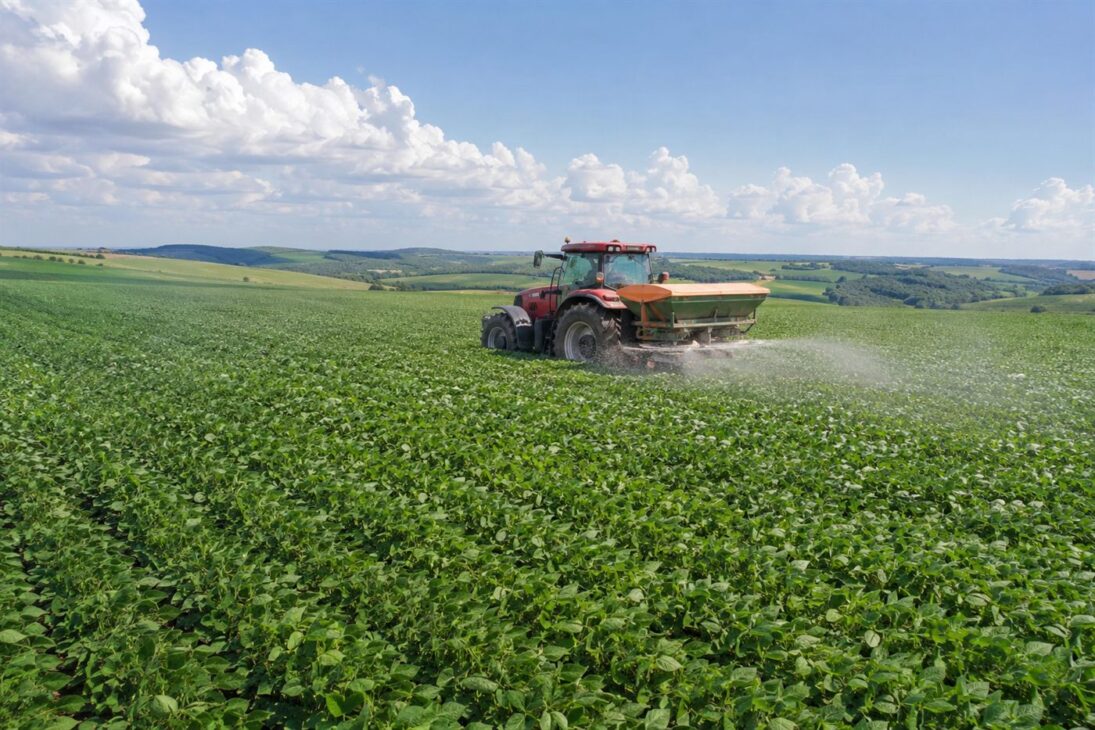
The answer is being unearthed in the heart of the Amazon. AgFeed details that the project, led by Brazil Potash through Potássio do Brasil, anticipates a total investment of US$ 2.5 billion, of which about US$ 250 million has already been applied.
It is one of the largest fertilizer mining projects ever planned in the country. Bringing such an operation to the interior of Amazonas requires logistics, licenses, and a lot of capital. Betting billions to produce at home what is readily bought abroad is the kind of investment that changes the matrix of an entire sector, and that is precisely the goal of the megamine.
20% of demand already in the first phase
The production numbers show the reach of the project. According to Compre Rural, the first phase should produce 2.4 million tons per year, equivalent to about 20% of Brazilian demand, with a second phase capable of reaching 5 million tons, or 40% of what the country consumes.
Supplying 20% of the demand right away would already be a revolution for a country that currently produces almost nothing. And there is room to double. Going from practically zero to 40% of national demand is the kind of leap that transforms a chronic importer into a relevant producer, reducing the agro sector’s exposure to crises abroad.
Why it costs much less to come from Autazes
The advantage is not just geopolitical, it’s financial. Compre Rural points out that the international transportation of potassium costs about US$ 200 per ton, while the estimated logistical cost of the Amazonian mine is only US$ 50 per ton, taking advantage of barge transportation on the region’s rivers.
This cost difference is enormous when multiplied by millions of tons. Producing close to where it is consumed cuts freight, exchange rates, and time. When the transshipment of fertilizer is four times cheaper coming from within the country, the calculation starts to make a lot of sense, and it is this economy that can make national potassium truly competitive.
The vulnerability that global crises exposed
The urgency of the project grew with global turbulence. A large part of the potassium imported by Brazil comes from regions marked by tensions and sanctions, causing the price of fertilizer to skyrocket with each new international crisis. Brazilian agriculture has already felt these jolts firsthand.
Reducing this exposure is a matter of food sovereignty. A country that depends on geopolitical moods to fertilize its crops is always at the mercy of factors it cannot control. Bringing production home is shielding Brazilian food from wars and embargoes on the other side of the planet, and this argument has gained strength in recent years.
What is still missing to get off the ground
Despite the progress, the project still has stages ahead. AgFeed indicates that production should start around 2029 or 2030, with construction depending on investments in the hundreds of millions of dollars throughout 2026 and the entry of a strategic partner in the venture.
Projects of this scale in the middle of the forest are complex and take time. Each license, each kilometer of logistics, and each round of financing is an obstacle to overcome. Between the announcement and the first grain of national potash coming out of the mine, there are still years of hard work, and the schedule will be the project’s big test.
Jobs and impact on the region’s economy
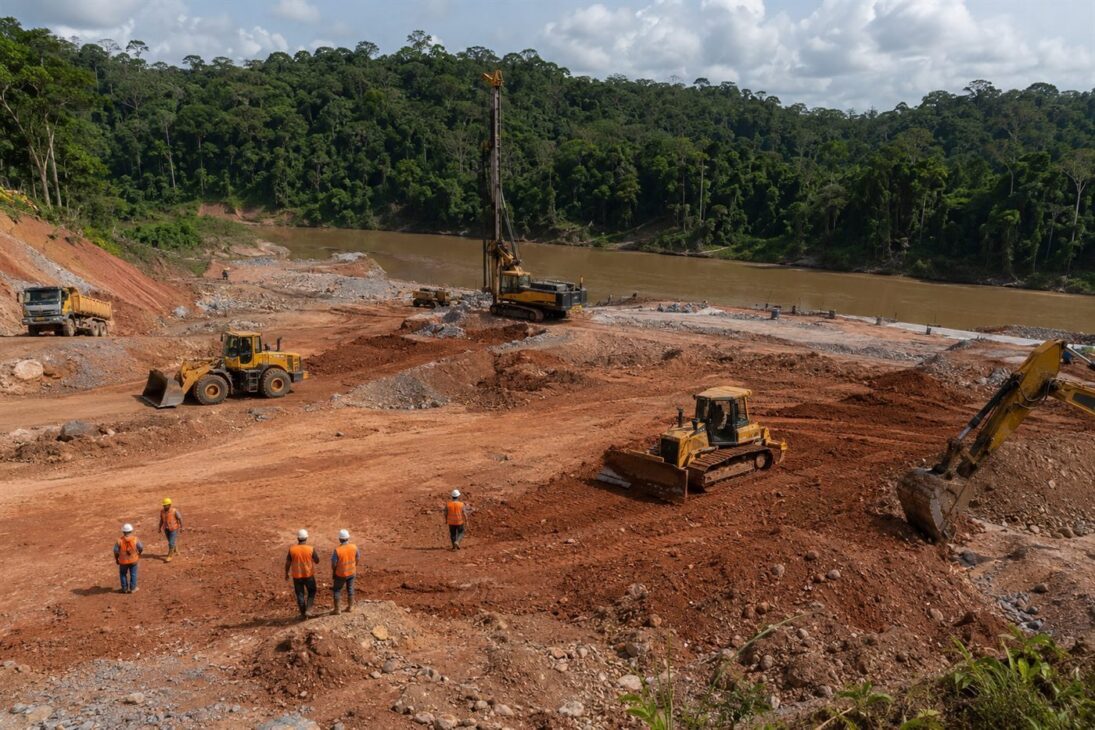
The local effect promises to be significant. According to AgFeed, the construction phase should mobilize, on average, about 2.6 thousand workers, reaching a peak of 4 thousand, in a municipality in the Amazon where formal job opportunities are scarce.
For the region, the arrival of a billion-dollar project means income, services, and economic movement. A project of this size irrigates an entire local chain. Bringing employment and investment to the interior of Amazonas is an impact that goes far beyond fertilizer, and makes the mine also a bet on regional development.
Why potash is strategic for agriculture
At its core, the dispute over potash is a dispute over food. Without fertilizer, crop productivity falls, and less food means higher prices on everyone’s table. Ensuring the supply of this input is ensuring the country’s own ability to produce.
The question remains whether Brazil will finally be able to stop relying almost entirely on imported potash, or if the mega mine will encounter the obstacles that have already stalled so many projects. Did you know that the world’s largest food exporter needs to buy almost all the fertilizer it puts in the soil from abroad?