





 Portuguese
  English
  Spanish
 5 min of reading
  0 comments


With More Than 140 Years, Historical Centennial Bridge Still Connects Cachoeira and São Félix, Uniting Tradition, Imperial Engineering, and Recôncavo Baiano Culture.
In the heart of the Recôncavo Baiano, a centennial bridge still fulfills the role of connecting two neighboring cities separated by the Paraguaçu River. The Imperial Bridge D. Pedro II, inaugurated in 1885, is more than a physical link: it is a symbol of modernization, resilience, and cultural identity for the people of Cachoeira and São Félix.
Even with its more than 140 years, the structure remains steadfast, maintaining the charm of 19th-century engineering and continuing to transport pedestrians, vehicles, and trains.
The Emergence of a Historical Need
Since the 18th century, residents of the Cachoeira region sought a safe way to cross the Paraguaçu River.
-
Provatti popcorn corn is removed from shelves after label says “gluten-free” while also warning about wheat

-
The United States government approved a potential sale of 100 portable Stinger anti-aircraft missiles to the Brazilian Army, in a package estimated at around 330 million dollars that still depends on negotiations between the two countries.

-
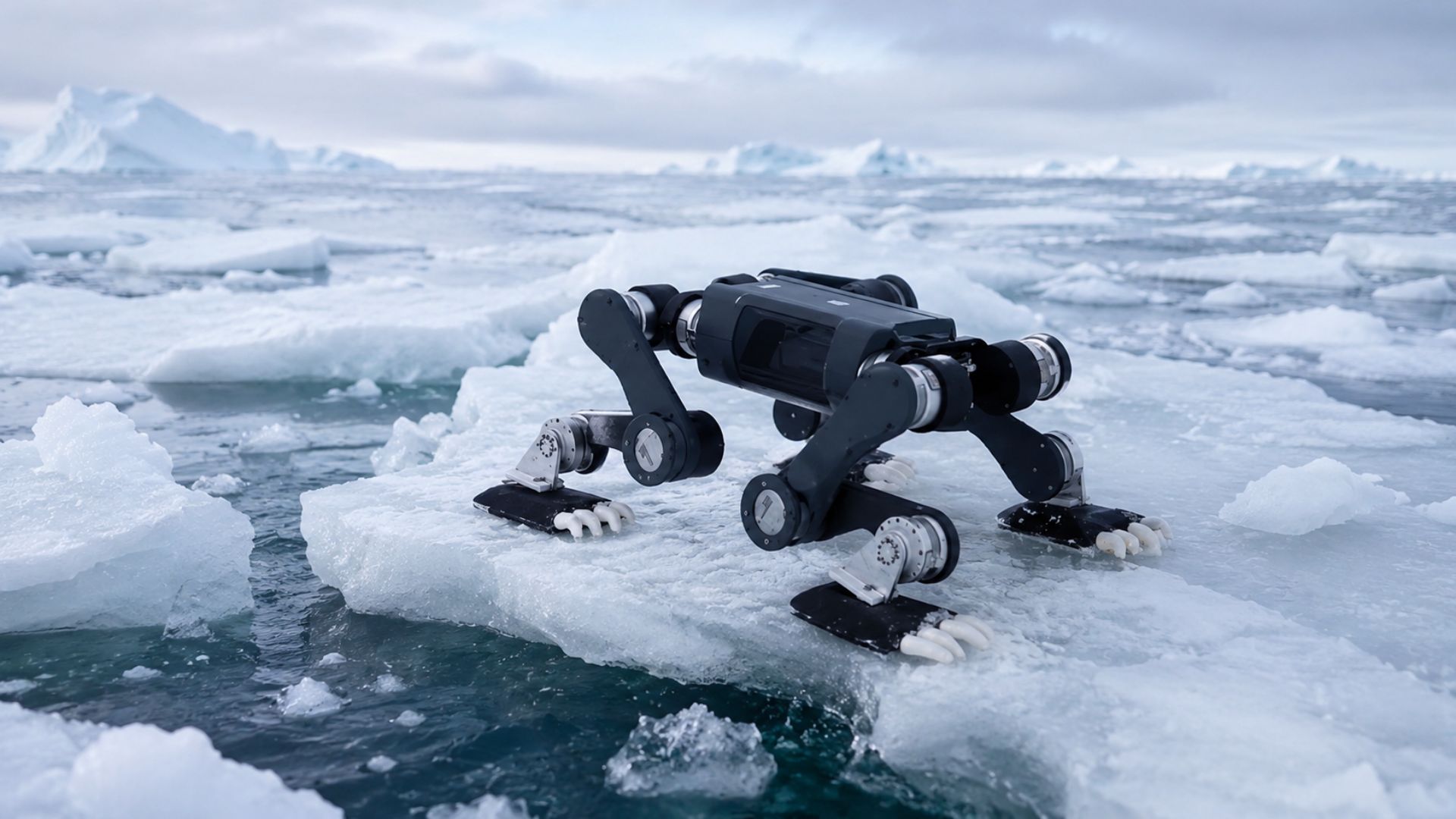
A four-legged robot dog, modified with bear paws and artificial intelligence navigation, has become the first of its kind to cross floating ice blocks in the Arctic Ocean.
-
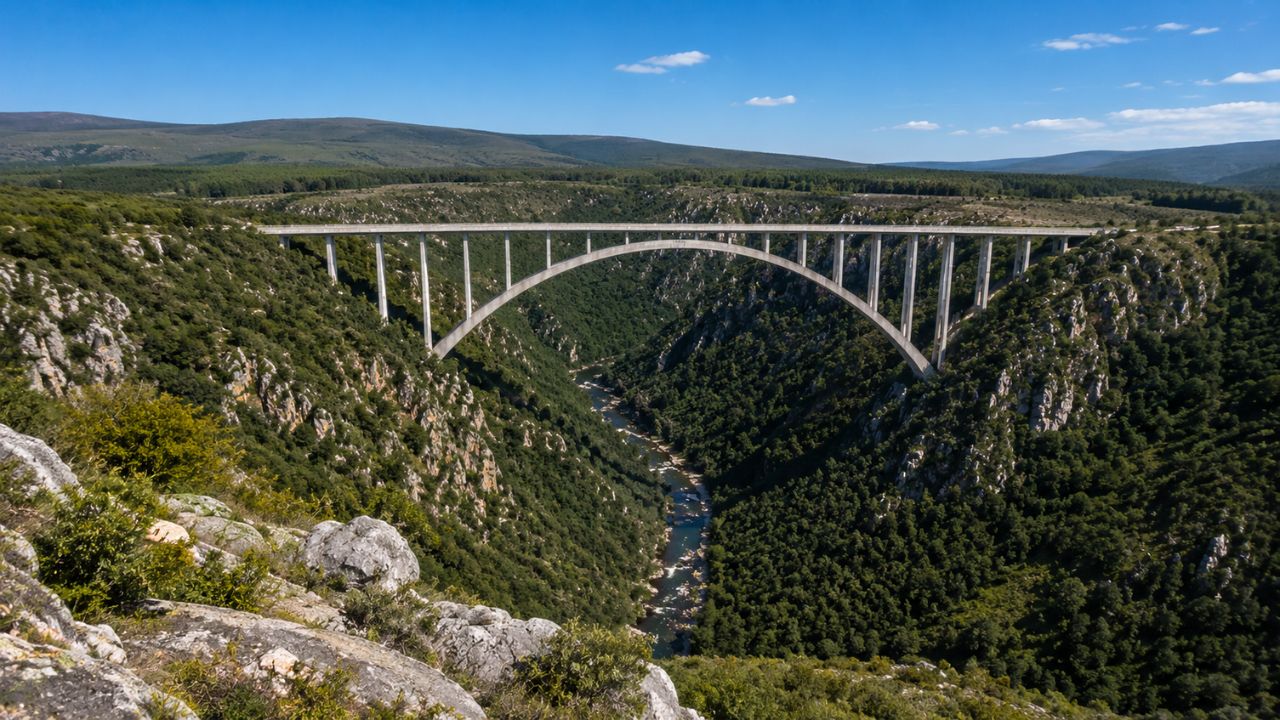
Suspended at more than 200m high, this bridge was built to replace a dangerous road and today offers a bungee jump with more than seven seconds of free fall over a gorge in South Africa; Get to know the Bloukrans Bridge.


At that time, the crossing was done by ferries, which did not offer security or capacity for large loads.
The advancement of the tobacco, sugar, and wealth cycles of Chapada Diamantina further increased the demand for a permanent link between the banks.
The decisive push would come in the 19th century, during the Empire. In 1865, Dom Pedro II authorized the creation of a railway to connect the interior of Bahia to the coast.
Thus, the need to build a bridge over the Paraguaçu arose, linking the tracks that reached São Félix to the city of Cachoeira.
English Design and Baiana Assembly
The bridge’s construction was undertaken by a British company called Brazilian Imperial Central Bahia Railway Company Limited, which brought the metal structures ready from England.
The pieces arrived disassembled and were assembled on-site under the direction of French engineer Frédéric Merci.
Oversight of the work was handled by Bahian engineer Afonso Glicério da Cunha Maciel.
The project lasted from 1882 to 1885. Engineer Hugh Wilson, known for his railway projects in Brazil, also played a crucial role, working on the concession of the railway and the bridge.
On July 7, 1885, the structure was officially inaugurated with great festivities.
Fireworks, music, and a crowd marked the celebration. The president of the Province of Bahia, José Luiz de Almeida Couto, represented the emperor at the event.
A Link Between Cities, Cultures, and Times
The Dom Pedro II Bridge connects the cities of Cachoeira and São Félix. Both are situated on the banks of the Paraguaçu River and have great historical significance.
Over the decades, the bridge has come to integrate not only the urban landscape but also the cultural life of the region.
Currently, the bridge is used for vehicle, pedestrian, and train traffic. As it has a single lane, traffic is alternated.
The same space serves for both cars and locomotives, which requires care and coordination. Despite this, it remains the only direct route between the two cities.
The historical value is immense. In 2002, the bridge was listed as state heritage.
Metal Structure and 19th-Century Engineering
With a length of 365 meters, the bridge was considered one of the largest engineering works in Brazil at its time.
Its width is about 9 meters, allowing for the passage of tracks and vehicles side by side.
The structure has four spans of approximately 91 meters each, supported by three central pillars and stone abutments at the ends.
The style is typical of 19th-century railway engineering. The metal trusses in the shape of “X”, called lattice, form a through truss structure, through which the train passes “inside” the beams.
The main materials used were wrought iron, imported from England, and stone masonry for the pillars.
The assembly required precision, as all the pieces arrived disassembled.
The engineering of the time employed innovative techniques for Brazil, making the bridge a national reference in terms of technology applied to infrastructure.
Recent Repairs and Incidents at the Centennial Bridge
Despite its age, the bridge remains functional thanks to restoration work done over time. Between 2010 and 2012, the concessionaire VLI (successor to the Centro-Atlântica Railway) carried out a series of repairs. The wooden walkway was replaced with a metal one, anti-corrosive paint was applied, and basic lighting was installed.
In January 2025, a derailment drew attention to the risks. A cargo train suffered thermal expansion on the tracks and derailed on the bridge.
The structure was temporarily closed but did not suffer serious damage. Civil Defense monitored the repairs and the bridge was reopened days later, with speed and load restrictions.
Today, the bridge undergoes regular inspections. Engineers assess the stability of the pillars, the condition of the metal pieces, and the tracks. With the necessary care, the structure continues to be used without major issues.
Centennial Bridge: A Landmark That Withstood the Republic
Even after the Proclamation of the Republic, the name of the bridge was maintained.
The homage to Dom Pedro II was not removed, unlike what happened with other monuments. This shows the affection and respect of the local population for imperial history and the figure of the monarch.
Popularly, it is also called the “Iron Bridge” or “Metal Bridge”.
These nicknames emphasize its structure, different from the wooden or concrete bridges that predominate in other regions. The original name, however, remains the official and most used.
Economic Impacts and Transformation
In the early years after its construction, the bridge boosted the local economy. Agricultural and mineral products were delivered by train to Cachoeira, crossed the bridge, and continued by boat to Salvador. This made the region a strategic point for trade.
Over time, new railway and road routes diverted traffic, removing Cachoeira and São Félix from the main route. This affected the economy, but helped preserve the heritage.
The absence of large urban renovations maintained the colonial scenery of the cities, which today thrive on historical and cultural tourism.
For the residents of Cachoeira and São Félix, the bridge is not just a passage. It represents the history of the region, a past of glory, the talent of engineering, and resilience against time. The structure appears on postcards, is the subject of exhibitions, and is present at commemorative events.







-

-

-

-

6 people reacted to this.