Portuguese
  Spanish


Construction index tracks costs of works, materials, and labor, directly affecting contracts of off-plan properties
An important financial update continues to draw attention in the Brazilian real estate market, especially among buyers of off-plan properties. The National Construction Cost Index, known as INCC, directly influences the installments paid during the construction and tracks the variation of civil construction costs in the country. According to MRV, the index is used to update values throughout the execution of the project and helps the consumer understand the adjustments applied to the contract. FGV IBRE, responsible for the monthly calculation of the indicator since 1940, monitors expenses related to materials, equipment, services, labor, finishes, and installations. This movement shows how the INCC functions as a thermometer for civil construction and reorganizes financial planning before the keys are handed over.
Technical indicator reveals direct impact on off-plan property
The application of the INCC occurs mainly during the construction period and, therefore, affects those who are still paying installments directly to the builder. After all, the index updates the outstanding balance as the construction costs change over time. Additionally, the calculation considers data from capitals such as São Paulo, Rio de Janeiro, Belo Horizonte, Brasília, Recife, Salvador, and Porto Alegre, forming a weighted average calculated by FGV IBRE. The practical impact for the buyer requires attention, as the installments may increase before the project is delivered.
Types of INCC help understand the adjustments
The index has three modalities, all of which track civil construction costs in different periods. The INCC-M considers data collected between the 21st of the previous month and the 20th of the current month. The INCC-DI uses information between the first and the last day of the reference month. The INCC-10 considers data between the 11th of the previous month and the 10th of the current month. Among them, the INCC-M appears as one of the most well-known modalities in the real estate market.
-
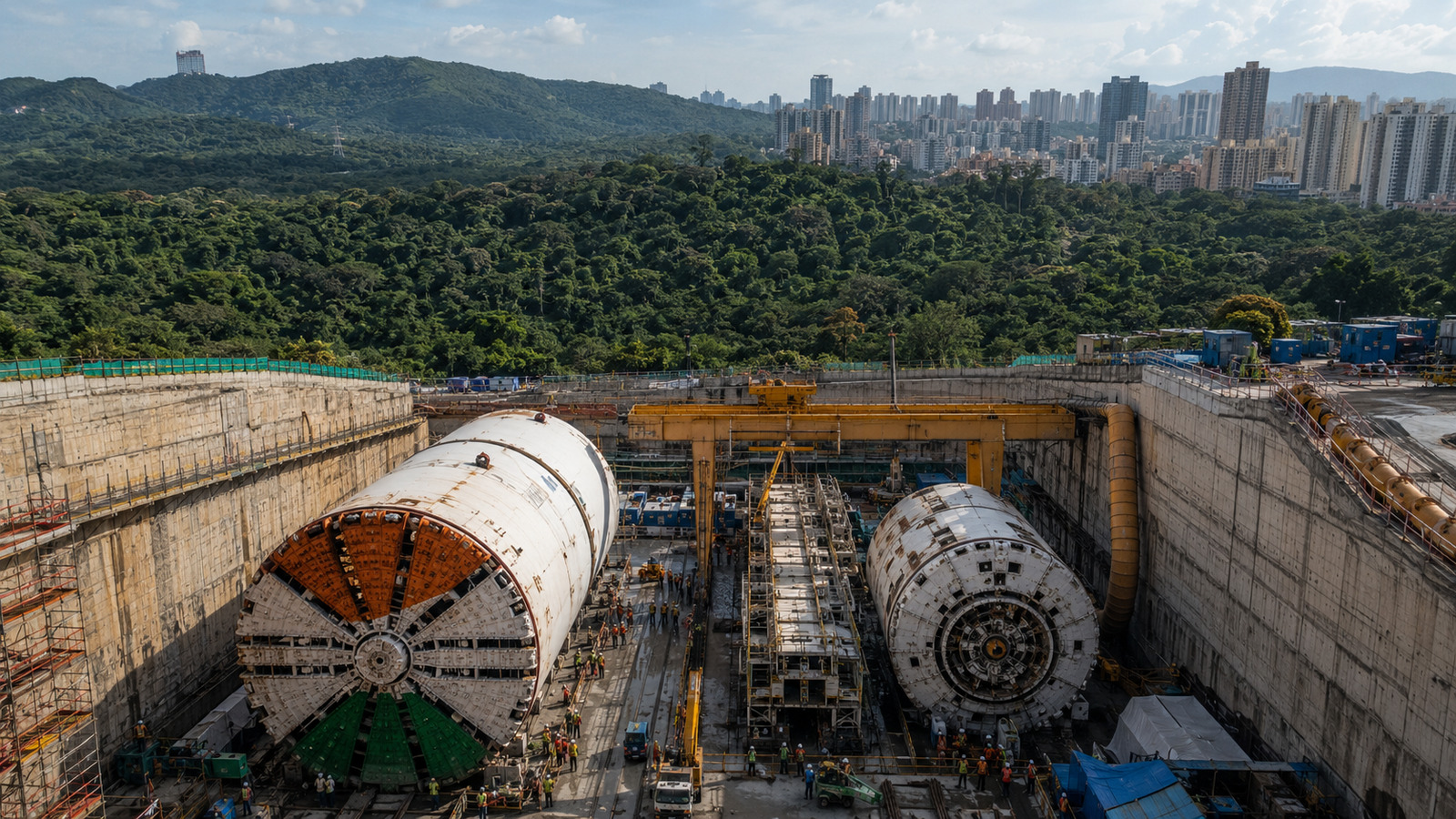
India Begins Drilling Massive Twin Tunnel Under National Park to Cut Mumbai Commute by 12 km and Save Up to 1 Hour

-
Detroit Microhouse Village Offers Former Homeless Residents Ownership After 7 Years: First 3 Tenants Receive Deeds

-
Brazilian Factory in Ivoti Produces 500 Modular Steel and Fiberglass Concrete Homes Following 2024 Floods, Securing $13 Million Contract
-
Brazilian Startup Develops Recycled Plastic Bricks, Cutting Construction Costs by 40% and Speeding Up Building by 90%




Recent evolution shows pressure on construction costs
According to FGV IBRE, the INCC-M accumulated over 12 months reached 6.28% in April 2026. In April 2026, the index rose 1.04% in the month and accumulated 6.28% over 12 months. In March 2026, the monthly variation was 0.36%, with an accumulated of 5.81%. In February 2026, the indicator registered 0.34% in the month and 5.83% over 12 months. In January 2026, it marked 0.63% in the month and 6.01% accumulated.

Adjustment changes installments before the delivery of the keys
During the construction phase, payments are usually made directly to the builder. Consequently, the outstanding balance is often adjusted by the INCC until the delivery of the project. This adjustment can affect the property down payment, installments paid to the builder, intermediate reinforcements, and outstanding balance. After the issuance of the Habite-se and the delivery of the keys, the remaining amount usually transitions to bank financing or direct settlement. Thus, the index ceases to be the main factor for updating after the end of construction.
INCC does not function as interest in the contract
Although it increases values during the construction, the INCC is not an interest charge. In practice, it functions as a monetary adjustment and updates contracts according to the variation in construction costs. Therefore, the index exists to protect the progress of works against fluctuations in material and labor prices. It helps maintain the financial balance of the construction, avoid distortions, and preserve the standard of the projects.
Ready properties follow a different financial logic
Normally, the INCC does not affect ready properties. The index is mainly applied to off-plan properties while construction is still underway. After the delivery of the keys, other financial conditions come into effect according to the contract signed with the institution responsible for financing.
In this scenario, do you believe that the buyer of an off-plan property should receive clearer explanations about the impact of the INCC before signing the contract?