Portuguese
  Spanish


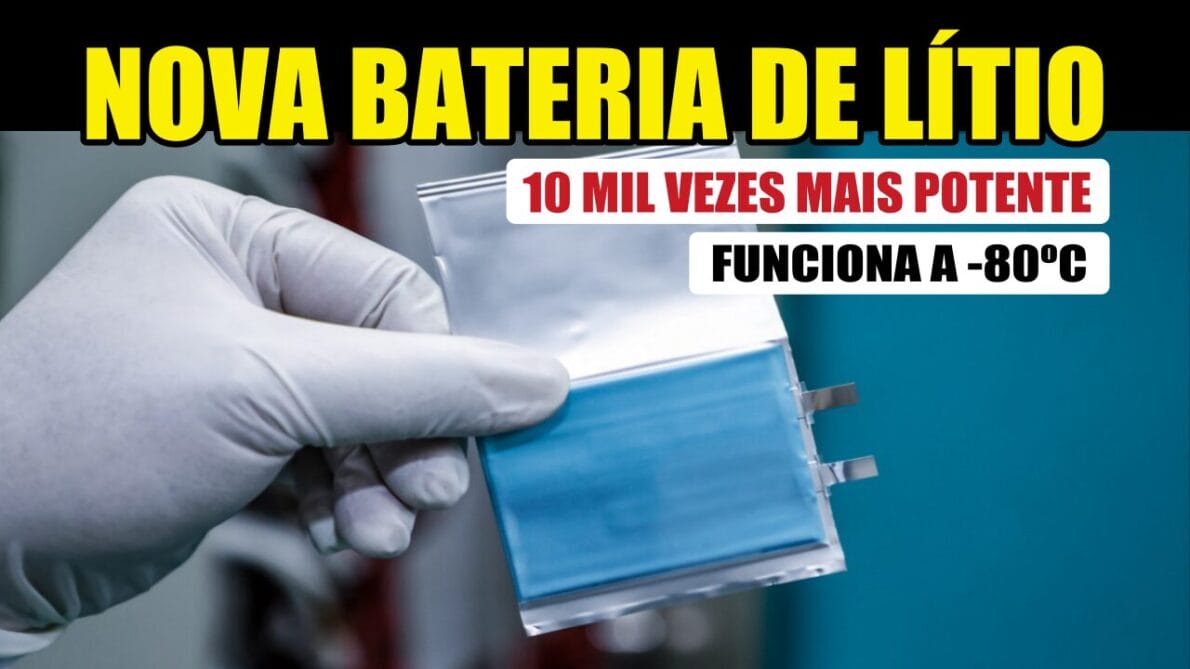

Discover China’s Revolutionary Lithium Battery, 10,000 Times More Powerful and Capable of Operating at -80ºC, Perfect for Extreme Winters.
China ‘makes a bold statement’ with this battery that is 10,000 times more powerful and withstands extreme cold. According to the South China Morning Post, Chinese scientists have developed a new electrolyte that allows lithium-ion batteries to charge and operate in extremely low temperatures, down to -80ºC (less than 112 degrees Fahrenheit).
This development represents a crucial solution to the challenges associated with operating and charging batteries in electric vehicles and aircraft under extreme weather conditions.
The Battery Problem:
Lithium-ion batteries have become the primary energy storage source in electronic devices and electric vehicles. However, their performance is significantly impaired in cold temperatures, which reduces their charge retention capacity and prolongs recharge times.
-
Scientists Develop Method to Store Wind and Solar Energy by Liquefying Air for On-Demand Power Generation

-
Brazilian Engineer Who Grew Up Without Electricity Develops Software, Expands AltoQi to 67,000 Clients, Aiming for $21 Million by Digitizing Brazil’s Construction Industry

-
Spain Launches World’s Largest Floating Dry Dock: 56-Meter Giant Produces Massive Concrete Structures in A Coruña Using Technology Proven in Brazil

-
AI-powered toys that talk, recognize faces, and collect data face scrutiny from Brazilian government over children’s privacy concerns





This happens because the liquid electrolyte can freeze at low temperatures, interrupting the flow of ions between the cathode and anode. The loss of power in cold climates has been a persistent problem for electric vehicle manufacturers and other outdoor applications.
It is estimated that the capacity of lithium-ion batteries is reduced by about 50% at -20°C compared to their capacity at temperatures of 20-30°C. This severely limits their use in cold regions and presents challenges for maintaining optimal performance.
The Battery from China That Is Here to Change Everything: 10,000 Times More Powerful
The international team led by Fan Xiulin, a professor at the Zhejiang University, achieved a milestone in battery technology by developing an electrolyte that allows lithium-ion batteries to charge and operate at temperatures as low as -80 degrees Celsius. According to the scientists, this incredible battery is 10,000 times more powerful than conventional ones.
The researchers discovered a previously unknown ion transport mechanism in batteries, which could lay the groundwork for the development of high-energy batteries that operate in extreme conditions. According to the research, the new electrolyte enables ultra-fast charging in cold environments, allowing batteries to operate with great capacity and stability at temperatures of up to -80 degrees Celsius. ‘This powerful battery can be charged to 80% of its capacity in just 10 minutes at extremely low temperatures’, states Xiulin.
As reported by the South China Morning Post, these batteries could be useful in a variety of fields, including telecommunications, trains, Arctic exploration, aviation, and electric vehicles. This achievement not only improves the feasibility of batteries in extreme cold weather but also paves the way for the creation of high-energy batteries capable of operating in adverse conditions.
The Strange Composition of This Super Battery: We Would Never Have Imagined
The super battery developed utilizes an innovative composition with a metallic lithium anode and a low-temperature ether-based electrolyte, allowing it to withstand temperatures of up to -80°C with little loss of performance.
The high energy density of the battery is driven by the electrolyte, which has an ionic conductivity 10,000 times higher at -70 degrees Celsius compared to standard electrolytes used in conventional batteries.
The cathode, made of vanadium and lithium oxide, is an advanced cathode material that also significantly contributes to this energy density. The addition of ether with lithium salts to the electrolyte is crucial, as it is specifically tailored to operate at extremely low temperatures.
Although this advancement is promising, the team notes that the research still has limitations and that more studies will be needed to ensure that the electrolyte can function properly within a traditional design. Perhaps this new battery from China will end up being the revolution we have been looking for years to transform our transportation, or it may turn out to be a new disappointment for the industry.