Portuguese
  Spanish


During A Simple Renovation, A Man Made An Unbelievable Discovery: A 900-Year-Old Stone Sculpture Was Hidden Under His House
During a renovation of his house in the village of Klotzow, Germany, Peter Wittenberg made an amazing discovery: a 900-year-old stone sculpture, known as bildstein, dated to the 12th century.
The artifact, measuring about one meter in length, was buried just a few centimeters from the surface and features the figure of a person wrapped in tunics, with a cross on their chest.
Experts believe that the sculpture may depict Otto of Bamberg, an important bishop and missionary in the spread of Christianity in the Pomerania region.
-
Former Atacadão Employee Turns Online Cake-Baking Lessons into a Confectionery Brand with Factory, Store, Delivery, and Nearly $400,000 in Revenue

-
Brazilian Startup Sells Nearly 9 Million Surprise Bags of Near-Expiry Food, Prevents Thousands of Tons of Waste, Aiming for $42 Million Revenue by 2026
-
How to Prevent Brown Recluse Spider Bites: Common Hiding Spots and Free Tips to Reduce Risks

-
Natto: The Unusual Japanese Superfood Gaining Popularity on Social Media and Driving Record Exports




After discovering the stone, Wittenberg notified the authorities, who quickly transferred it to the city of Schwerin for detailed analysis. According to Detlef Jantzen, chief archaeologist of Mecklenburg-Vorpommern, this is the only known image stone that may represent a Christian dignitary, making this discovery extremely valuable.
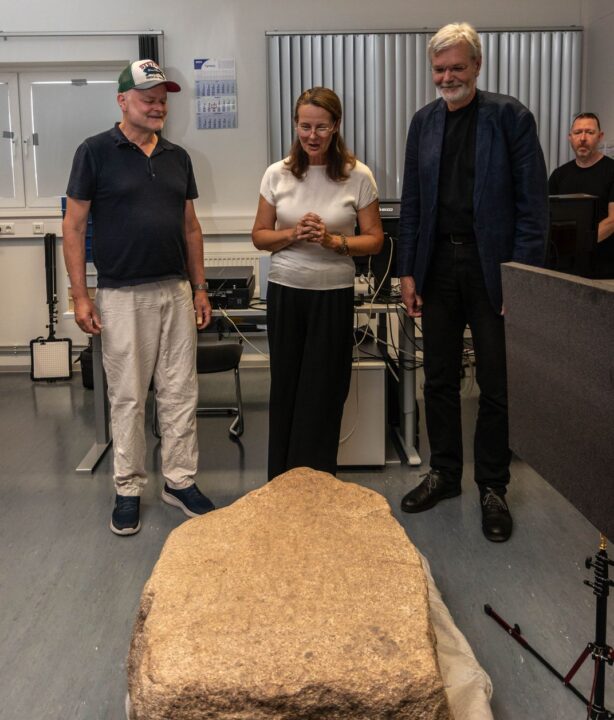
Image stones, common between the 4th and 12th centuries, were used as memorials, but few featured elements of Christianization. The Klotzow sculpture stands out for containing these rare Christian symbols, adding another important fragment to the religious history of the region.
Otto of Bamberg: The Missionary Who Conquered Pomerania
Otto of Bamberg, born in 1060, was an influential missionary responsible for converting populations in the Pomerania region, which today includes parts of Germany and Poland. He undertook his evangelizing missions in the region between 1124 and 1128, where it is estimated that he baptized tens of thousands of people. The coincidence of the sculpture being discovered exactly 900 years after his first mission is considered remarkable by many.
The found artifact presents intriguing details, such as a shawl and a cross, which, according to experts, may represent a pallium, a religious garment worn by high-ranking figures of the Church, such as bishops and archbishops. Jantzen points out that Otto of Bamberg received the pallium from Pope Paschalis II, and during his missionary journeys through Pomerania, he was the only possible bearer of this garment at that time and place.

After the analyses, the authorities plan to exhibit the sculpture in Klotzow, allowing the public to have the opportunity to appreciate this unique piece of medieval history. Bettina Martin, Minister of Culture of Mecklenburg-Western Pomerania, expressed the importance of the discovery, thanking Wittenberg for his prompt communication and highlighting how this sculpture adds a valuable chapter to the rich history of the country.