






 Portuguese
  Spanish
  3 min of reading
  6 comments


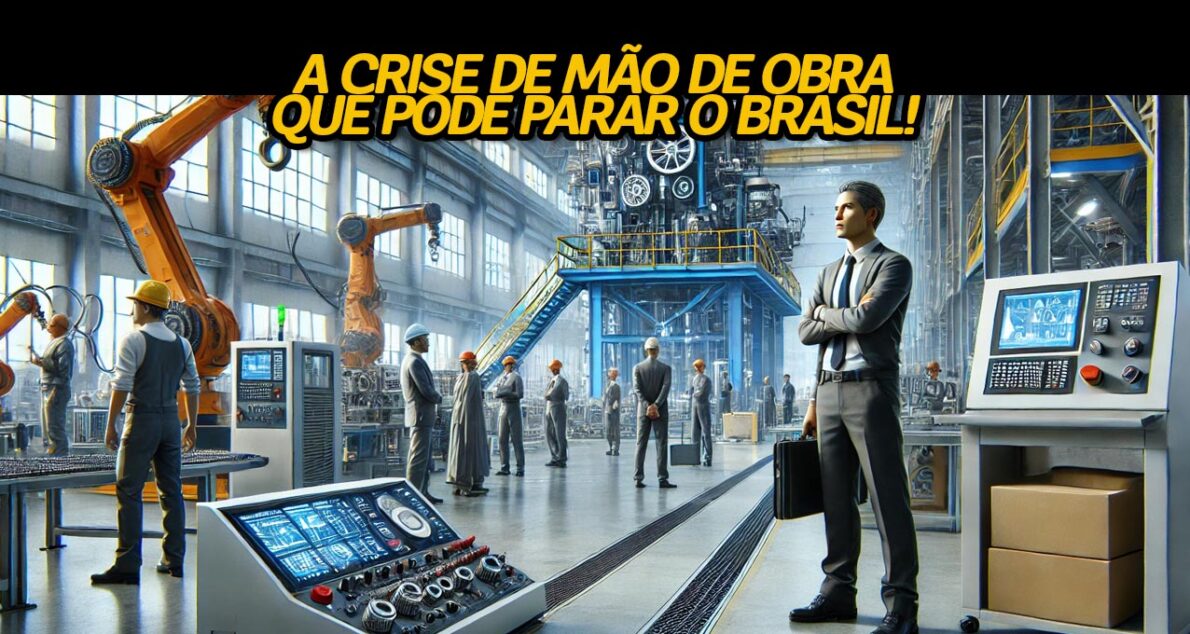

Amidst A Scenario That Blends Technological Advancement And Economic Challenges, Brazilian Industry Faces A Problem That Could Paralyze Production In Several Sectors: The Scarcity Of Skilled Labor.
But what is behind this crisis that seems to be only increasing? And what are the areas most affected by this lack of talent?
According To The Industrial Work Map 2022-2025, A Detailed Study Conducted By The National Industry Observatory, Brazil Urgently Needs To Train 9.6 Million Workers By Next Year To Meet Market Demands.
-
Coal mine purchased for $2 million in Wyoming, the Brook Mine holds rare earth elements and critical minerals estimated at up to $37 billion, in an asset that the US is competing for with China.

-
In the year Brazil won the World Cup, gasoline cost R$ 1.77, the cheapest car was worth R$ 13,000, there were no flex-fuel cars, SUVs were rare, and no Chinese brand sold a single vehicle in the country.
-
Neighboring Balneário Camboriú will receive a R$ 1 billion airport with 225 hangars, an area of 2.2 million m², a technology park, and an export zone that promises to transform the economy and generate thousands of jobs.
-
After investing R$ 5,000 in fried chicken in his backyard, a Brazilian transformed two fryers and a freezer into a network with 115 sales points, presence in up to 17 states, and revenue exceeding R$ 115 million per year.



The Impressive Number Reveals A Need That Goes Far Beyond What Was Imagined, With The Creation Of 497 Thousand New Jobs In The Next Four Years.
This Growth Should Raise The Total Number Of Formal Jobs In The Industry To 12.8 Million. However, The Scarcity Of Professionals With Technical Training Threatens These Ambitious Plans.
According To Gustavo Leal, Director-General Of The National Service For Industrial Training (Senai), In An Interview With O Globo Newspaper, The Main Profile Sought By Industries Includes Professionals Who Can Quickly Adapt To Technological Changes, Who Have Critical Thinking, And Who Demonstrate Creativity.
Industry 4.0, Which Is Becoming Increasingly Present In The Country, Demands Specialized Curricula In Mechatronics, Data Analysis, And Artificial Intelligence, According To Leal.
Moreover, Knowledge Of Green Economy Is Rising, As Industries Seek Paths For Sustainability, Making These Areas Even More Valuable.
However, The Root Of The Problem Is Not Restricted To Factories. Leal Points Out That The Difficulty In Capturing Qualified Professionals Starts Long Before Young People Enter The Job Market.
The Small Proportion Of Students Who Choose Technical Education In High School, Combined With High School Dropout Rates, Results In An Insufficient Pool To Fill Available Positions.
A Survey Conducted By Senai In May 2024 Revealed That 52% Of Adolescents Aged 14 To 17 Know Little Or Nothing About Professional Training Opportunities In The Industry.
Large Industries, Aware Of This Challenge, Are Investing In Programs To Attract Young People To The Sector. Saint-Gobain, A Construction Giant With 58 Factories In Brazil, Plans To Hire 3,400 People In 2024, A 23% Increase Compared To The Previous Year.
So Far, 1,700 Hires Have Already Been Made In The First Half Of The Year. The Company Also Has 250 Open Positions In Various Areas And Has Implemented Robust Policies To Retain Its Talent, Especially In Information Technology (IT), Which, According To Gustavo Siqueira, Vice President Of HR For Latin America, Presents Ongoing Challenges Due To The High Demand For Jobs In The Market.
Training Initiatives In Education
In São Paulo, Hyundai Motor Brazil Innovated By Starting An Educational Project In The Public Network Of Piracicaba, Where Its Factory Is Located, Aiming To Train Students Aged 14 To 18 To Develop Prototypes Of Hydrogen Energy Solutions.
In Ceará, M. Dias Branco, A Food Manufacturer Of Well-Known Brands Such As Piraquê, Adopted The Strategy Of Organizing Visits For Students To Its Facility In Eusébio.
The Effort Of Companies Is Commendable, But Will It Be Enough To Solve The Skilled Labor Shortage In The Industry? Moreover, Can These Short-Term Initiatives Compensate For Decades Of Neglect In The Technical Training Of Young Brazilians?




Se o Senai baixasse os preços dos cursos na área industrial não haveria baixa mão de obra e quando se tem empresas querem qualificação excluindo mais de obras
Infelizmente é a como o Brasil funciona!! Exige que hajam trabalhadores qualificados mas não podem ter salário equivalente. Querem que a educação se torna um negócio, ou seja, que seja privatizada, e nota-se que está funcionando, estudantes fugindo das carreiras tecnológicas, seja em qual nível for. As visitas eram uma estratégia de todos os cursos públicos, mas as indústrias interpunham regras no início, e ao final não aceitavam as visitas, o que é compreensível, pois atrapalha os turnos. Mas aí está a outra consequência.
Então, eu não entendo os empresários brasileiros , primeiro embarca no impedimento da presidente paralisando o país e apoiando o golpe, em seguida defende a prisão sem provas do presidente lula em consequência vem a eleição da quadrilha miliciana Bolsonaro aí foi aquele festival de horrores sem nenhum projeto de país ,com todos esses desastres o país foi ao fundo do posso e como vocês querem mão de obra qualificada se vocês apoiaram fechamentos das universidades e escolas técnicas, a elite brasileira é atrasada sem visão de futuro, vocês são **** pra caramba
Corretíssimo!! Palmas p vc José.
Só corrigindo, se escreve poço.
Da pra perceber que não teve educação básica.