






 Portuguese
  Spanish
  3 min of reading
  1 comment


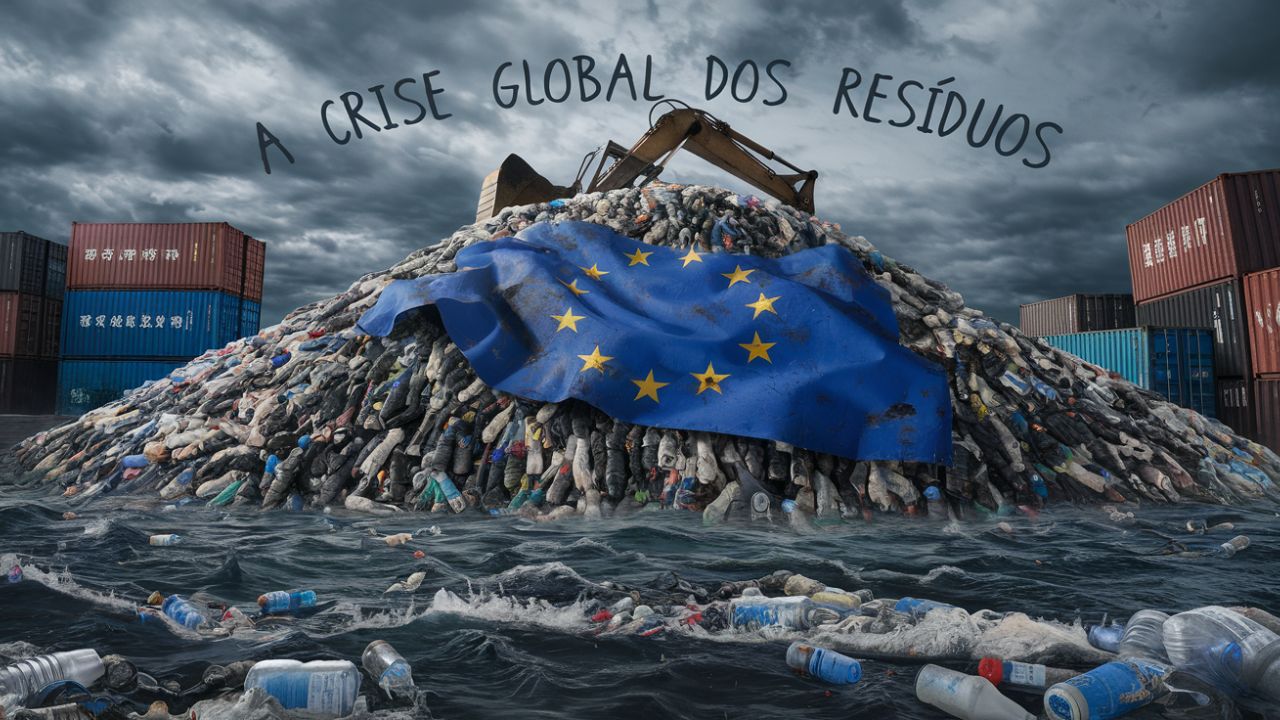


In 2018, the European waste industry collapsed with China’s ban on waste imports, exposing a fragile and unsustainable system. More than 200 million tons of waste were redirected to vulnerable countries, exacerbating the global environmental crisis. The promise of recycling failed: only 12% of global waste is recycled, while the rest suffocates landfills or invades oceans.
Have you ever stopped to think about where all the trash we produce goes? Every year, around 2 billion tons of waste are generated worldwide. The waste industry, especially in Europe, made us believe everything was under control. But in 2018, this illusion came crashing down.
The Waste Industry and The Hidden Collapse
Until 2018, China was the main destination for European waste. Approximately 95% of plastics from Europe were sent there. When the country decided to close its doors to foreign waste, the European waste management system collapsed. It became clear that the industry was not sustainable; it was just a transfer of responsibility.
Without China to absorb its waste, Europe needed to find alternatives quickly. Millions of tons of waste were redirected to Southeast Asian countries and the Gulf of Guinea. This shift did not solve the problem; it merely displaced the environmental impact to less prepared regions.
-
Bolivian Female Construction Workers Form Association to Combat Discrimination and 38% Pay Gap in the Industry

-
Near Amsterdam, residents buy land and discover they must also build streets, manage drainage, handle waste, and grow food on half their plot.
-
Without a mansion, without high investment, and without a traditional classroom, a teacher living in a 22 m² house taught students to build a 9 m² studio apartment with the equivalent of R$10,000.
-
Without her own home and pressured by rent, a 25-year-old bought a small 15-meter boat, gradually renovated the interior by herself, transformed the interior with paint, new flooring, a larger bathroom, and started living on the canals, paying much less per month.


The Opacity of The Industry: A Web of Silence

Why didn’t anyone talk about this fragility before? The answer is simple: the waste industry has always operated opaquely, with the complicity of governments and management companies. Solving the problem locally was expensive and complex. Thus, they opted to keep the problem hidden under the rug.
Recycling has always been sold as the magic solution. However, only 12% of global waste is actually recycled. The rest continues to be buried or exported. The industry preferred to invest in “green” marketing than in effective solutions.
The Search for New Destinations: Waste in Transit
With China’s doors closed, the industry rushed to Southeast Asian and African countries. These places, often lacking adequate infrastructure, became dumps for global waste. The problem only changed address.
Why doesn’t the industry seek local solutions? Because it is expensive. Implementing efficient recycling systems requires high investments. Thus, exporting remains the most financially viable option, although environmentally disastrous.
The Future of Waste: Toward Sustainability or Collapse?
Managing waste locally is difficult, but not impossible. Countries need to invest in advanced recycling technologies and environmental education. The industry must be held accountable and encouraged to seek sustainable alternatives.
Innovations like chemical recycling and circular economy can transform waste management. But is the industry willing to change? Without pressure from society and effective public policies, transformation will be slow.




A reciclagem existente é um processo montado para separar e devolver os diversos tipos de plástico à sua condição de uso pela tecnologia existente (injetoras), que não trabalha com plásticos misturados. Tenho solução para aproveitar todos os resíduos plásticos com uma só tecnologia.