






 Portuguese
  Spanish


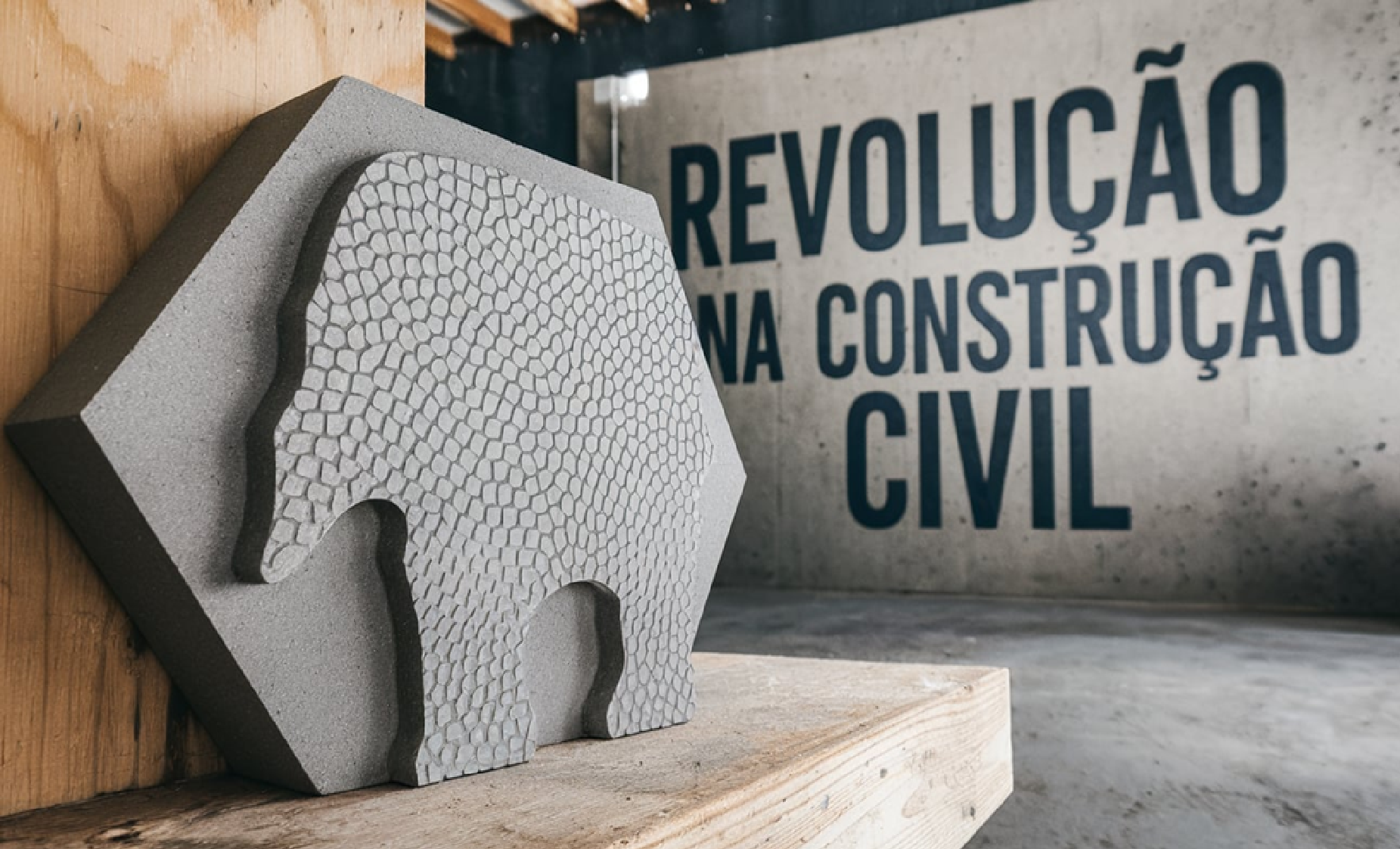


Discover How Elephant Skin + Fungi Can Be a Sustainable Solution in the Construction Industry
The search for innovative and sustainable solutions in the construction industry has led scientists to draw inspiration from nature itself. Recently, German engineers developed a shading system inspired by pine cones to control building temperatures without the use of air conditioning. Now, a team from Nanyang Technological University, Singapore, has taken a step further by creating a thermal insulation material based on elephant skin and produced from biodegradable fungi, according to the website Technological Innovation.
Professor Hortense Le Ferrand, the research leader, explains that the goal is to replace conventional thermal insulation materials such as fiberglass, ceramic paint, and tiles, which require expensive industrial processes and use non-biodegradable materials. The innovative solution proposes a passive cooling system that efficiently and sustainably reduces the internal temperature of buildings.
How Elephant Skin Inspired This Technology?
Elephant skin plays a key role in thermal regulation for these animals, especially in hot climates. Its textured surface, full of wrinkles and ridges, allows water to accumulate and evaporate slowly, helping to cool the body.
-
Bruno Guimarães, 28, Misses Crucial Penalty Against Norway in World Cup After Replacing Vinicius Jr.

-
Inspired by a school lesson on Africa’s water crisis, a young boy raised money through chores to fund a well that transformed a Ugandan community.

-
Brazilian Construction Worker Moves to France, Earns Up to €2,500 Monthly with Home Renovations, Gains Social Media Attention

-
US Navy Sinks USS Oriskany with 230 kg of C-4, Creating World’s Largest Artificial Reef in 37 Minutes






The scientists applied this principle to the tile design, creating a front surface textured to mimic elephant skin. This special shape reduces heating speed and accelerates cooling of the material, while the back of the tiles remains smooth to optimize thermal insulation.
Fungi: The New Frontier of Construction Materials
The innovation of this research does not stop at the elephant-inspired design. To manufacture the tiles, the team used mycelium, a network of interconnected fungal cells that naturally grows by decomposing wood. This biological material was cultivated from a silicone mold created with a 3D printer, allowing for large-scale production through a simple and low-cost process.
Mycelium has several advantages:
✅ Biodegradable: The tiles decompose naturally without generating toxic waste.
✅ Sustainable: Produced from residual biomass, such as bamboo microfibers.
✅ Durable: Despite being natural, they have high durability and weather resistance.
According to Hortense, this approach challenges traditional construction methods, bringing the industry closer to nature and placing human well-being and sustainability at the center of technology.
Is the Future of the Construction Industry in Biomimicry?
The use of materials inspired by nature is not new, but recent advances in bioengineering and 3D printing have made it possible for these concepts to be applied more effectively and accessibly.
The innovation from Hortense Le Ferrand’s team shows that it is possible to create efficient, sustainable, and economically viable solutions to reduce energy consumption in buildings. With rising global temperatures and increasing demand for environmentally responsible construction, technologies like this could become the new trend in sustainable architecture.





