Portuguese
  Spanish


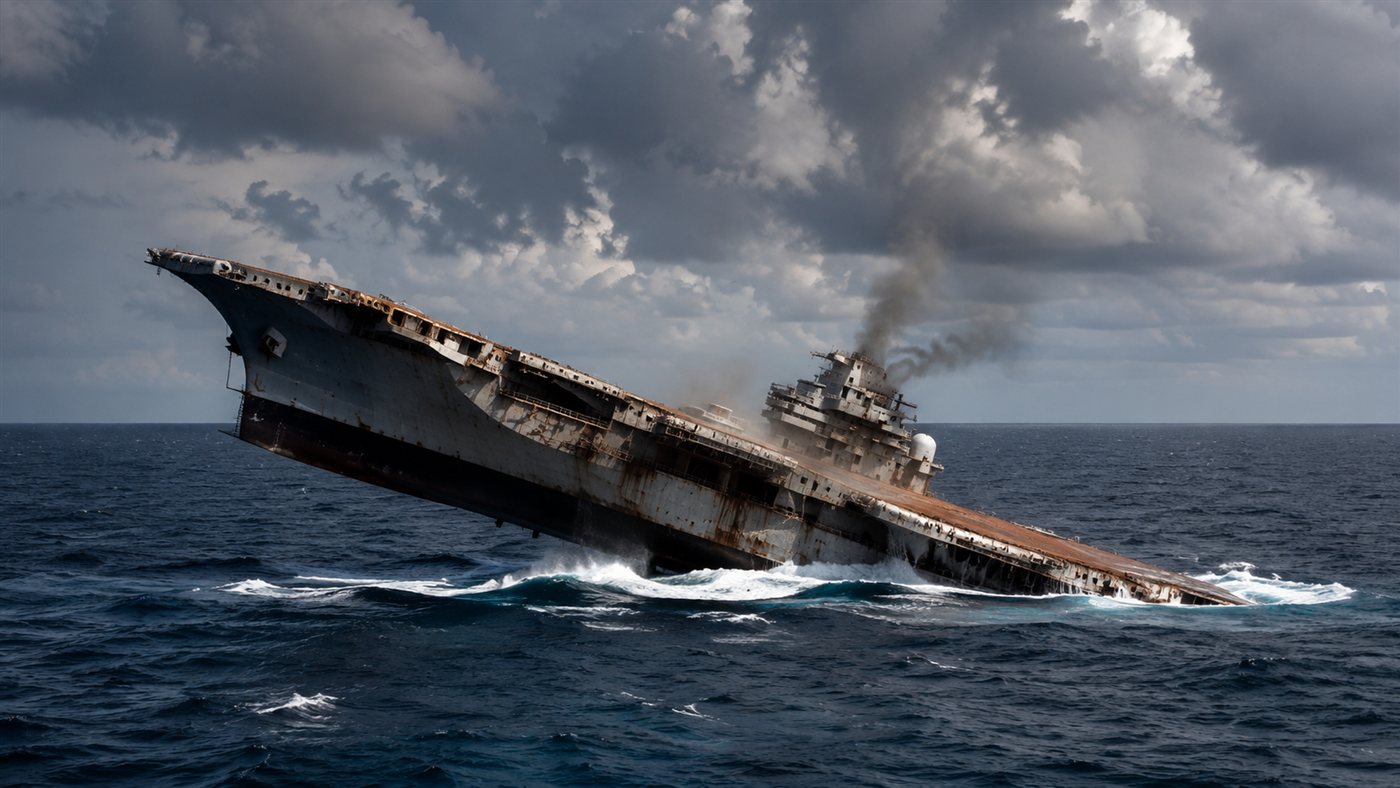

The War History Online record documents the detonation of the 22 charges, the hull landing upright at 64 meters, and the nickname that stuck: Great Carrier Reef
Intentionally sinking an entire aircraft carrier requires the same engineering rigor as keeping it afloat. According to War History Online, in a record published in November 2016, a team from the U.S. Navy sank the USS Oriskany on May 17, 2006, in the Gulf of Mexico, in an operation that transformed the war colossus into the largest artificial reef on the planet.
The logistics of the day involved half the state of Florida. The operation was supported by the Florida Fish and Wildlife Conservation Commission, the Escambia County Department of Natural Resources, the Coast Guard, Pensacola police, and sheriffs from several neighboring counties, as listed by War History Online. It was no small feat: you don’t bring down a warship in the backyard of a tourist city without closing the entire surrounding sea.
The day of detonation: 22 charges and 37 minutes
The programmed demise of the giant was surgical. According to War History Online, a Navy explosive disposal team from Panama City, Florida, detonated C-4 charges with about 230 kg of net explosive weight, strategically positioned in 22 sea connection pipes in the machinery compartments.
-
U.S. Dumped Tanks, Jeeps, and Coca-Cola into the Pacific in 1945 After British and French Lowball Offer, Creating “Million Dollar Point”

-
WHO Warns of Unnecessary Interventions in Natural Births Worldwide, Advocates for More Human-Centered Care, Reigniting Debate on Medicalization

-
World War II American Bombs Discovered in German City Prompt Evacuation of 20,500 Residents

-
World’s Largest Ice Cave Extends 42 km Beneath Austrian Alps, Revealing a Vast Frozen Realm Preserved by Natural Air Currents


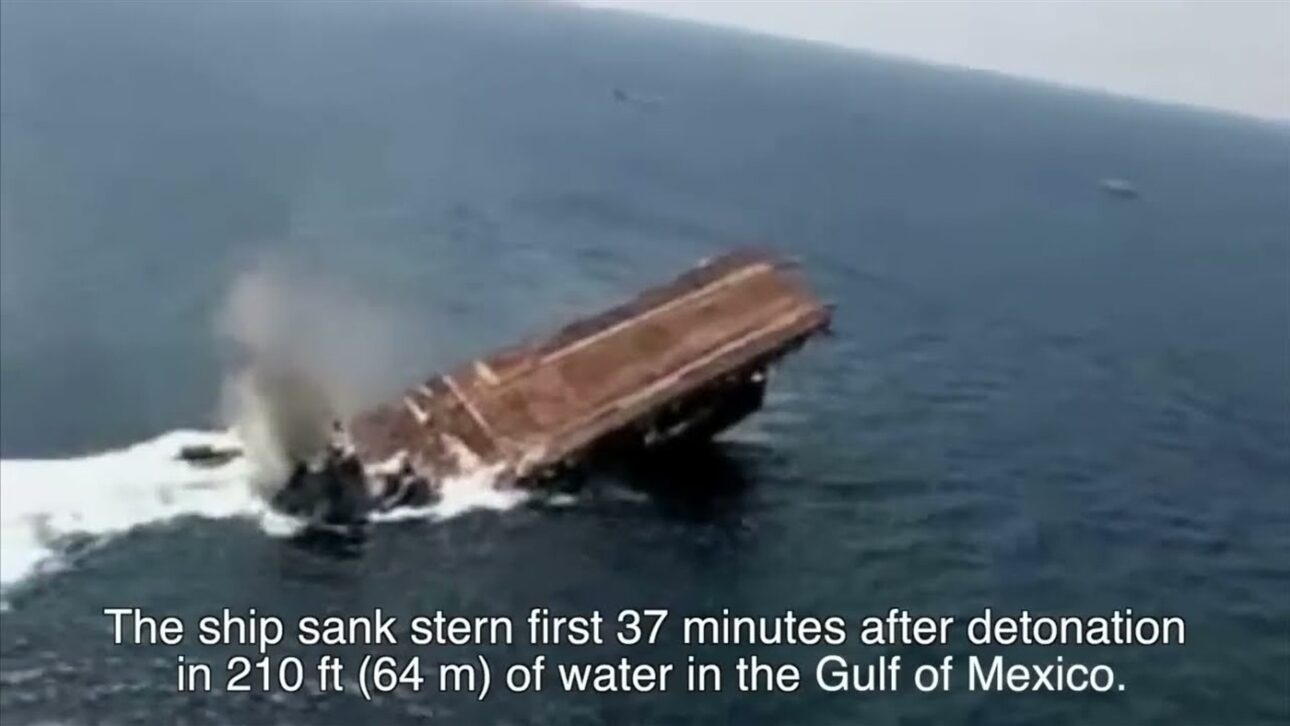
The trick lies in what the charges didn’t do. Instead of tearing the hull, the explosives opened the ship’s internal veins for the sea to enter in a controlled manner, and the aircraft carrier sank by the stern 37 minutes after detonation, as described by War History Online. The result came out as designed on paper: the ship landed upright on the seabed, exactly as the engineers wanted, ready for its second life.
The Cold War giant that became an artificial reef
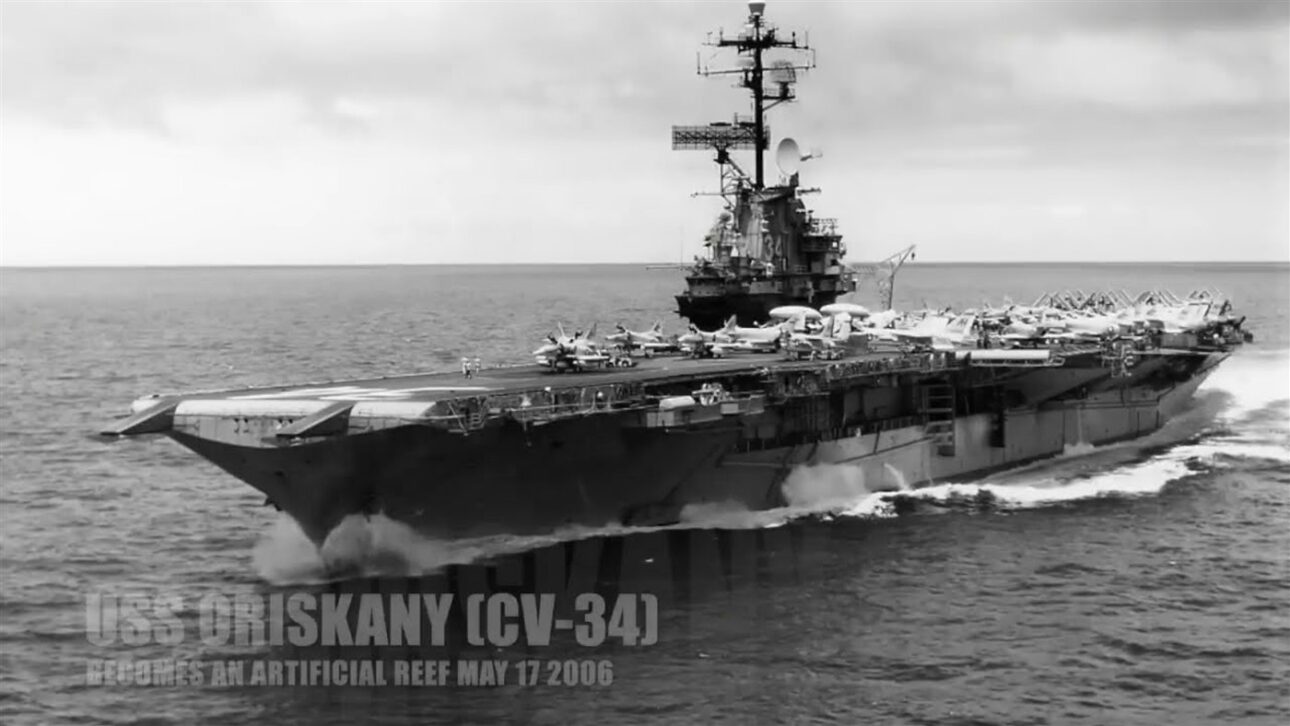
The ship’s resume explains the commotion surrounding the sinking. The USS Oriskany is an Essex-class aircraft carrier commissioned in 1950, a veteran of the Korean and Vietnam wars, about 270 meters long, with a notorious history that includes the 1966 fire that killed 44 crew members, and the departure of the fighter jet of future Senator John McCain, shot down over Vietnam in 1967.
Retirement took longer than the career. Decommissioned in 1976, the hull spent decades in disputes over its final fate until the decision to transform it into the world’s largest artificial reef, an outcome widely documented that the War History Online record shows in detail at the decisive moment. Between becoming a razor blade in the scrap and becoming a coral city, the Oriskany had the most dignified end available for a warship.
64 meters deep and the deck at 41
The numbers of the final resting place were calculated for diving. According to the War History Online channel on YouTube, the ship sank in waters 64 meters deep in the Gulf of Mexico, and, with the hull upright, the flight deck was 41 meters from the surface, while the command tower rose to 21 meters.
Each level has an audience. The tower structure is accessible to recreational divers, while the flight deck requires additional training and equipment, as War History Online explains. It is a reef with floors, as the ship always was: casual visitors stay on the rooftop, and only technical divers descend to the ground floor.
The hurricane that pushed the ship 3 meters down
Not even at the bottom of the sea did the Oriskany escape the Gulf’s weather. According to War History Online, after the passage of Hurricane Gustav, the ship settled 10 feet deeper, about 3 meters, leaving the flight deck 44 meters from the surface.
The detail says a lot about the ocean’s power. A hull of tens of thousands of tons, deliberately settled on the seabed, was moved by the energy of a single storm, a reminder recorded by War History Online that an artificial reef also has a geological life. For divers, the change shortened the visit time to the deck; for engineers, it became project data for future sinkings.
The Great Carrier Reef: diving into the colossus
The nickname sums up the ship’s second career. According to War History Online, the reef is popularly known as the Great Carrier Reef, a play on words with Australia’s Great Barrier Reef, and has become a destination for divers seeking the world’s largest intentional shipwreck.
The underwater city works. The steel became a substrate for corals and a shelter for schools of fish, and the Pensacola region gained a diving tourism magnet, the notable development that motivated the project from the start. The ship that spent its career launching aircraft ended up hosting fish: the runway is now a landing point for marine life.
Why sink instead of scrap
The calculation that took the ship to the bottom is pragmatic. Dismantling an aircraft carrier in a shipyard is expensive, takes years, and generates environmental liabilities on land, while controlled sinking, preceded by rigorous decontamination, solves disposal and even creates an economic asset underwater.
The case became a showcase for the practice. The Oriskany went through years of preparation and cleaning before the C-4 charges, precisely so that the hull would not take contaminants from half a century of operation to the bottom, the notable protocol that American environmental agencies require of any large artificial reef. The result is the argument that proponents of the practice repeat: cheaper than scrap, more useful than a junkyard.
The Brazilian parallel: the fate of the São Paulo
Brazil experienced the mirrored version of this dilemma. In 2023, the hull of the former aircraft carrier São Paulo, the old Foch purchased from France, was sunk by the Navy in the Atlantic, hundreds of kilometers off the Brazilian coast, after no shipyard agreed to dismantle it, a notable episode that sparked environmental debate precisely for not following the Oriskany’s script.
The comparison between the two endings is inevitable. The American ship went down clean, shallow, and planned to become an artificial reef and diving attraction, while the Brazilian went down in deep waters as disposal, without a second life project, a contrast that turns the Florida case into a reference for what the end of a naval giant can be when there is planning. Reef that generates tourism or hull lost in the abyss: the difference is the project.
What science says about steel reefs


The transformation of a war machine into a marine nursery has a known biological basis. Hard and stable structures on a sandy bottom serve as a substrate for corals and sponges, attract reef fish, and can relieve visitation pressure on natural reefs, the notable scientific argument behind artificial reef programs.
The counterpoint is also known. Marine biologists monitor the release of metals and waste from hulls over the decades, and the rule that enables the practice is one: complete decontamination before sinking, the same principle that guided the preparation of the Oriskany. Twenty years later, the Great Carrier Reef remains as the largest living laboratory of this bet.
The record shows the detonation, the ship descending stern-first, and the final resting place of the giant in the Gulf of Mexico.
The USS Oriskany proved that even an aircraft carrier can have a productive retirement: 37 minutes of descent and an eternity of coral. Tell us in the comments: would you dive to the deck of an aircraft carrier at 44 meters?