






 Portuguese
  Spanish


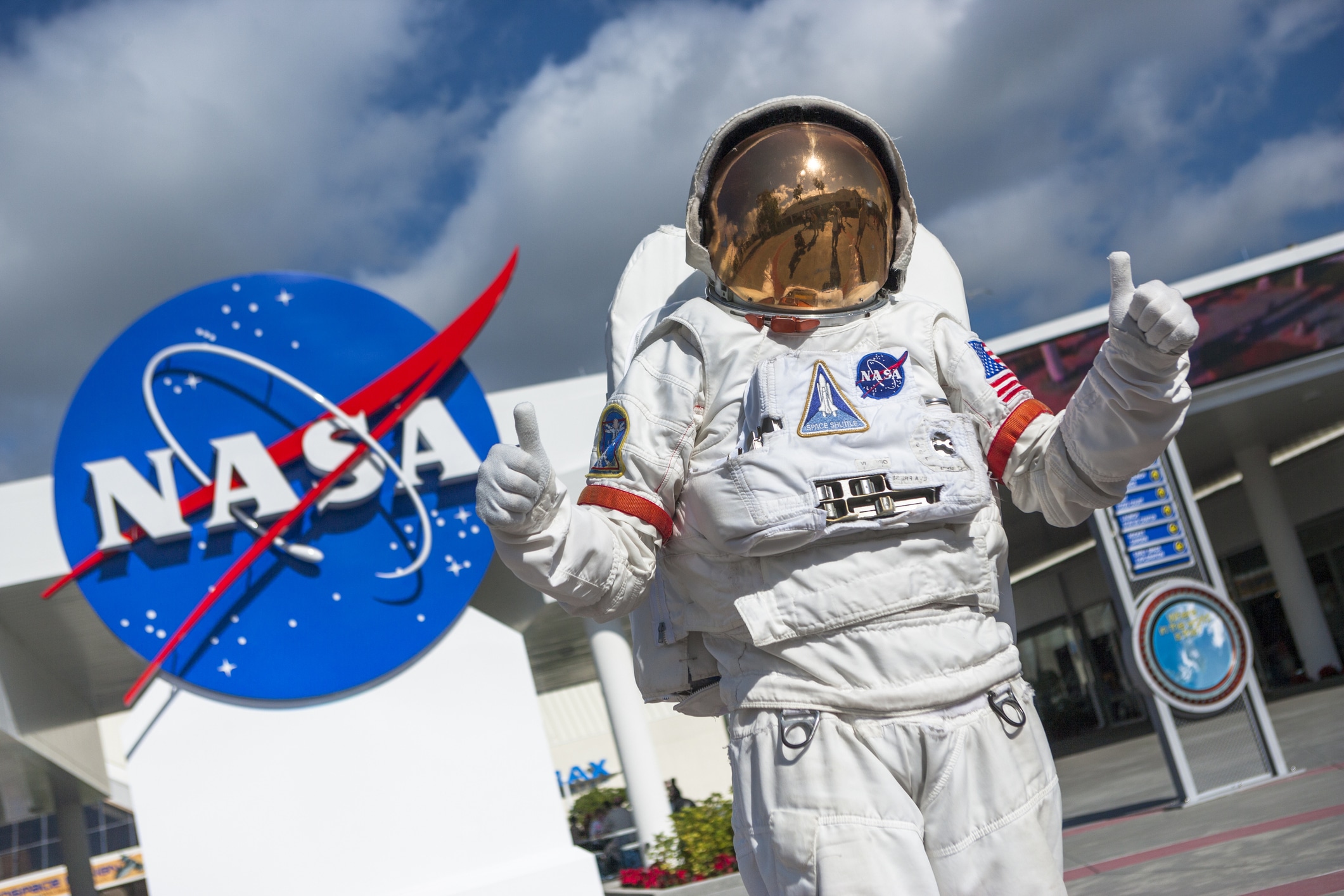

Solar-Powered Spacecraft Are NASA’s Latest Project For Solar Expeditions
One of the major challenges faced by the National Aeronautics and Space Administration (NASA) today is addressing fuel demand during its space missions. With this in mind, a team of researchers from the Rochester Institute of Technology and John Hopkins University, along with NASA, sought to develop a model of spacecraft powered by solar energy.
The latest NASA project involves expeditions for the exploration of the Sun, in a way that has never been done before. With this new mission and the need for fuel in mind, the researchers created solar sails, which are similar to those used on boats and utilize the energy from the sun’s rays for propulsion. The project was initiated several years ago, but only now are the sails ready for use, following some testing. To learn more, keep reading.
Understand A Bit About The Tests Of The Solar Sails Conducted Several Years Ago In The Video Below


The Development Of Solar Sails For Spacecraft Won 3 Phases Of The Innovative Advanced Concepts (NIAC) Program And Had Million-Dollar Investment
As the Sun is a difficult-to-reach location, the researchers leveraged solar energy from the Sun itself to obtain fuel. The project was named Diffractive Solar Sailing and recently won Phase III of the Innovative Advanced Concepts (NIAC) program, promoted by NASA itself to stimulate the development of new exploration technologies.
-
Brazilian scientists are simultaneously advancing two research projects on clean hydrogen and driving solutions that could transform the energy matrix, enhance industrial competitiveness, and accelerate large-scale emission reduction targets.

-
Advancement in renewable energy: A R$ 150 million project launched by Petrobras and Finep aims to create state-of-the-art electrolyzers for green hydrogen, strengthening national research and preparing Brazil to compete in a billion-dollar energy market.
-
Solar energy can increase property value by up to 10% and become a selling point.
-
Illiterate or semi-literate grandmothers were trained to repair solar systems, open rural workshops, and light up homes that still depended on kerosene.




This award provided a US$ 2 million investment for the execution of the mission to explore the solar poles soon. With the new propulsion mechanism, the sails will allow the structure’s grids to generate energy from diffraction, which consists of the scattering of sunlight after passing through an opening.
The project addresses a problem that has long been known to space scientists: the lack of energy for propulsion of spacecraft in solar exploration.
“With our team’s combined experience in optics, aerospace, traditional solar navigation, and metamaterials, we hope to enable scientists to see the Sun like never before.”
Amber Dubill, Johns Hopkins University Applied Physics Laboratory, Project Lead for NASA.
A similar mechanism was tested in previous years by other countries. In 2010, a Japanese probe named Ikaros was sent into space for solar exploration, but without solar sail technology. This inspired NASA to improve the mechanism in the following years.
“Diffractive solar navigation is a modern take on decades-old light sails. While this technology can improve a multitude of mission architectures, it is poised to significantly impact the heliophysics community’s need for unique solar observation resources. With our team’s combined experience in optics, aerospace, traditional solar navigation, and metamaterials, we hope to enable scientists to see the Sun like never before.”
Amber Dubill, Johns Hopkins University Applied Physics Laboratory, Project Lead for NASA.
NASA Will Transform Solar Expeditions Into Something Unprecedented, As Never Done Before, Using Solar Energy
The project developed by the researchers in partnership with NASA will now move on to a new phase of testing using spacecraft with solar sails for propulsion. However, the outlook is optimistic and tends to improve propulsion without compromising the maneuverability of the spacecraft.
Additionally, the project encourages the use of solar energy in a differentiated way, using concepts from physics, especially the diffraction of sunlight. This advancement is an important step for science and for a better understanding of the largest star in the solar system.







