Portuguese
  Spanish


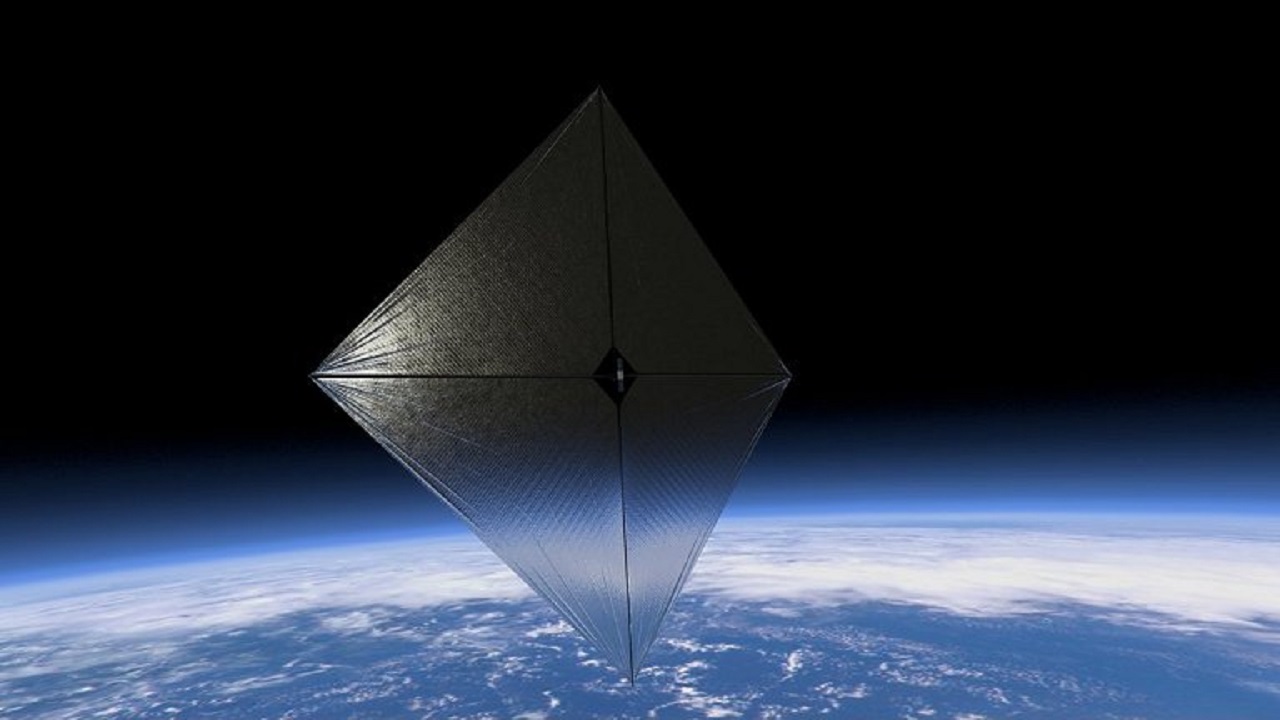

Aiming To Replace Chemical Fuels In Traditional Rockets, NASA Will Launch A Solar Sail That Will Be Used As A Type Of Propulsor For Long-Duration Spacecraft Missions
The National Aeronautics and Space Administration (NASA) will conduct a mission to demonstrate and test the innovative solar sail in practice. The mission is named ACS3, which stands for Advanced Composite Solar Sail System, and is expected to launch next year. NASA’s solar sail is intended to be used as a type of propulsor for long-duration spacecraft missions.
Read Other Related News
NASA Moving Away From Chemical Fuels In Rockets To Use Solar Energy
The agency’s solar project will use an innovative telescoping rod system that extends in space to open the sail. The project will be able to propel NASA’s spacecraft by harnessing the radiation pressure from sunlight or a remotely projected laser.
Thus, it will no longer be necessary to use chemical fuels or nuclear sources to propel traditional rockets. NASA’s expectation is to send probes into deep space, where the new technology will be used for solar sails of up to 5,000 square feet.
-
Ceará brings together 7 giants and R$ 66 billion to transform Pecém into the largest green hydrogen hub in Brazil, with final decisions expected by the end of 2026.

-
Scientists Convert Factory Waste Heat into Hydrogen Using Perovskite Catalyst at Significantly Lower Temperatures

-
Airbus and MTU Launch Joint Venture to Advance Hydrogen-Powered Electric Aircraft Engines, Paving the Way for a New Era of Low-Emission Commercial Aviation
-
In a Place Many Doubt Solar Power Works, 360 Panels Operate in the Arctic, Harnessing Reflected Snowlight to Reduce Diesel Use at an Isolated Station



A Process That Can Take Less Than Half An Hour


When the sail reaches space, it will open its solar panels and extend four telescoping masts, each of which can reach up to 23 feet in length. Along with the masts, which are made from a reinforced and flexible polymer material with carbon fiber, will also be the solar sail fabric from NASA.
This entire testing process will take about 20 to 30 minutes, during which a set of cameras will record the procedure to assess the operation and final shape of the solar sail.
Once the sail is fully “open,” the mission will collect a series of data on the speed and acceleration achieved by the spacecraft when “pushed” by solar radiation.
NASA Studies The Possibility Of Creating A 2,000 Square Meter Solar Sail
The extendable rods created by NASA are 75% lighter and experience 100 times less thermal distortion in space compared to the metal rods that were launched previously.
Another benefit is in the solar sails themselves, which are limited by the strength of the materials that comprise them and the electronic systems of the probes; that is, they have the capacity to operate indefinitely. NASA is currently working to develop new mechanisms where it will be possible to create solar sails of up to 2,000 square meters.