






 Portuguese
  Spanish


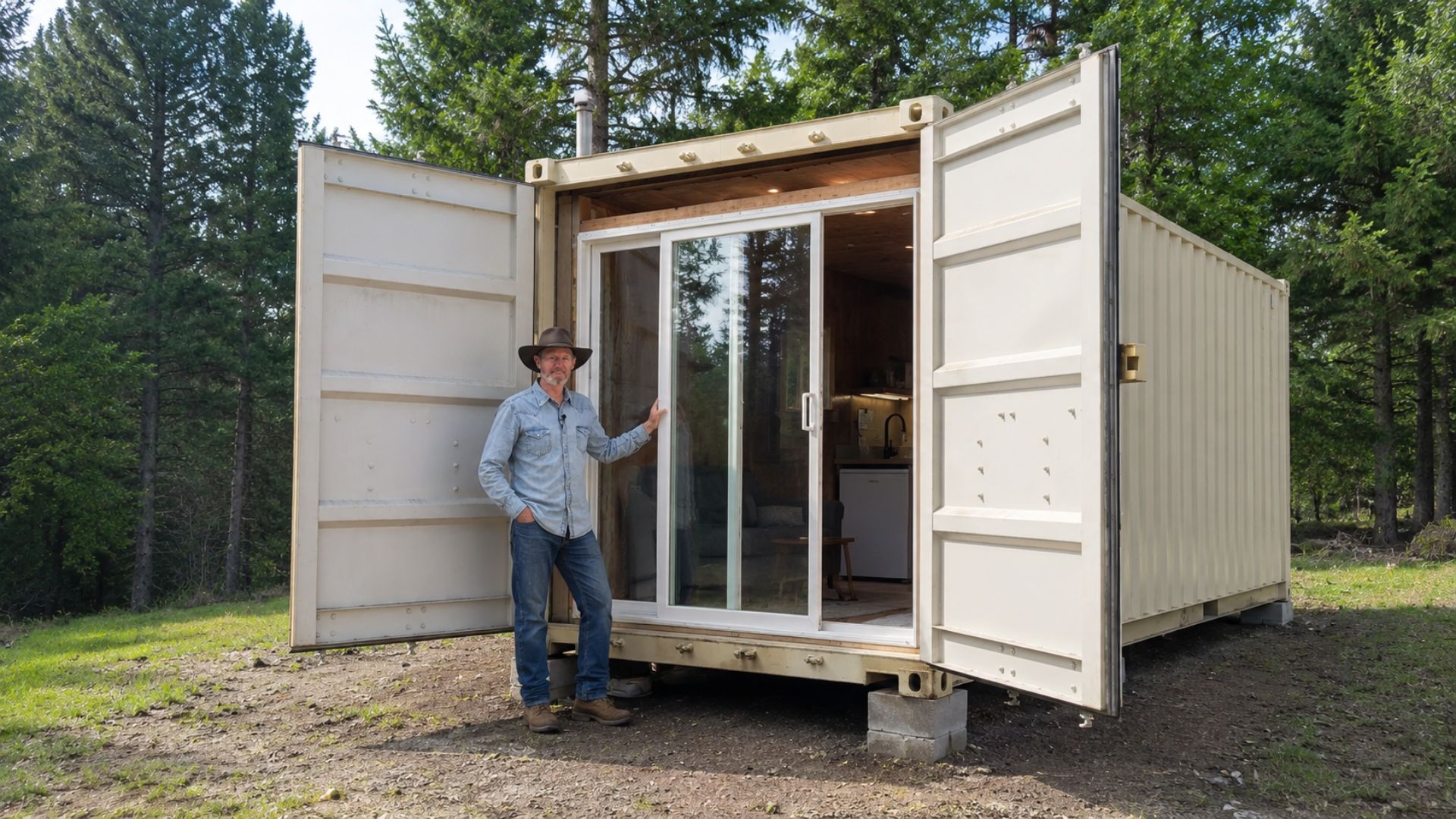


The construction follows the logic of maintaining the integrity of the shipping container, preserving the original strength of the structure and allowing the house to be dismantled and transported to another site. The entire interior was made with screwed wood, thermal insulation, and repurposed sliding glass doors.
A resident caught attention on social media by showing how he transformed a shipping container into a functional house spending less than 2 thousand dollars on materials. The amount, he highlights, is less than what is paid for a single month’s rent in the region where he lives. The detail that made the project even more talked about was the decision not to make cuts or welds in the original structure of the container, preserving all the strength of the equipment.
Instead of modifying the corrugated steel sheet, he took advantage of a specific model called a double-door container, which already comes with openings at both ends. The result is a house that can be easily removed from the site and transported to another location, without losing the original structure and without leaving permanent marks on the equipment. The entire interior was made with screwed wood, mineral wool thermal insulation, and repurposed sliding glass doors from other constructions.
Why choosing a double-door container changes everything

The secret of the cut-free construction lies in the choice of the type of shipping container. The traditional model has doors only at one end, which usually forces those who want to live inside it to make holes for additional windows and doors.
-
U.S. City Builds Tiny Home Village on Water Company Land to House 136 Homeless People: Inside the Social Housing Units

-
Woman Turns Shipping Container into Home, Embraces Rural Life to Cut Monthly Expenses to Just Over $330
-
France Revamps 530 Social Housing Units with Large Balconies and Glass Facades Without Demolishing Existing Buildings

-
Facing high rent, couple transforms parents’ garage into a fully functional apartment, creating a complete home at a fraction of the market cost.




The double-door container, however, already comes with openings at both ends. This configuration allows for the installation of sliding glass doors at each end without making a single cut in the steel sheet, keeping the original structural strength of the equipment intact.
The resident explains in the video that, when the external doors are closed, the container looks like a common transport equipment. But, when opened, the large sliding glass windows appear, illuminating the interior of the house and creating the feeling of a residential environment. The solution also facilitates future transport: just close everything, load it onto a trailer, and take it elsewhere.
The total construction cost was less than one month’s rent

The budget of the work is one of the most surprising points of the project. Not counting the value of the shipping container itself, the resident estimates that he spent less than 2,000 dollars on all the materials used to make the house habitable inside.
He makes a direct comparison with the real estate market in the region where he lives. The rent for a house there exceeds 2,000 dollars per month, which means that the entire internal structure of the container cost less than he would pay in just 30 days living in a conventional residence.
Part of the savings came from reusing materials. The sliding glass doors were not brand new, top-of-the-line pieces, but second-hand pieces that still worked well. The wood used in the internal structure was sawn by himself, in his own sawmill, which further reduced the final cost of construction.
How the interior of the container house turned out


Inside, the resident set up a traditional wooden structure that supports walls and ceiling without directly touching the metal sheet of the container. The choice was for 60-centimeter studs, instead of the traditional 40 centimeters, precisely to accommodate the thickness of the available thermal insulation.
The interior includes:
- Screwed wooden structure, without altering the container’s sheet
- Mineral wool insulation in the walls and ceiling
- Sliding glass doors at each end
- Utility panel for public services
- Wooden interior finish
The resident makes a point of highlighting that the entire internal structure is only screwed, without permanent fixation. This means that everything can be disassembled, modified, or removed without leaving damage to the original shipping container, preserving the equipment for other future uses.
Why he chose mineral wool instead of expanding foam
The insulation chosen for this house was mineral wool, different from the previous project by the same resident, which used expanded polyurethane foam. The decision has a clear technical explanation, and he treats the case as a comparative experiment between the two materials.
Mineral wool offers two advantages considered important for this specific use of the container. The material provides better acoustic insulation, which helps muffle the noise of rain hitting the metal roof, and it does not promote mold growth, a common problem in environments with restricted ventilation.
The resident intends, therefore, to transform this unit into the bedroom, precisely because of the acoustic advantage. The previous container, insulated with expansive foam, will be reserved for the kitchen, refrigerator, solar energy electrical components, and equipment that makes more noise.
Structure resistant to wildfires
Another central reason that led the resident to choose a shipping container was safety against wildfires. The region where he lives is prone to this type of event, and the steel structure offers important advantages over a traditional wooden cabin.
When he needs to be absent during wildfire season, he simply closes the container doors and leaves the structure closed on the property. Combined with a defensible area of one hundred meters around the property and care not to leave flammable materials under the structure, the container offers considerable fire resistance, although it is not completely fireproof.
This characteristic differentiates the project from other rural housing options, such as wooden cabins or trailers, which tend to be much more vulnerable to wildfires. The resistant steel of the shipping container becomes, in this context, another practical reason for choosing the equipment as the base of the house.
What a new shipping container costs today
For those who want to replicate the idea, it’s worth understanding the starting point of the project. The resident comments that the local supplier in the region where he lives sells a new double-door shipping container, 20-foot model, for about 4,300 dollars.
The price refers to a new container, meaning it was used only once for a sea voyage before being made available for sale. It is possible to find cheaper containers in the used equipment market, but the resident argues that it is worth paying more for a new unit, precisely because the equipment will be in better condition.
He also comments that he chose the 20-foot model, shorter than the 40-foot ones, because this size facilitates transporting the container on common trailers. If at any point he wants to move the house to another property, he just needs to load the structure onto a flatbed trailer and take it away without much complication.
Why the no-cut method preserves resale value
Keeping the shipping container intact is not just an aesthetic decision. It has a direct effect on the resale value of the equipment and the flexibility of the project in the long term, according to the resident himself.
Cutting the side of a container compromises the structural strength of the equipment. Much of this strength comes from the corrugated steel sheet, which, although not very thick, gives rigidity to the structure. When this steel is cut to open additional windows or doors, it is necessary to build an internal reinforcement structure, which increases the cost of the work and still decreases the resale value of the container.
The resident comments that he still does not know how long he will live on that land. If he decides to develop the property and build a conventional house, he can easily move the container elsewhere, precisely because it maintains its original structural strength. Another option would be to simply sell the equipment, which would be much more difficult if it had been modified with cuts.
The second container and future plans
This is not the resident’s first experience with shipping container construction. He already had another piece of equipment on the land, insulated with expanding foam, which was being used as a cabin. The new unit, with mineral wool insulation, will work in conjunction with the previous one.
The idea is to use the two containers for complementary functions. The older container, with expanding foam, will concentrate the noisy equipment of the routine, such as the kitchen, refrigerator, and electrical components of solar energy. The new, quieter container will be the resting and sleeping area.
The bathroom and recording room are still in the planning phase. The resident mentions that he may add a separate structure for these environments, depending on how the use of the two main containers evolves in the coming months. The flexibility of the modular project allows for this type of gradual addition.
When it is worth adopting this solution
The case shows that shipping container construction can be a viable alternative for those seeking simple, mobile, and low-cost housing. But the success of the project depends on some specific choices that are often overlooked in more ambitious adaptations.
Keeping the container intact is the first principle. The fewer cuts and structural modifications, the cheaper the project and the more resistant the final structure. Choosing a double-door model, with openings at both ends, solves most window and lighting needs without requiring work with welding or an electric saw on the steel sheet.
On the other hand, the reduced size of the 20-foot shipping container is a real limitation for larger families. The solution adopted by the resident was to use two containers in parallel, but the scheme may not work for all resident profiles. For individual or couple use, with simple needs and a taste for a more laid-back life, however, the model delivers a lot for little investment.
The story of this resident proves that it is possible to solve the housing problem by spending much less than the traditional market charges, as long as the person is willing to accept space limits and take part in the work with their own hands. The choice not to cut the shipping container is a practical lesson in simple and economical engineering.
And you, what do you think about this solution? Would you consider building a house inside a shipping container without cuts or welds? Do you believe that this type of housing can grow in Brazil given the rise in rents? Leave your comment, share your opinion, and tag someone who dreams of living more simply.









