Portuguese
  Spanish


In Detroit, the couple Lynne and Michael Savino bought a 1925 bank for just $28,000, transformed the building into a home, and turned the two old vaults into a living room and wine cellar. Today, they live in the property and earn more than $40,000 a year with an annex rented on Airbnb.
Buying an entire bank for less than the cost of a popular car seems impossible, but that’s how an American couple started one of Detroit’s most curious housing projects. Lynne and Michael Savino acquired an old 1925 bank, abandoned, for about $28,000 and transformed it into a home. The story was reported by AOL.
The charm lies in the details that came with the building. The two vaults of the old bank were not demolished: the ground floor one became a living room, and the basement one, which held the clients’ safety deposit boxes, was reimagined as a wine cellar. What was once a symbol of stored money became a living space.
And the business still turns a profit every month. Besides living in the property, the Savinos transformed an annex building, which was once a bar, into a three-bedroom accommodation rented on Airbnb, which yields more than $40,000 a year. Today, the complex is for sale for about $1.1 million, thousands of times more than it cost.
-
Tired of Seeing People Sleep in the Cold, London, Canada Opens First Modular Shelter for Homeless with 60 Cabins, Heating, Meals, and Dog Area

-
Brazil’s $1.3 Billion, 870-Meter Immersed Tunnel to Be Latin America’s First of Its Kind, Featuring Special Public Facilities and Information Center
-
Brazilian Innovator Develops Concrete Blocks from Recycled Plastic, Eliminating Mortar and Reducing Construction Costs
-
Brazilian Woman Builds House with Recycled Plastic Bottles, Halving Construction Costs in the Process


The 1925 bank that became a home
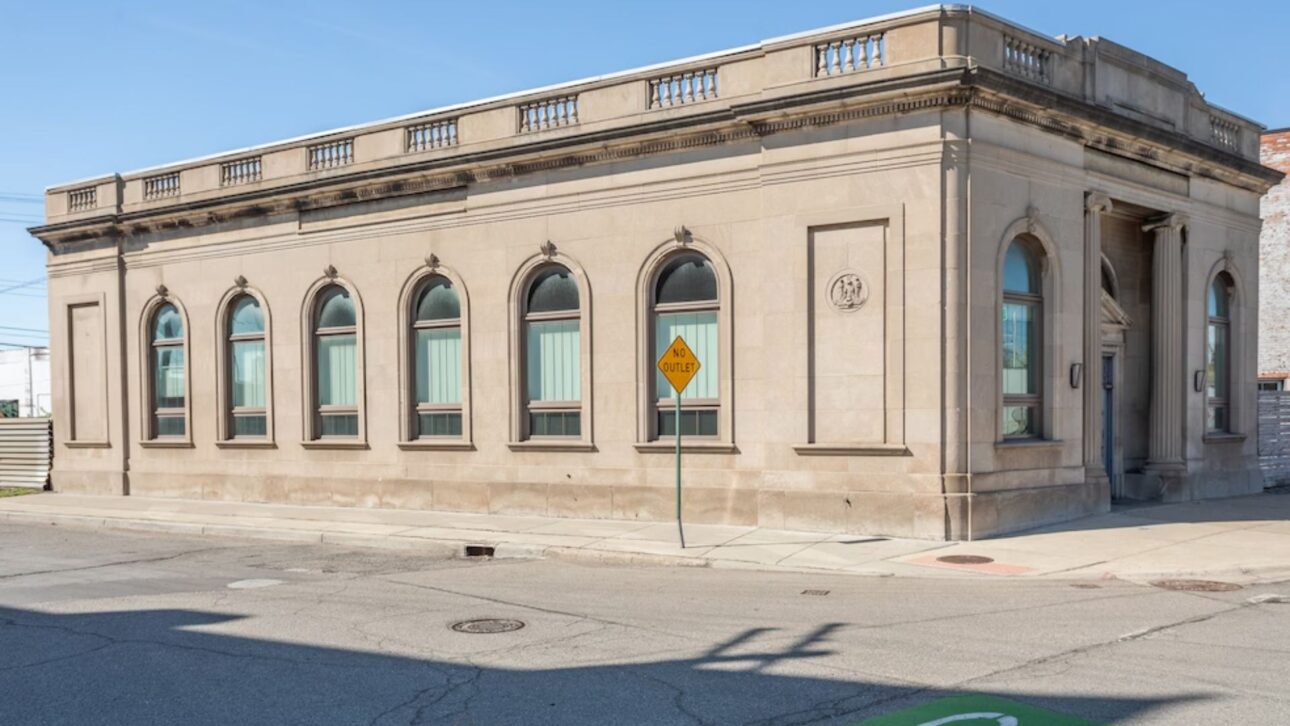
The protagonist of the story is an imposing building. The property is an old bank erected in 1925, at 3401 Michigan Avenue, near the Corktown neighborhood in Detroit, United States. With a limestone facade and a monumental air, the building was born to convey solidity and confidence, as dictated by the banking architecture of the time.
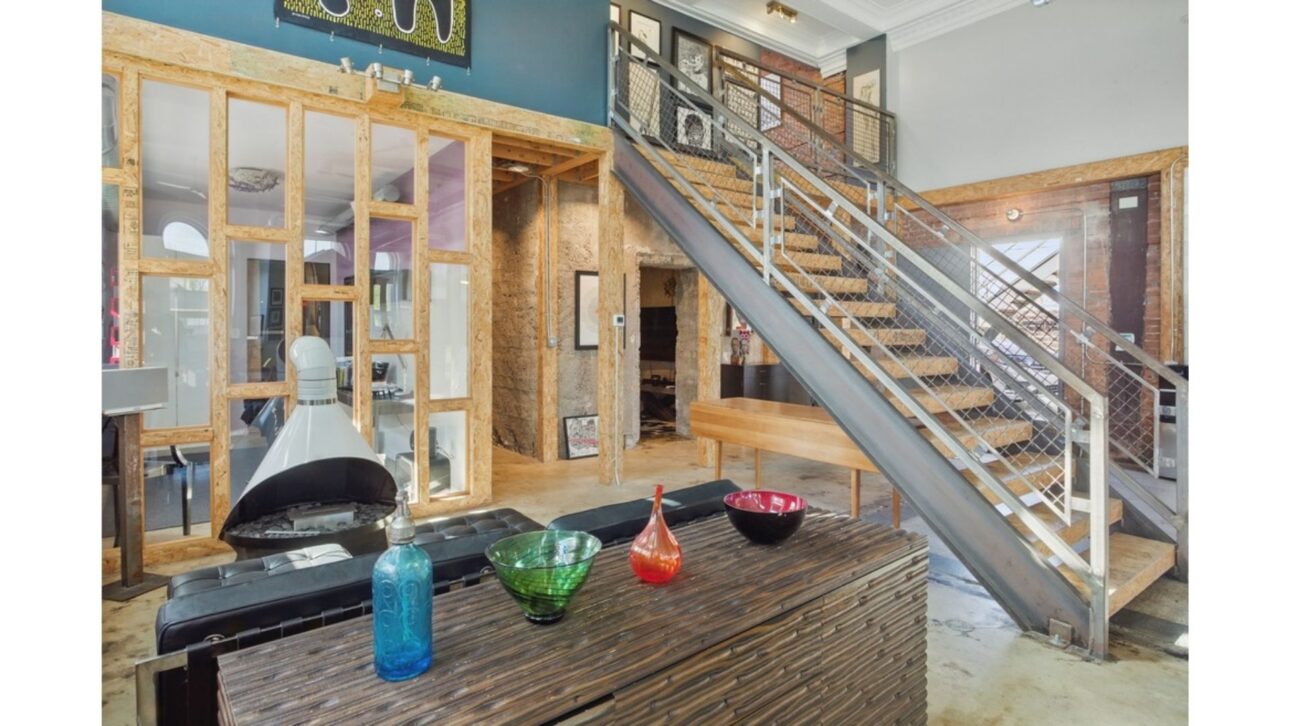
Inside, the bank held architectural treasures. It spans about 3,000 square feet, equivalent to about 280 square meters, with terrazzo floors, marble, exposed bricks, large arched windows, and a ceiling height of over five meters. There is even a copper vestibule with restored wooden doors, those kinds of details that are no longer made.
Transforming this into a home was the Savinos’ clever idea. Instead of looking at the abandoned building and seeing a problem, the couple saw a home with a unique personality, capable of combining history and comfort. The 1925 bank ceased to be a forgotten relic and became one of the most talked-about residences in the city.
The architecture of old banks greatly aids in this transformation. Built to impress and endure, these buildings usually have very high ceilings, thick walls, noble materials, and large open halls, exactly what is sought after today in design homes. Where there used to be lines of cashiers, there is now ample space for a spacious living room.
US$ 28 thousand for an abandoned bank
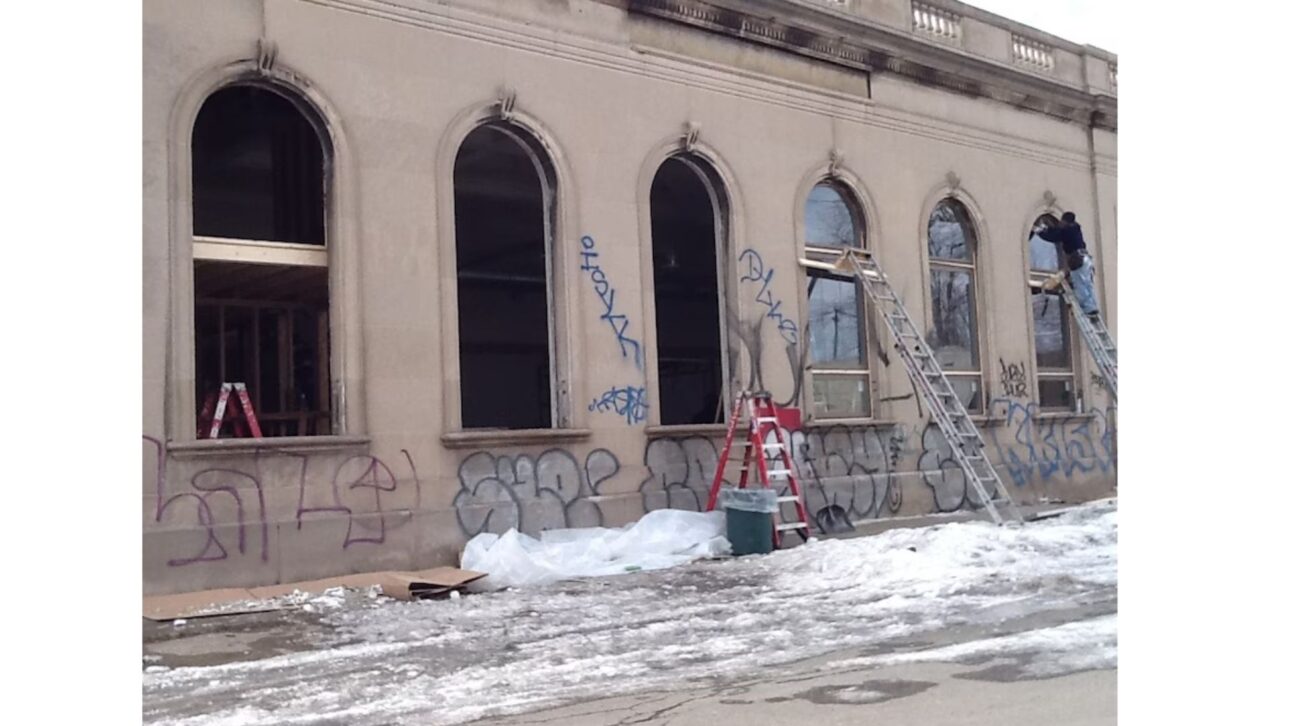
The purchase price is the most shocking detail. According to reports, the Savinos acquired the building in 2013 for just US$ 28,470, a negligible amount for a construction of that size. It’s less than many people pay for a used car, and it got the couple an entire bank.
This bargain price has an explanation. Detroit went through decades of economic decline and even declared bankruptcy in 2013, which flooded the market with abandoned properties at rock-bottom prices. Those who had the courage to bet on the city at that time found rare opportunities, like a historic bank for a pittance.
The cheap price, of course, came with its cost in labor. Buying the structure for US$ 28 thousand was just the beginning, because transforming an abandoned building into a home required a long and expensive renovation. Even so, starting from such a low value gave the couple a huge margin to invest in the restoration without blowing the budget.
The two vaults became a living room and wine cellar
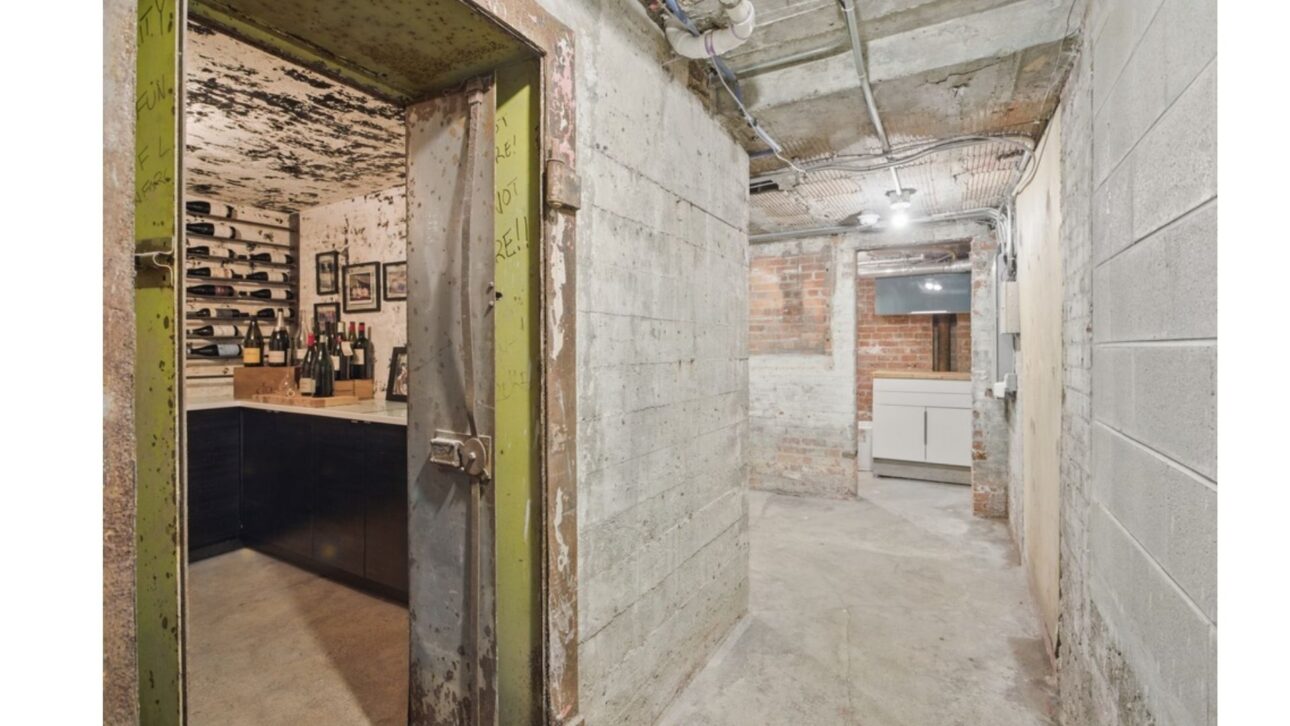
The heart of the house is the old vaults. Every respectable bank had reinforced vaults, and this one was no exception: there was one on the main floor and another in the basement, where the clients’ safety deposit boxes were located. Instead of removing them, the Savinos decided to preserve them and give them a new function.
The transformation was as creative as it was symbolic. The ground floor vault, with its thick steel and concrete walls, became a cozy living room, the kind that no neighbor has. Meanwhile, the basement vault, once home to safety deposit boxes, was reimagined as a wine cellar, a place impervious to everything to store wines.
Living inside a vault has a charm that’s hard to explain. The walls that once protected money and jewels now embrace moments of rest and glasses of wine, in a contrast that enchants visitors. It’s this kind of impossible-to-copy detail that makes the bank-house a standout among improbable homes.
From clandestine club to home: the building’s history
Before becoming a home, the bank had a rather lively phase. According to the couple’s account, the building once operated as a sort of clandestine club, an after-hours venue, in the 2000s, attracting all sorts of people after the official bars closed. The old bank had already lived many stories before the Savinos.
Lynne doesn’t hide the state in which they found the place. “There were definitely some pretty random characters living in the bank at that time,” she recalled, describing the mess and traces left by former occupants. It was from this chaotic scene that the couple set out to build their home.
This turbulent origin became part of the house’s charm. From a temple of money to a clandestine party spot and, finally, to a family residence, the building accumulated layers of history that few properties have. Restoring it was also about rescuing the memory of a piece of Detroit.
Before and after: the renovation
Transforming the bank into a home was not a quick task. The initial renovation took about nine months, followed by improvements over several years, a project the couple undertakes as a life mission. “We did everything. We wanted to live in an unconventional space,” summarized Lynne, about the dedication to the work.
The result combined the old and the new. The couple preserved historical elements, such as terrazzo, marble, and the high ceilings, and added modern comfort, with an open-concept gourmet kitchen, a nearly nine-meter cement countertop, and a huge island. The house has two bedrooms and two bathrooms, plus a patio created on a previously empty lot.
The quality of the ensemble even caught the attention of television. The bank-house ended up being featured on HGTV, an American channel specializing in real estate and renovations, which helped spread the story across the country. For Michael, there are “countless details that simply can’t be reproduced these days.”
Adapting a building like this, of course, brings enormous challenges. It was necessary to create rooms, bathrooms, and a kitchen in a space that was never intended for living, ensure thermal comfort in solid walls, and adapt electrical and plumbing installations to a property from 1925. Each solution required creativity to marry respect for the historic building with the needs of a modern home.
The Airbnb annex that yields US$ 40,000 per year
The house is not just a residence; it’s also a business. Next to the bank, the couple had an annex building that had already operated as a bar and was transformed into a complete accommodation. Furnished and with three bedrooms, this unit began to be rented out on Airbnb to tourists and visitors to Detroit.
The financial return is what makes the project even smarter. According to reports, the annex generates more than US$ 40,000 per year in seasonal rentals, equivalent to more than 200,000 reais annually. It’s an income that helps pay bills, cover renovations, and transform the unlikely house into a self-sustaining asset.
This model shows a lesson in smart repurposing. Instead of leaving the annex building idle, the Savinos put it to work, combining living space and income on the same property. Turning idle square meters into money is the kind of move that makes the difference between a property that only costs and one that also yields.
From US$ 28,000 to US$ 1.1 million: the property for sale
The appreciation of the complex is impressive. What was bought for about US$ 28,000 is now for sale for approximately US$ 1.1 million, according to the most recent listing. Even discounting what was invested in the renovation, the leap in value shows the power of transforming an abandoned property into something unique.
The price, it should be noted, has varied quite a bit. The property was listed several times throughout 2025, with values exceeding US$ 1.3 million, and returned to the market at a lower level. It’s the kind of property that’s hard to price, precisely because it has no equal: there is no other bank-house with two vaults and an Airbnb annex.
For the right buyer, the package is tempting. Whoever buys the property doesn’t just purchase a house but also a ready-made lodging business and a piece of Detroit’s history. It’s this combination of living space, income, and rarity that supports the million-dollar price of a construction that once cost the price of a car.
The case also becomes a lesson in investment. Buying a cheap deteriorated property, restoring it with care, and still generating income from it is the playbook of those who live from renovating and reselling, the so-called house flipping. The difference is that the Savinos lived in their own project and made it unique, something that tends to be worth more than a standardized renovation done just for sale.
Detroit, from decline to rebirth
The Savino case is part of a larger story. Detroit, the American automotive capital, suffered decades of decline and crisis, with factories closing and buildings being abandoned en masse. It was this collapse that filled the city with very cheap properties, like the bank bought for $28,000.
In recent years, however, the city has been reinventing itself. Neighborhoods like Corktown, adjacent to the Savino’s bank, have undergone a renaissance, with new businesses, residents, and investments arriving. Betting on a historic property there, more than a decade ago, proved to be a visionary move, accompanying the city’s turnaround.
Stories like this help retell Detroit. Each recovered building, from factory to bank, is a sign that the city has a future beyond the ruins that marked it. The bank-house has become, in this sense, a small symbol of urban rebirth, proving that it is worth restoring what seemed lost.
Unlikely Homes and What Brazil Has to Do With It
The bank-house in Detroit fits into a global trend. More and more people are transforming unusual structures into homes, from churches and silos to substations and old banks, attracted by the combination of history, space, and originality. The unlikely home has become a way to escape the norm and save buildings from demolition.
In Brazil, the idea has everything to succeed. The country is full of idle historic properties, from old bank branches to warehouses and mansions, many in the center of emptied cities, which could become homes, inns, or cultural spaces. The so-called retrofit, which adapts old buildings to new uses, is a path with enormous potential here.
Brazil has plenty of raw material for this. Emptied historic centers, closed old bank branches, and idle mansions multiply in cities like Rio, São Paulo, and Salvador, many of them listed and waiting for a new use. Incentive programs for housing in the center and retrofit could transform these idle buildings into homes and income, as happened in Detroit.
There is also the financial lesson from the story. Combining housing and income, as the Savinos did with the annex on Airbnb, is a strategy that fits well in Brazil, where short-term rentals grow every year. Transforming an idle property into a home and a source of income at the same time is the kind of move that can inspire many Brazilians.
The story of Lynne and Michael Savino proves that it’s worth looking differently at what seems unused: they bought a 1925 bank in Detroit for about $28,000, transformed the building into a house with the two vaults becoming a living room and wine cellar, and still earn more than $40,000 a year with an annex on Airbnb. Today, the property is worth around $1.1 million.
And you, would you have the courage to transform an old bank, or another abandoned building, into a house, even using the vaults? Share in the comments which unusual building in your city you think would make a great unlikely home, and if you would be willing to sleep inside a vault.