Portuguese
  Spanish


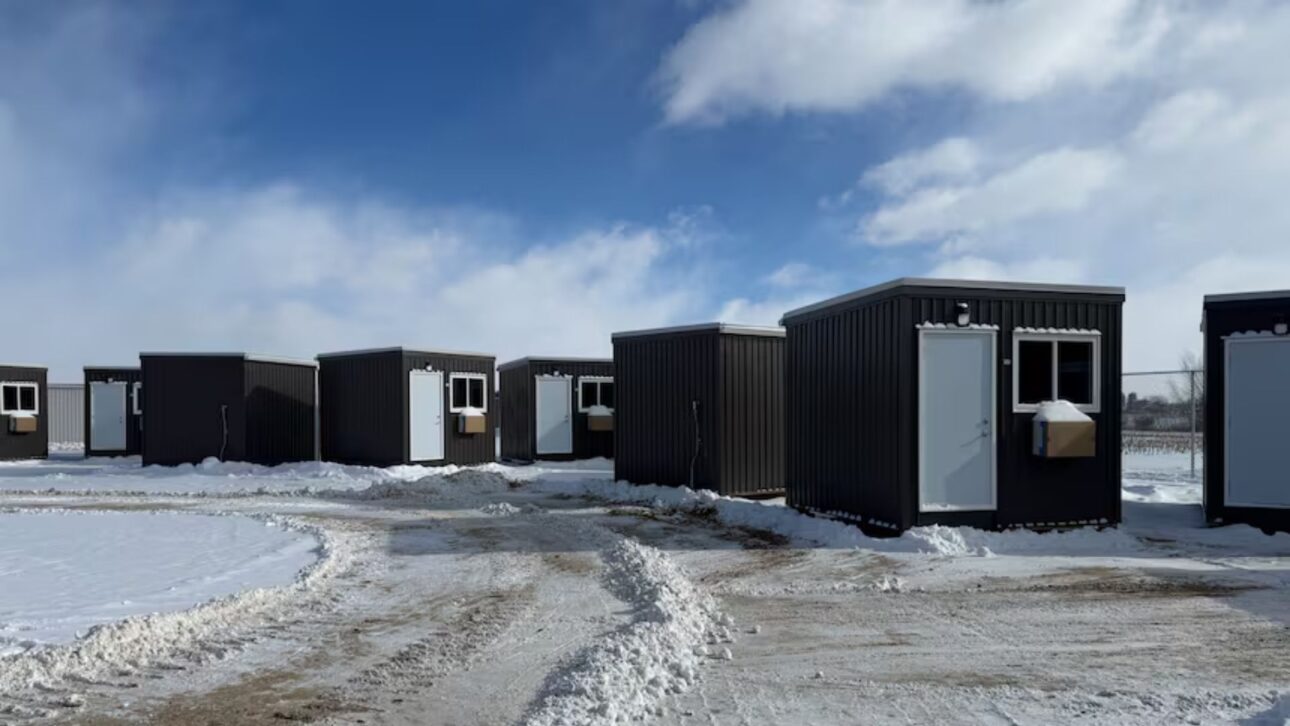
Tired of seeing people sleep in the cold, the city of London, in Ontario, Canada, opened its first modular shelter for the homeless population. There are 60 cabins with beds, heating, daily meals, and even an area to walk dogs, a model of transitional social housing for those living on the streets.
Faced with harsh winters and people sleeping outdoors, a Canadian city decided to act. London, in the province of Ontario, Canada, inaugurated its first micro-modular shelter for the homeless population, a set of small individual cabins designed to take people out of the cold with dignity. The story was reported by the CBC, the country’s public broadcaster.
A clarification is needed right from the start. This is not London, England, but London, a medium-sized city in the province of Ontario, Canada. It is there, not in the British capital, that this modular shelter operates, which began receiving residents at the beginning of 2026.
The project has a clear spirit: to offer more than just a bed. Each of the 60 cabins has heating, basic furniture, and privacy, and the site serves daily meals, has showers, laundry, and even an area for residents to walk their dogs. It is transitional social housing with a human touch, not a warehouse.
-
Brazil’s $1.3 Billion, 870-Meter Immersed Tunnel to Be Latin America’s First of Its Kind, Featuring Special Public Facilities and Information Center

-
Brazilian Innovator Develops Concrete Blocks from Recycled Plastic, Eliminating Mortar and Reducing Construction Costs
-
Brazilian Woman Builds House with Recycled Plastic Bottles, Halving Construction Costs in the Process
-
Couple Sold Their Home to Live in a Trailer While Converting a Granite Tower into an Award-Winning 11-Meter Residence in Cornwall


The first modular shelter in London, Canada
(Jack Sutton/CBC)
The initiative was born out of a social urgency. London faces, like many cities, an increase in the homeless population, exacerbated by the extreme cold of Canadian winters, capable of killing those who sleep exposed. It was to respond to this scenario that the city council created its first micro-modular shelter, with individual units instead of the old model of collective shelters.
The choice for the modular format is logically based on speed. Pre-fabricated cabins can be installed quickly, allowing for openings in a short time, which is essential when the thermometer drops and every night counts. Instead of waiting years for a building, the city set up a functional shelter in a matter of months.
The first residents began moving in at the beginning of 2026, in a staggered process. Entries were made gradually, in an organized manner, to ensure reception, guidance, and connection with local support services. It wasn’t a mass opening of doors, but rather a careful occupation, designed to succeed.
This model, it is worth mentioning, is distinct from other housing projects in the city. London has other fronts focused on housing, but this modular shelter is specifically a transitional response for the general homeless population, a place to get out of the cold while seeking a more permanent solution.
60 cabins with bed, heating, and privacy
(Jack Sutton/CBC)
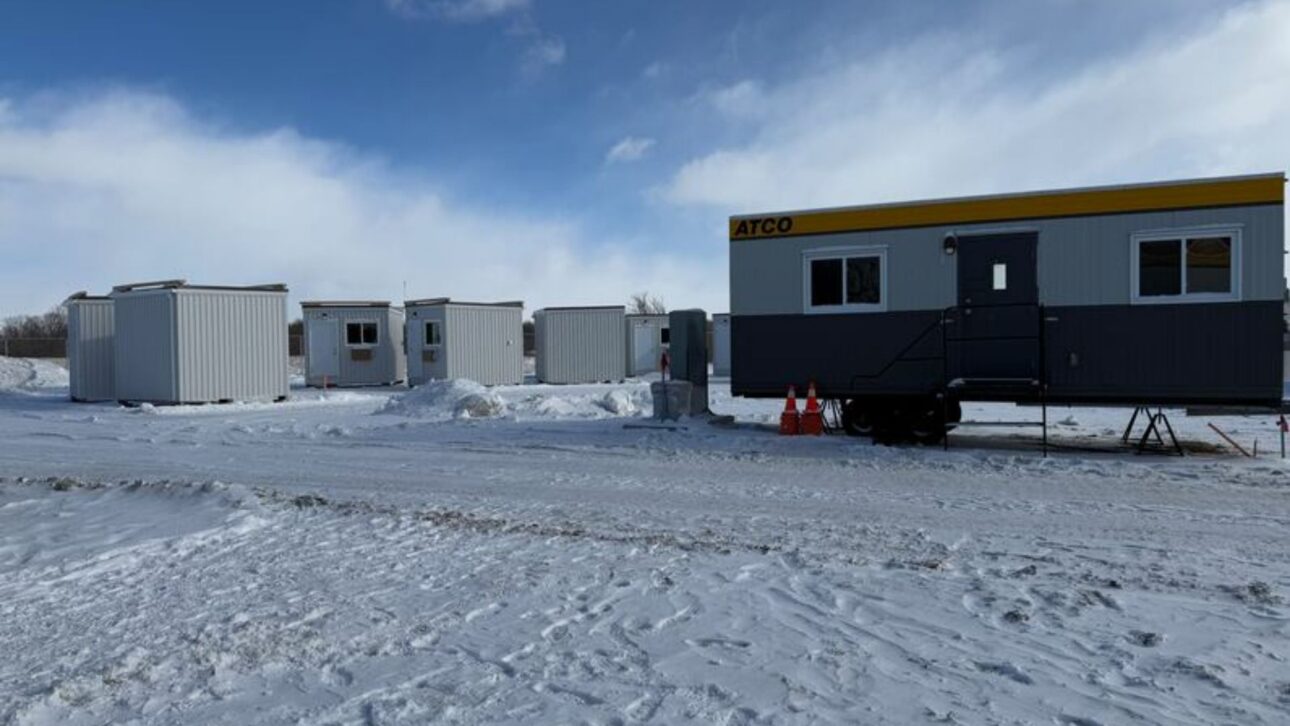
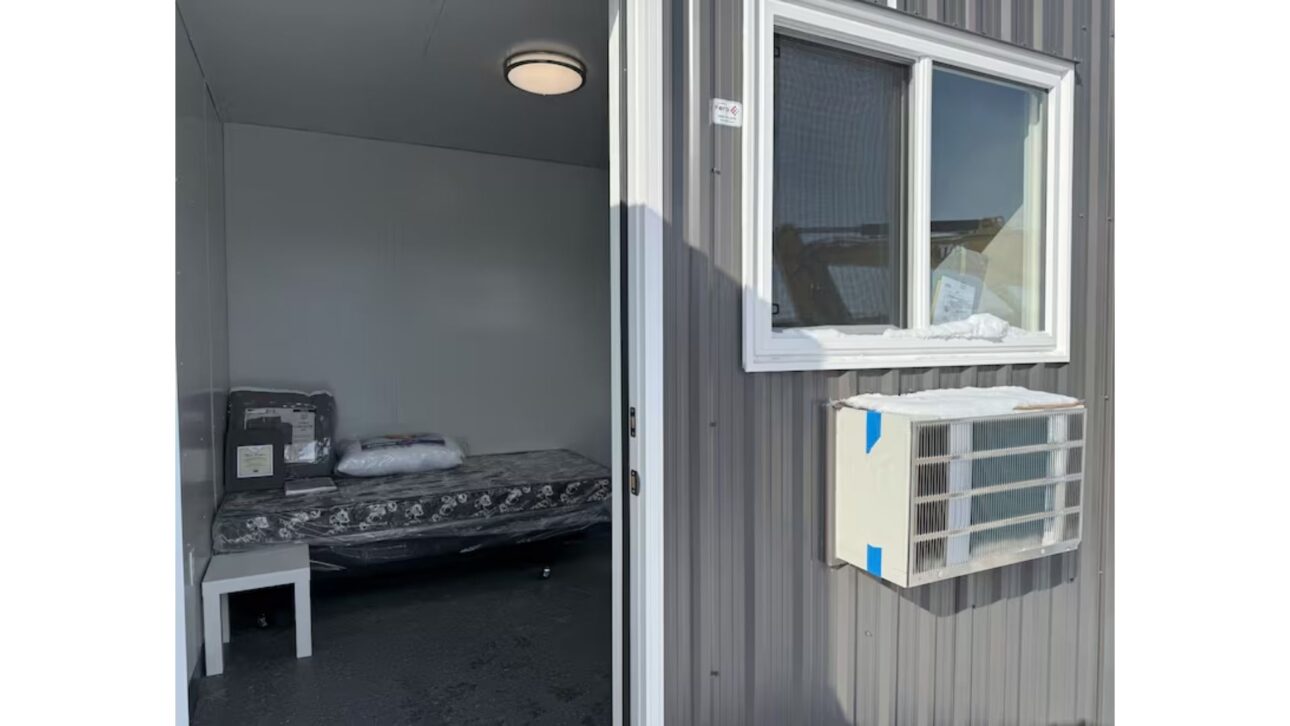
The heart of the project is the individual cabins. There are a total of 60 units, each equipped with electricity, heating, and cooling, a bed, a chair, a small support table, and space to store belongings. It’s small in size, but it’s a space of your own, with a door that locks.
This privacy makes all the difference for those coming from the street. In traditional collective shelters, dozens of people share the same hall, which creates noise, lack of security, and total loss of privacy. An individual cabin gives back to the resident something that street life takes away: a personal, safe, and warm corner.
(Jack Sutton/CBC)
Not all units are for just one person. Of the 60 cabins, ten were designed for couples who want to stay together, raising the total capacity of the shelter to about 70 residents. It’s an important detail, as many homeless couples refuse to enter shelters that force them to separate.
Quick assembly is another advantage of the format. Since they are prefabricated, the cabins arrive almost ready and are installed in series, allowing an entire shelter to be erected in weeks, not years. For a city racing against winter, this speed can mean lives saved each cold season.
Three meals, bath, and even a dog area
(Jack Sutton/CBC)
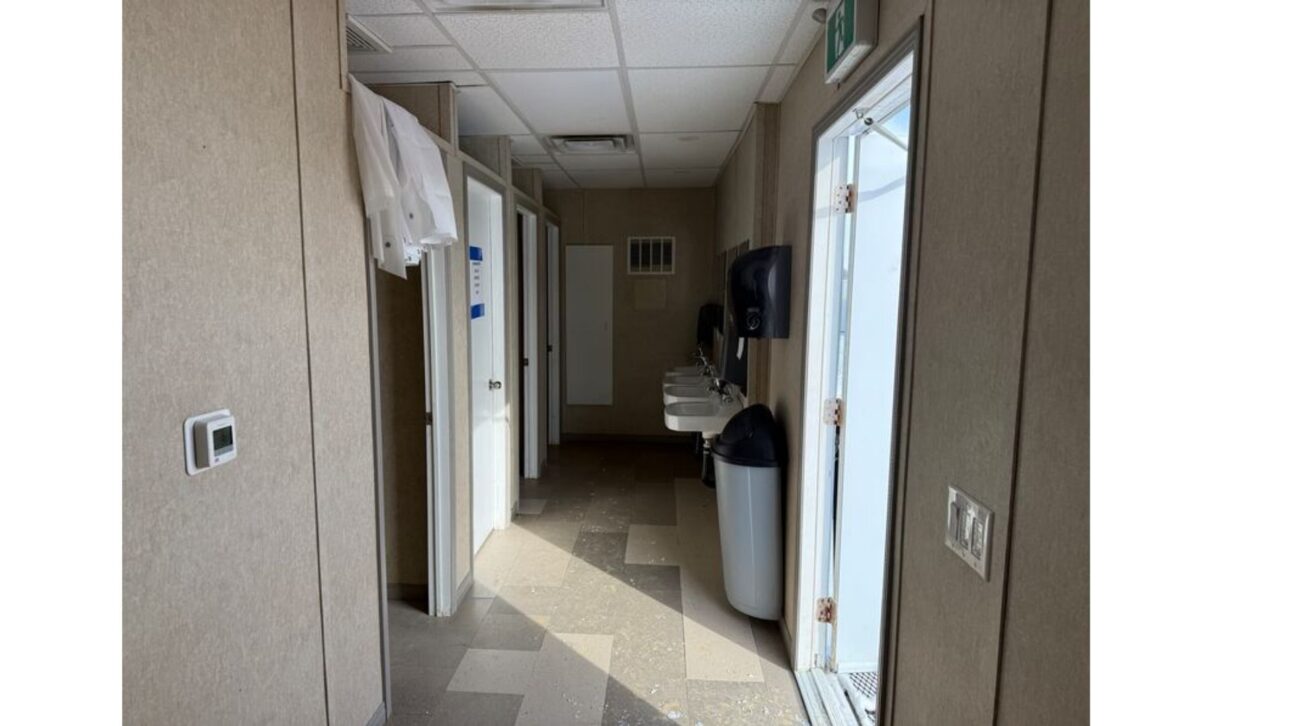
A real shelter is not just four walls. In addition to the cabins, the London site offers shared bathroom and shower facilities, laundry, and a dining area with food served on-site every day. Having a place to shower, wash clothes, and eat in peace already changes the routine of those who lived on the street.
There is also a space dedicated to services. The shelter has support rooms and offices where residents receive care and guidance, transforming the place into more than just a dormitory. It is a small ecosystem aimed at stabilizing the life of each person accommodated.
And there is a detail that moves and makes a practical difference: pets are welcome. The shelter has a designated area for walking dogs on a leash, allowing residents to bring their animals instead of abandoning them. For many people on the street, the dog is the only company, and being able to keep it close is decisive when accepting help.
Why accepting pets changes everything
The issue of animals seems small, but it is central to accommodation. One of the reasons many homeless people refuse shelters is the prohibition of bringing their pets. Forced to choose between a roof and their dog, many prefer to stay on the street alongside the animal.
By reserving an area for dogs, the London shelter breaks down this barrier. The resident does not have to give up the animal, which is often their greatest emotional bond and even their protection on the streets. It is a gesture of empathy that increases the chance of the person actually accepting to get out of the cold.
This type of detail reveals the philosophy of the project. Thinking about the resident’s dog is thinking about the person as a whole, with their ties and needs, and not as a number to be housed. It is this human approach that differentiates a welcoming shelter from a simple human warehouse, and that usually defines the success of initiatives for the homeless population.
More than a roof: the support that comes with it
Getting someone out of the cold is just the first step. The London shelter was designed to also offer continuous support, with weekly assistance to help residents apply for social benefits, organize finances, apply for housing, and access health services. The idea is to use the time in the shelter to rebuild life.
The operation is in the hands of a specialized company. The place is run by Xpera, which has experience in managing emergency accommodations and temporary shelters in challenging environments, having already served evacuees from Indigenous communities, refugees, and homeless people. The professional management seeks to balance security and hospitality.
This support is what separates a shelter from a real solution. Providing a cabin without support would only solve the cold night, but connecting the resident to benefits, health, and future housing addresses the causes that led them to the street. It’s the difference between a pause and a turning point in life.
How much it costs and how long it will operate
A project of this scale has a significant cost. According to the information released, building and operating the modular London shelter is expected to cost around 7 million Canadian dollars, equivalent to over 25 million reais. It’s a high investment, but small compared to the social cost of keeping people living and dying on the streets.
The funding also involves the residents themselves. Those who receive housing assistance through Ontario’s social programs contribute this amount to the shared costs of the location, in a model that splits the bill between the public authority and the beneficiaries. It’s not pure charity, but a partnership.
However, there is an expiration date. The modular shelter is expected to operate until April 2027, which reinforces its nature as a transitional solution, not a permanent home. The hope is that, during this period, residents will be able to take the next step towards stable housing.
It’s worth remembering that leaving people on the street also costs a lot. Homeless people often resort to emergency rooms, hospitals, and the police system, generating high and often invisible public expenses. Viewed from this angle, investing in an organized shelter may be cheaper for the public authority than simply ignoring the problem.
High demand and criticism: the project does not please everyone
The size of the queue shows the extent of the problem. A few months after opening, the shelter was already housing about 70 people, near full capacity, while more than 100 others were waiting for a spot on the waiting list. The demand alone already proves the size of the homelessness crisis in the city.
But not everything is praise, and it’s fair to note. According to CBC itself, at least one resident stated that they would prefer to return to living on the streets rather than stay in the shelter, a sign that rules, coexistence, and adaptation do not always please everyone. Projects like this face the challenge of balancing security, freedom, and dignity.
These tensions are common in such initiatives. Reconciling operating norms with the autonomy of those coming from the street is delicate, and success depends on constant adjustments and listening. Recognizing criticism, instead of hiding it, is part of making the shelter truly work for the homeless population.
Modular housing: a trend against the housing crisis
The case of London is not isolated. Cities in various countries have been investing in modular shelters and housing to quickly respond to the homeless crisis, using prefabricated cabins that combine relatively low cost, speed of installation, and individual privacy. It is a practical response to an urgent problem.
The advantage of the model lies in agility and dignity. Instead of large impersonal hostels, the modules offer reserved units that respect each resident’s privacy and security, increasing the adherence of those who would normally refuse a shelter. It is a way to welcome without humiliating.
Examples are spreading across North America. Cities in Canada and the United States are creating villages of tiny houses and modular shelters to accommodate those living on the streets, with individual units, common spaces, and support services. Each project tests a different way to transform the cold emergency into a way out.
Of course, modular housing is not a magic solution. Being often temporary, it needs to be linked to a larger plan for permanent housing, or it only postpones the problem. The London shelter works best precisely when understood as a bridge, not a final destination, for those seeking to leave the streets.
What Brazil has to do with this
The Brazilian reality makes the example very current. Brazil has a homeless population that has grown significantly in the last decade, and although the climate is milder, the cold in the South and Southeast also kills homeless people every year. The need for dignified and quick shelters is as real here as in Canada.
Several elements of the model could inspire Brazilian cities. The privacy of the cabins, the permission to bring animals, meals on site, and support for rebuilding life are replicable ideas that make the reception more humane and effective. Often, it’s the small detail, like accepting a dog, that makes a person agree to enter.
Some Brazilian capitals are already experimenting with similar ideas. There are projects for transitional housing, republics, and shelters with individual rooms that approach the logic of London, albeit on a smaller scale and with fewer resources. The Brazilian challenge is to expand these initiatives and link them to permanent housing programs, so the shelter does not become a dead end.
There is also the lesson about speed and transition. Building modular shelters can be a way to quickly create spaces in winter, as long as they are connected to long-term housing policies. London shows that treating the homeless population with dignity is not a luxury, but a possible choice for any city that decides to look at those sleeping in the cold.
And you, do you think this would work here?
The story of London, in Canada, shows that it is possible to face the cold and life on the streets with a serious project: a modular shelter with 60 cabins, bed, heating, daily meals, and even an area for dogs, designed as transitional social housing for the homeless population. More than just sheltering, the place tries to restore dignity.
And you, do you believe that a modular shelter like this, with individual cabins and that even accepts animals, could help the homeless population in Brazilian cities? Share in the comments what you think makes a shelter truly welcoming and what is still missing for this to become a reality here.