






 Portuguese
  Spanish
  4 min of reading
  0 comments


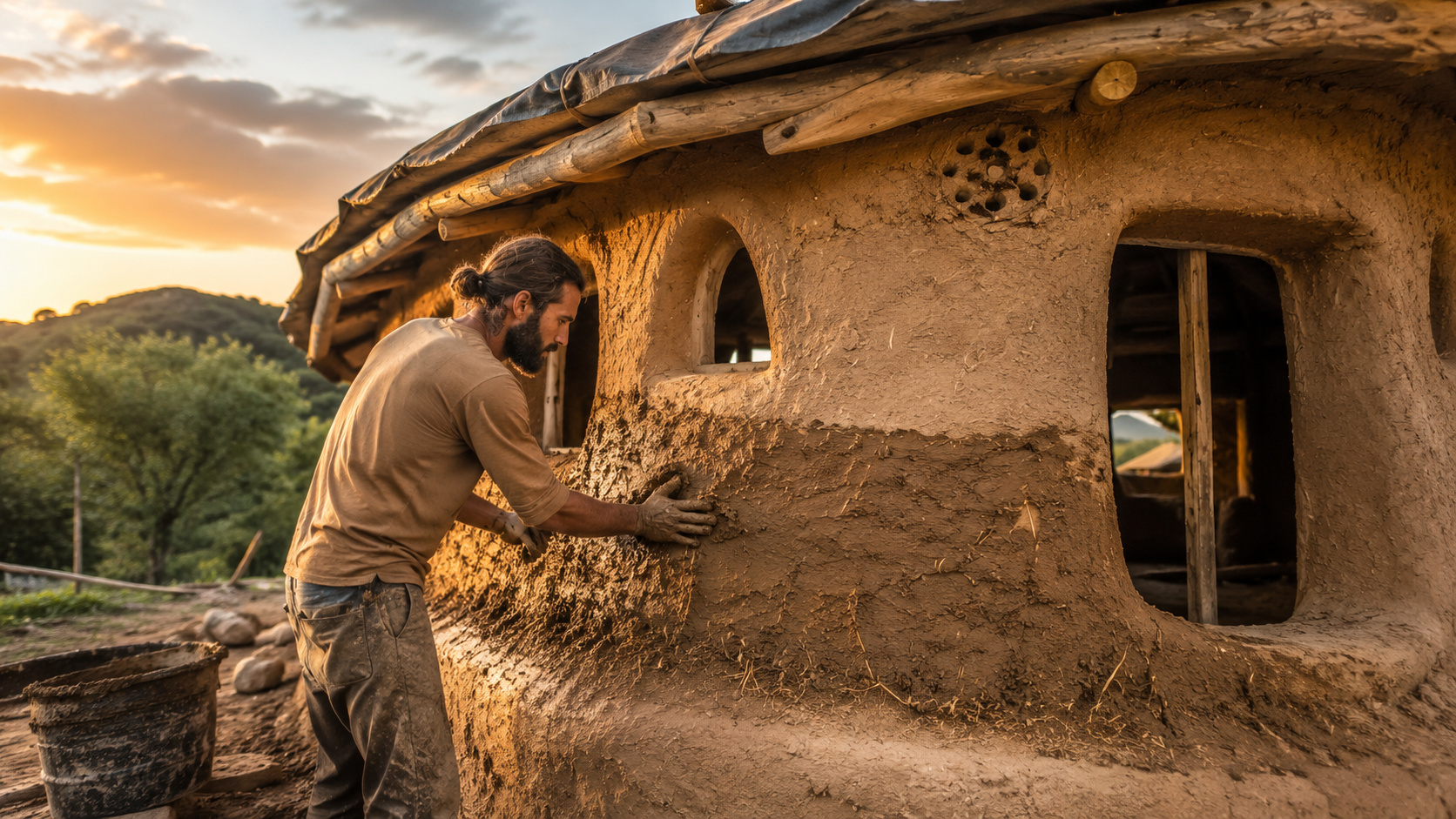
The clay house made with cob technique shows a natural construction built with earth, sand, straw, and water, revealing how walls can be molded by hand without following the common pattern of blocks, conventional concrete, and plaster used in most buildings
A clay house made with earth, sand, straw, and water went viral by showing a dwelling being built with manually molded walls, without the traditional logic of blocks and conventional concrete. The information was released by Natural Buildings, a YouTube channel about natural construction.
The video shows the complete construction in 10 minutes and appears indexed on YouTube with over 660 thousand views. The scene draws attention because the house does not emerge through ready-made pieces, but through layers of a natural mixture applied gradually.
The visual result is impressive because it looks like a dwelling sculpted into the land itself. Even so, the technique requires care, as natural construction does not mean a simple, cheap, or permitted project anywhere.
-
Brazilian siblings aged 11 and 7 read 240 books in just one year and caught attention on social media: while many children spend hours on screens, they turned their family’s routine into an example of reading, discipline, and curiosity.

-
4-year-old granddaughter saved her elderly grandmother after a serious fall at home, ran to ask a neighbor for help, and guided rescuers to the room, surprising the police with her calmness and may receive an award for the action that prevented a family tragedy.
-
Forget the Eiffel Tower: the largest steel bridge on the planet has 25.8 thousand tons of metal, a height equivalent to 100 floors, a record-breaking arch of 580 meters, and spans mountains 310 meters above the river.

-
With 181 meters, 12,000 tons, and 46 years in service, the French helicopter carrier concealed a mission that involved 5 types of helicopters and global presence.




Clay house made with cob technique swaps blocks for a hand-molded mixture
The technique used is known as cob, a name given to a form of construction with raw earth. In simple words, it uses a mass made with clay, sand, straw, and water to form thick walls.


The clay helps to bind the mixture. The sand adds volume. The straw acts as fiber, helping to bind the material. The water allows everything to be mixed until it reaches a mass that can be applied by hand.
Unlike a common wall, made with aligned blocks and plaster on top, the cob wall grows in layers. This gives the house a more organic shape, with curves and an artisanal appearance.
How the walls of earth, sand, straw, and water are erected in natural construction
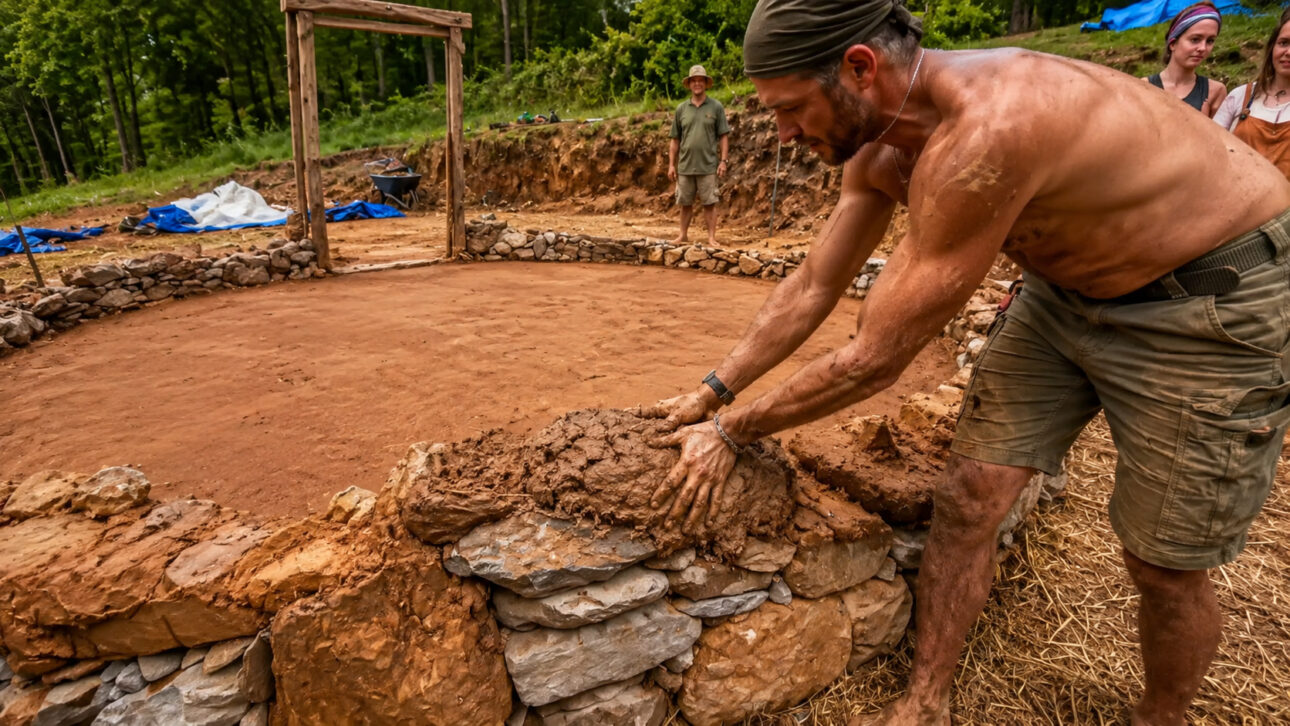
The construction begins with the preparation of the dwelling’s base. Then, the mixture of earth, sand, straw, and water is gradually placed, forming the body of the walls.
This process gives the impression that the house is being sculpted, not assembled. Each layer needs to take shape before receiving more material, which gives the project a very different pace from conventional construction.
Natural Buildings, a YouTube channel about natural construction, shows the complete sequence of the project in video. The footage helps to understand why the technique draws so much attention: the wall does not arrive ready, it appears as a result of manual and repeated work.
Why the mud house went viral on social media and sparked so much curiosity
The house went viral because it showcases a type of construction that deviates from what many people know. Instead of conventional concrete, bricks, and straight walls, the video shows earth, sand, straw, and water turning into a home.
The curiosity also comes from the visual. The walls have texture, volume, and curves, which makes the house look different from the common buildings seen in Brazilian cities.
Another point that captures attention is the transformation of materials. The mixture seems simple at first, but it takes the shape of a wall and becomes part of a complete house. For the lay audience, this change is easy to understand and visually striking.
Cob technique draws attention, but does not eliminate design, safety, and local regulations
Building with cob may seem simple, but a house needs to be safe to live in. This applies to any material, whether concrete, wood, block, or mud.
A raw earth wall needs to be protected against moisture, rain, and soil issues. The roof, foundation, and house design also need to work together to prevent damage over time.
Therefore, the technique cannot be treated as a ready solution for any terrain. The mud house requires analysis, technical guidance, and compliance with local building regulations, when such regulations are required.
Natural construction should not be confused with improvised work
The fact of using natural materials does not make the construction automatic or risk-free. A dwelling needs to have stability, protection, and real conditions for use.
It is also not correct to state that the technique will always be cheaper. The cost can vary greatly, as it depends on the terrain, the availability of materials, the working time, and the need for professionals.
The video shows a possibility of natural construction, not a universal promise. The cob technique arouses interest precisely because it is different, but it needs to be understood responsibly.
Mud house shows another way of seeing housing and construction
The house made with earth, sand, straw, and water draws attention because it reveals a way of building that many people do not see in everyday life. It shows that walls can be molded manually and that natural construction still arouses curiosity in the midst of the conventional concrete era.
The greatest impact is in the contrast between simple materials and the final result. The cob technique shows a house with an artisanal appearance, but it also reinforces an important lesson: every home needs to combine creativity, safety, and respect for local regulations.
Would you live in a mud house made with earth, sand, straw, and water if it had a safe design and construction authorization? Share your opinion and share with those who like to see different ideas in civil construction.


Be the first to react!