






 Portuguese
  Spanish
  7 min of reading
  0 comments


Turkey’s lakes have become a global alert after 186 of the 250 dried up in 50 years. In Lake Marmara, boats were left on dry land, while desertification, dams, irrigation, and water crisis affect communities, agriculture, tourism, migratory birds, and wetlands in the country hosting COP31 today on a broader and more visible scale.
The lakes of Turkey have become the center of a water crisis that gained prominence on June 20, 2026, when Exame reported that the country, pointed out as the host of COP31, lost 186 of its 250 lakes in the last 50 years, in a scenario aggravated by desertification.
The transformation is symbolically evident in Lake Marmara, in the province of Manisa, in southwestern Turkey. Where there was once water, boats, and economic life, today there are abandoned boats on dry land, withered vegetation, and residents dealing with the disappearance of an ecosystem that supported part of the region.
Lake Marmara became a symbol of the crisis
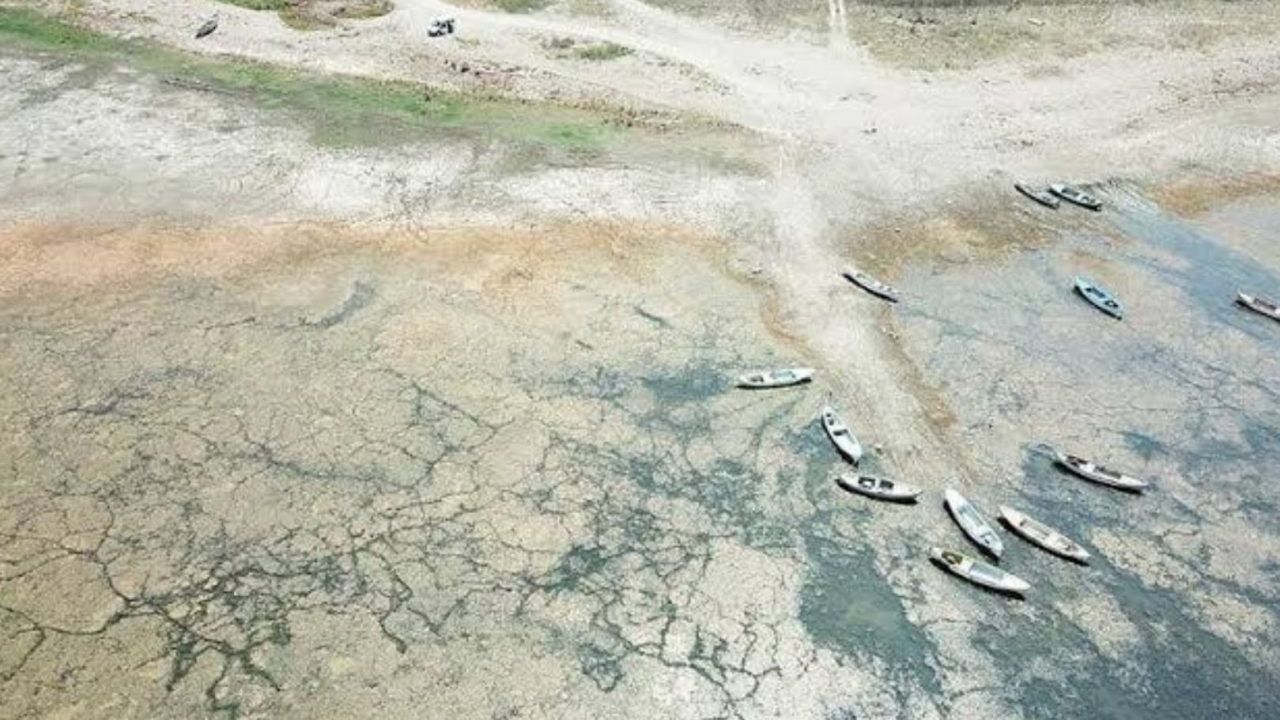
Lake Marmara is one of the strongest examples of water loss in Turkey. The place, once associated with fishing, tourism, and the presence of thousands of birds, began to lose volume rapidly starting in 2011.
-
Two Brazilian students created a hospital bed with voice control to help their sick grandmother and won an award in Portugal: the prototype allows patients to adjust height and inclination just by speaking, without cranks, and promises more autonomy for the elderly and people with reduced mobility.

-
Public school students from Sertão de Pernambuco create a $5 filter using sugar-apple peel, transform toxic cassava waste into drinking water, and win 1st place nationally in Samsung’s innovation contest.

-
8-year-old boy found small balls in the yard, thought they were seeds, and helped U.S. universities reveal a hidden natural strategy in oak galls, showing how small domestic observations can change scientific research on discrete natural processes.
-
The owner of Facebook, Mark Zuckerberg, opened his wallet and paid the equivalent of R$ 72.9 billion, or US$ 14.3 billion, to hire a 28-year-old and put him in charge of Meta’s new superintelligence.


Ten years later, it had already lost 98% of its surface, according to data published by Exame based on information from National Geographic. Today, the dry lake sums up a change that has ceased to be slow and has become visible in the landscape.
Boats remained where there was once water
The image of abandoned boats in dry areas helps convey the scale of the problem. A vessel stranded on the empty bed is not just a curious scene; it is the portrait of an economy that depended on water.
When lakes disappear, the impact goes beyond the landscape. Fishing, tourism, livestock, agriculture, and local circulation lose their foundation simultaneously, pushing communities towards a difficult adaptation.
Turkey lost 186 of its 250 lakes
The most striking data is the national scale of the crisis. According to the report, 186 of Turkey’s 250 lakes dried up in half a century, while about 1.5 million hectares of wetlands were also affected.
This number transforms isolated cases into an environmental pattern. Turkey is not just facing the reduction of a famous lake, but a broad alteration in its water systems, with accumulated effects in various regions.
Crisis is not explained only by lack of rain
Drought and warmer climate help explain part of the water disappearance, but they don’t tell the whole story. Experts cited by the source point out that human interventions played a decisive role.
Dams, canals, agricultural irrigation, and intensive water use altered the natural flow that supplied flooded areas. When water replenishment is interrupted for decades, lakes become more vulnerable to any dry period.
Dams changed the water path
The water infrastructure policy adopted by Turkey since the 1950s appears as one of the structural causes of the crisis. Projects created for irrigation and supply helped redirect water to agricultural projects.
In the case of Lake Marmara, the Gördes Dam is cited as part of the process that reduced water replenishment. What seemed like a solution for short-term production ended up leaving an entire ecosystem without sufficient flow to survive.
Intensive agriculture increased the pressure
The expansion of irrigation worsened the competition for water. In some regions, producers also resorted to groundwater, increasing the pressure on aquifers that supplied nearby ecosystems.
This type of use creates a chain effect. When rivers, aquifers, and reservoirs are pressured simultaneously, lakes stop receiving surface and underground water, accelerating the collapse.
Desertification advances over Turkish territory
The lake crisis occurs as Turkey faces an increasing risk of desertification. According to the source, a recent United Nations report indicates that 88% of Turkish territory is at risk and that the country may face severe drought by 2030.
This data amplifies the COP31 alert. A country that will host climate discussions arrives at the event dealing with an internal example of how water, climate, agriculture, and land occupation are connected.
Lake Eğirdir also shows signs of stress
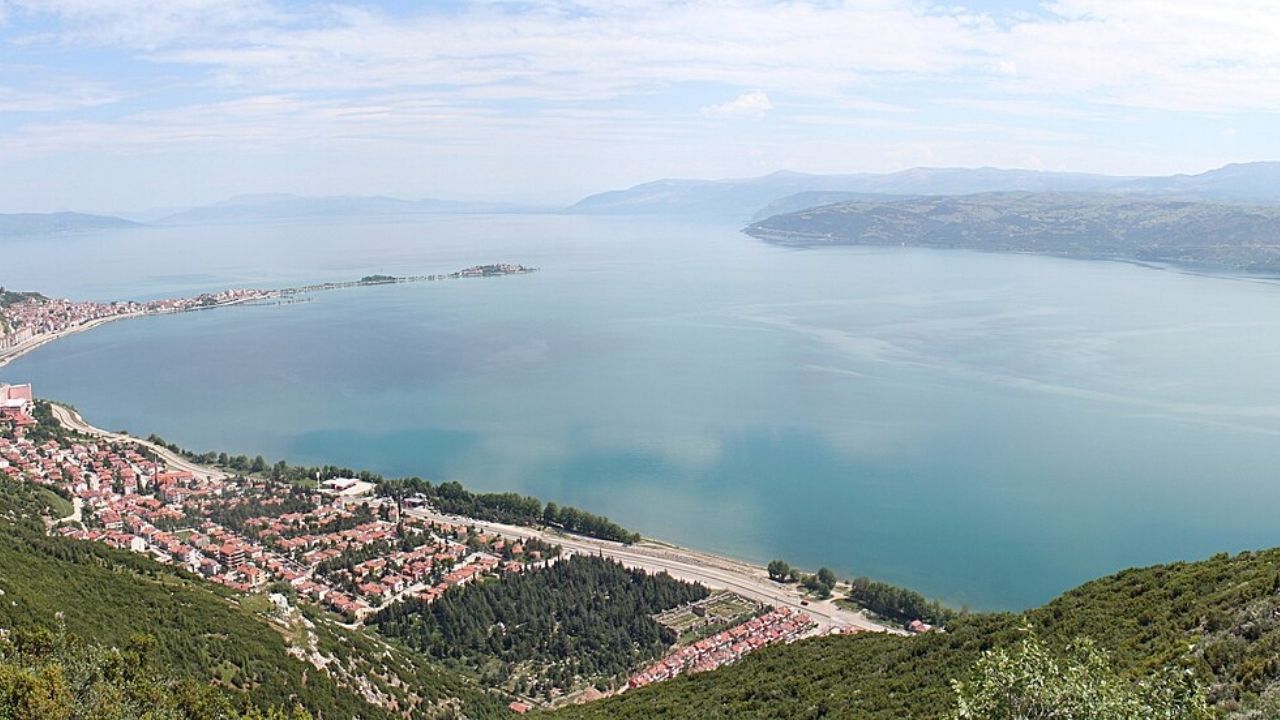
Lake Eğirdir, known for its color changes throughout the day, faces water volume loss and algae and mucilage proliferation. These signs indicate ecological imbalance and worsening environmental quality.
When a lake loses volume, the concentration of nutrients and pollutants can increase. The remaining water becomes more vulnerable to contamination, color alteration, bad odor, and loss of aquatic life.
Lake Van receded and revealed hidden marks
Lake Van, the largest in Turkey, also saw its shoreline recede. With the reduction of water, areas once submerged began to reveal historical ruins, accumulated trash, and structures that remained hidden for decades.
This exposure may seem fascinating at first glance, but it carries a warning. When lakes reveal what was submerged, they also show the extent of the water that no longer exists.
Lake Seyfe faces new pressure
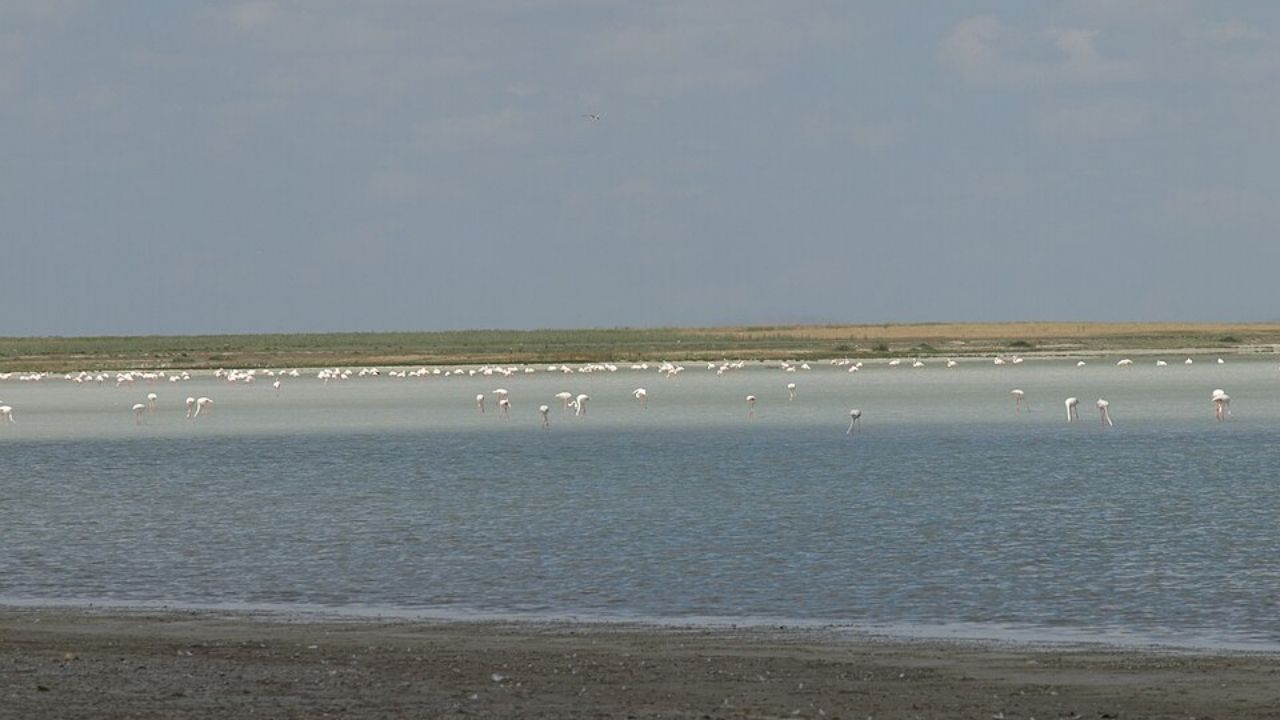
The Seyfe Lake, which once hosted large concentrations of flamingos, also appears among the concerning cases. Besides the loss of water, the region faces pressure associated with a mining project near the protected area.
This type of conflict shows how the water crisis mixes with the dispute over land use. Fragile areas become even more exposed when water decreases and new economic activities advance near ecosystems.
Lake Tuz Gölü became a symbol of environmental loss
Lake Tuz Gölü also became a symbol of the crisis after records of mass flamingo deaths on its dry bed. The scene reinforces the direct effect of water loss on natural cycles and migratory routes.
Even without turning the issue into an animal theme, the episode helps to measure the ecological impact. When lakes dry up, resting, breeding, and feeding routes cease to exist on the natural map.
Communities lose income and begin to leave
Around Lake Marmara, livestock farming declined and residents began to leave the region after the water disappeared. The former fishermen’s cooperative was also abandoned.
This is one of the harshest effects of the crisis. When the water vanishes, the loss is not only environmental: it reorganizes people’s lives, empties economic activities, and changes the future of entire communities.
Signs indicate a lake that no longer exists
A detail described in the source summarizes the disconnection between memory and reality: signs by the roadside still warn about the proximity of the lake, even though the water is no longer there.
This contrast strengthens the story. The signage points to a place that existed as a local reference, but the current landscape shows that the territory changed faster than its own public memory.
Drying creates toxic dust and salinized soils
The loss of lakes can also generate less visible effects. When the bed is exposed, contaminated sediments, salts, and fine particles can be carried by the wind, worsening air and soil quality.
Moreover, salinization harms nearby agricultural areas. The disappearance of water does not end at the lake’s edge; it spreads through the soil, the dust, the production, and the environmental health of the region.
Turkish problem reflects global trend
Although Turkey’s situation is dramatic, it is not isolated. Exame cites a 2023 study by researchers from the University of Virginia, which states that more than half of the world’s largest natural lakes and reservoirs are losing water.
The research also indicates that about a quarter of the world’s population lives in watersheds linked to lakes that are drying up. In other words, the Turkish alert is part of a larger freshwater crisis.
COP31 arrives under symbolic pressure
The hosting of COP31 increases the pressure on Turkey because it places the country’s water crisis in front of an international climate showcase. The case of the dry lakes should serve as a concrete example of environmental vulnerability.
It’s not just about climate diplomacy. The central question is how a country that has lost so many bodies of water can discuss adaptation, water, and land use in the face of such a visible crisis at home.
When water disappears, the country changes
The lakes of Turkey show how the climate crisis and water management can transform entire landscapes in a few decades. The disappearance of 186 out of 250 lakes, the collapse of Lake Marmara, and the advance of desertification indicate a problem that has already surpassed the environmental field.
Boats stranded on dry land, communities leaving once productive regions, and ecosystems losing function reveal a crisis that mixes climate, infrastructure, agriculture, and human choices. Do you think COP31 should make cases like Turkey’s a global priority for water adaptation? Share your opinion.




Be the first to react!