Portuguese
  Spanish


The Field Of Neuroscience Has Gained New Impetus With The Development Of An Almost Imperceptible Microstructure Brain Sensor. The Technology Was Designed To Continuously And Minimally Invasively Capture Neural Signals, Facilitating Both Treatments And Research On The Human Brain
A new brain sensor developed by researchers at Georgia Tech, located in Atlanta, Georgia, United States, could transform how brain-computer interfaces (BCIs) are used in daily life.
The innovation allows for the reading of neural signals with high precision, without causing discomfort or requiring bulky equipment.
Brain-Computer Interfaces — Microscale Sensor Fits Between Hair Follicles
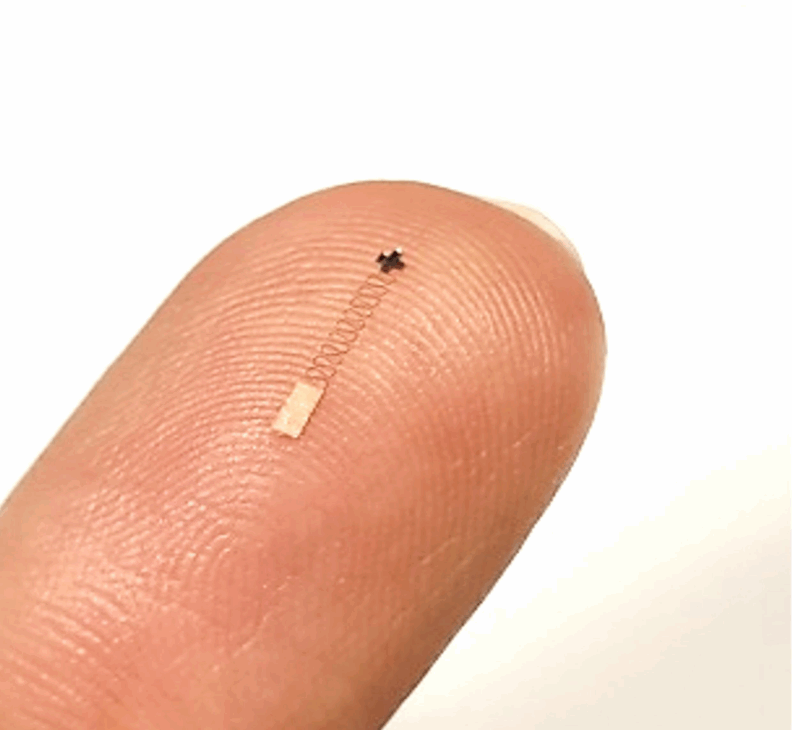
The sensor created by the team is extremely small and can be inserted into the spaces between hair follicles, just beneath the skin. It is nearly invisible to the human eye.
-
Astronauts Returning from Space Show Altered Gut Bacteria and Loss of Protective Microbes, Highlighting Potential Risks for Mars Missions

-
Electrolux Unveils Smart Washing Machine Line with 12kg Capacity, 45-Minute Cycle, Automatic Dosing, Dirt Sensors, Sanitizing Steam, App Control, and User-Guiding Display
-
Realme Launches Affordable 16x 5G Phone with Military Certification, 6,600 mAh Battery, 50 MP Camera, and 6.8-Inch Screen Starting at $320

-
Amazonian Fruit Bacuri: A Nutrient Powerhouse with Antioxidants, Vitamins, and Bioactive Compounds, Ideal for Sweets and Beverages



According to the researchers, this positioning allows for greater proximity to the source of brain signals, reducing external interferences.
Unlike traditional methods that use gel or dry electrodes on the scalp, the new solution avoids rigid wires and the need for constant application. It also overcomes the limitations of invasive sensors that require implants in the brain.
Technology Uses Conductive Microneedles And Flexible Wires
The device uses microneedles made of a conductive polymer to capture electrical signals from the brain.
These signals are then transmitted through flexible wires made of polyamide and copper. The entire system is encapsulated in a structure smaller than 1 millimeter.
Professor Hong Yeo, the research leader and an expert in wearable sensors, was the one who combined knowledge in flexible electronics and microtechnology to create this new sensor.
Yeo is a professor at the George W. Woodruff School of Mechanical Engineering and also works at the Georgia Tech Institute for People and Technology.
“My goal is to develop sensor technologies that can really help in the healthcare field“, Yeo explained. He states that the key lies in miniaturization and strategic positioning of the sensor, which greatly improves the quality of the captured signals.
Tests Show 96.4% Accuracy With Full Freedom Of Movement
To test the sensor, six people participated in a study where they used the device throughout a normal day.
The participants were able to walk, run, and perform daily tasks while the brain-computer interface recorded and interpreted neural signals.
During the tests, users controlled an augmented reality video call just by focusing their gaze.
The system was able to identify, with 96.4% accuracy, which visual stimulus was being observed, allowing actions like accepting calls or accessing contacts without the use of hands.
The reliability of the signals was maintained for up to 12 continuous hours, with extremely low electrical resistance between the skin and the sensor. This indicates that the system can operate for long periods without performance loss, even with constant movement.
Possibilities For Continuous Use And Human-Machine Integration
The results excited the researchers. For Yeo, this wearable technology could make BCIs viable for continuous use in anyone’s routine, practically integrating the human brain with external devices.
Additionally, the sensor could pave the way for future applications in areas such as rehabilitation, prosthetics, and control of assistive devices. “I will continue collaborating with my team to further develop BCI technology“, the professor stated.
Yeo also highlighted the importance of teamwork. “Many of today’s major challenges are too complex to be solved individually. Therefore, I thank my colleagues and collaborators who made this advancement possible.“
New Path For Brain Monitoring Devices
With this innovation, Georgia Tech demonstrates that miniaturization and user comfort can be combined with high performance in brain-reading devices.
The new sensor offers a promising alternative to traditional systems, indicating a new phase in the development of more practical, effective, and integrated brain-computer interfaces in daily life.
Study published in PNAS.