






 Portuguese
  Spanish
  4 min of reading
  0 comments


Study Rewrites The History Of One Of The Most Visited Archaeological Complexes In The World And Discovers Unique Links To Egyptian Mythology
An international study recently published in the scientific journal Antiquity has revealed findings that challenge decades of archaeological knowledge about the Karnak Temple in Egypt. The research establishes a new chronology for the complex and presents evidence that its location may have been chosen for mythological reasons.
Led by Dr. Angus Graham from Uppsala University in Sweden, in collaboration with scientists from the University of Southampton in the United Kingdom, the team analyzed 61 sediment samples and thousands of ceramic fragments to reconstruct the landscape surrounding the temple over its nearly three thousand years of occupation.
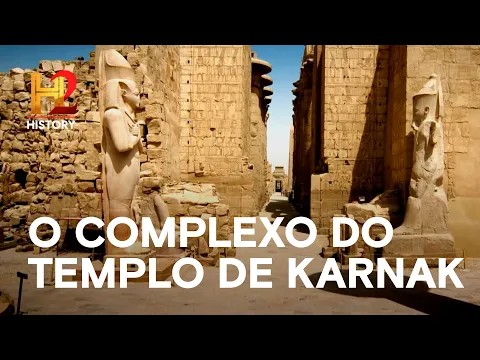
Considered a UNESCO World Heritage Site and one of the largest religious complexes of the ancient world, Karnak receives millions of visitors annually. The complex is located about 500 meters east of the current Nile River, near the city of Luxor, where Thebes, the ancient religious capital of Egypt, was located.
-
Giant South American Tree Stores Water in Its Trunk, Survives for Years in Dry Regions

-
Brazilian Man Transforms Degraded Area in São Paulo into Urban Forest with 40,000 Trees
-
11-Year-Old Brazilian Prodigy Develops New Math Formula, Seeks Publication in Leading Scientific Journal
-
They promised wealth with Sigma Lithium’s lithium mining, but the Jequitinhonha Valley got cracked houses, skyrocketing rent, and R$ 0 in royalties in 2025.




The research represents the most comprehensive geoarchaeological study ever conducted on the temple and offers an unprecedented understanding of when and why the site was chosen to become one of the most important sacred centers of Egyptian civilization.
More Recent Occupation Than Previously Thought

The results indicate that permanent occupation of the site only became possible after 2520 BC, with a margin of error of 420 years, likely during the Old Kingdom period, which spanned from 2591 to 2152 BC. Before that, the land was subject to periodic floods caused by the strong currents of the Nile River, which made any continuous occupation unfeasible.
The discoveries contradict previous theories suggesting even older occupation, possibly during the predynastic period. Other archaeologists argued that the Egyptians began using the site only from the First Intermediate Period, between 2152 and 1980 BC.
By analyzing sediments and ceramic fragments, the researchers traced the transformation of the site over three millennia. The oldest ceramic fragments found in the complex date from the period between 2305 and 1980 BC, corroborating the dating established by the geological study.
According to the researchers, the soil on which Karnak was founded gradually formed as the Nile channels advanced westward and eastward, creating a highland island in the region that today corresponds to the southeast section of the complex. This emerging island was key to enabling the initial occupation and the construction of the temple.
Formation Of The Landscape And Expansion Of The Complex
Over the centuries, the river channels surrounding the site continued to shift, moving further apart and expanding the area of available land. This natural process created the necessary conditions for the temple complex to expand over the millennia, transforming it into the vast architectural ensemble we know today.
The temple, covering approximately 200 hectares, consists of temples, monumental pylons, chapels, and other impressive structures that were built and expanded by various pharaohs throughout Egyptian history. The complex reached its peak during the New Kingdom, from 1550 to 1070 BC, when it consolidated itself as the religious, political, and administrative epicenter of Egypt.
The research demonstrates how the interaction between the Nile River and the peoples who inhabited the region was decisive for the development of Karnak. Changes in the river landscape not only allowed for initial occupation but also shaped how the temple expanded over time.
Surprising Link With Egyptian Mythology
One of the most fascinating discoveries of the study is the possible connection between the choice of the site and Egyptian mythology. Religious texts from the Old Kingdom describe that the “Creator God” manifested as an elevated piece of land emerging from the primordial waters, the so-called “primeval mound”.
The research found evidence that the location of Karnak may have been chosen to reflect the ancient Egyptian creation myth, where the first land emerged from the primordial waters. According to the archaeologists, the only known area of elevated land surrounded by water in the Thebes region was precisely the island where Karnak was founded.
This similarity does not appear to be mere coincidence. The researchers believe that the Tebanian elites deliberately chose the site to establish the dwelling of a new manifestation of the “Creator God,” referring to Amon-Ra, the supreme deity of the ancient Egyptian pantheon.
The geographical configuration of the site, with its elevated island surrounded by Nile channels, fit perfectly into the mythological scenario of the formation of the Universe according to Egyptian cosmogony. This choice may have conferred a symbolic and religious dimension even deeper, reinforcing its role as a spiritual center of Egypt.
New Perspectives On Karnak
The study represents an important milestone for Egyptian archaeology, offering answers to questions debated for decades in academic circles. The combination of geological analyses with archaeological evidence allowed researchers to reconstruct with unprecedented accuracy the evolution of the landscape around the temple.
These discoveries not only rewrite the chronology of Karnak but also reveal how natural factors, cultural practices, and religious beliefs intertwined to give rise to one of the most extraordinary monuments of antiquity. The temple of Amon-Ra in Karnak remains a testament to the ingenuity and profound spirituality of the Egyptian civilization.
For the millions of tourists who visit the site annually, these revelations add new layers of meaning to an already impressive experience, showing that even after centuries of study, the monuments of Ancient Egypt still hold fascinating secrets waiting to be discovered.





-

-

-

-

-

14 people reacted to this.