Portuguese
  Spanish


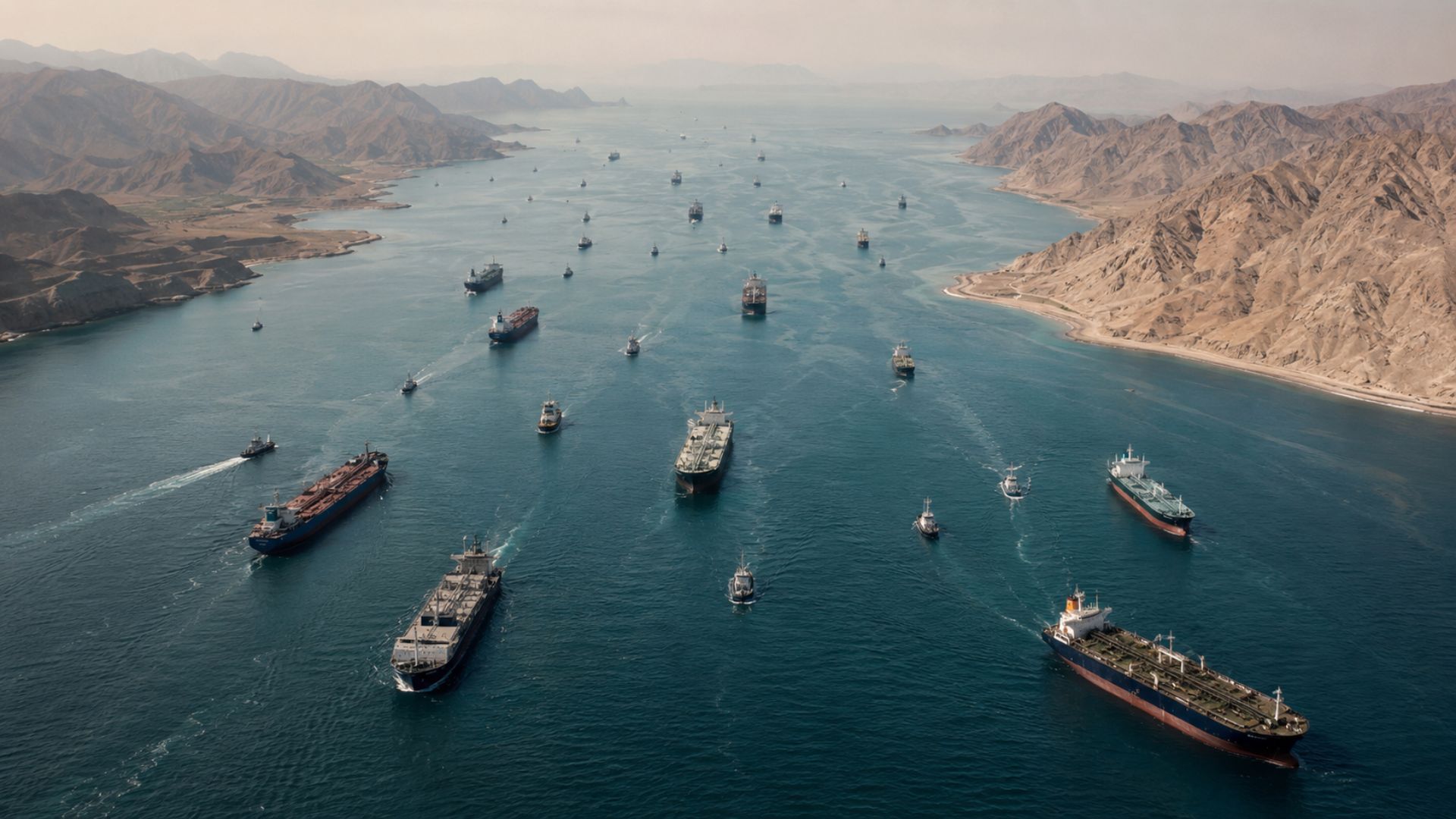

Iran’s decision to reopen ship transit in the Strait of Hormuz coincides with Trump’s visit to China and reveals a direct understanding between Tehran and Beijing that could reshape the balance of power in the world’s largest oil route
Iran announced this Thursday (14th) that about 30 ships crossed the Strait of Hormuz with Tehran’s authorization since Wednesday night (13th). According to information from G1, the statement, released by the Iranian Revolutionary Guard to state media, does not detail the nationality of the vessels, but the Fars news agency points out that the transit of Chinese ships through the route was resumed after a direct understanding between Iran and China, the largest buyer of Iranian oil.
What makes this movement much more than a simple maritime traffic release is the context in which it happens. Iran’s authorization was announced exactly during the official visit of the United States President, Donald Trump, to Beijing, where he met with Chinese President Xi Jinping. The coincidence of dates raises an inevitable question: was the opening of the Strait of Hormuz a calculated diplomatic gesture or a demonstration that China achieved through negotiation what Washington could not achieve by force?
The Strait of Hormuz as a central piece in the oil board
The Strait of Hormuz is not just a maritime passage. It is the bottleneck through which a huge portion of the oil traded globally flows, connecting the Persian Gulf to the Gulf of Oman and, from there, to consumer markets in Asia, Europe, and the Americas. Any restriction on ship transit on this route has the potential to cause shocks in international oil barrel prices and disrupt entire logistics chains.
-
How to Prevent Brown Recluse Spider Bites: Common Hiding Spots and Free Tips to Reduce Risks

-
Natto: The Unusual Japanese Superfood Gaining Popularity on Social Media and Driving Record Exports
-
Brazilian Mayor Goes Undercover as Homeless for 24 Hours to Assess Public Services

-
15-Year-Old Entrepreneur Malu Lira Publishes 20 Children’s Books on Financial Education, Earns $500,000, and Expands Her Project to the Amazon Rainforest




Since the beginning of the conflict between Washington and Tehran, on February 28th, control over this passage has become one of the most sensitive points of the dispute. Iran began restricting ship circulation as a pressure tool against the United States, while the Americans responded by intensifying inspections and blocking the transit of Iranian vessels in the region. The result was a kind of strategic paralysis that affected shipowners, insurers, and oil markets around the world.
China and Iran seal understanding that Washington observes from afar
The information that the transit of Chinese ships through the Strait of Hormuz has resumed under an agreement between Beijing and Tehran places China in an unprecedented diplomatic leadership position in this crisis. China is the largest buyer of Iranian oil, and the interruption of the flow through the strait directly affects Chinese energy security. A bilateral understanding to ensure the passage of its ships represents, in practice, a parallel negotiation channel to what the United States is trying to conduct.
In the assessment of the U.S. Treasury Secretary, Scott Bessent, in an interview with CNBC this Thursday, China “would do whatever it could” to help open the Strait of Hormuz, something that, according to him, would be “of great interest” to Beijing. Bessent’s statement implicitly acknowledges that China’s influence over Iran may be more effective than American military pressure on the specific issue of navigation through the strait. After the first meeting between Trump and Xi, a White House official told Reuters that both leaders agreed that the Strait of Hormuz should remain open and that Iran should never obtain nuclear weapons.
Attacks on ships cast a shadow over the reopening of the Strait of Hormuz
Despite the tone of easing suggested by the release of the ships, the surroundings of the Strait of Hormuz remain a high-risk zone. In recent days, a series of attacks on vessels in the region shows that the situation is far from stabilized and that the safe transit of ships is not yet guaranteed.
India reported that one of its ships was attacked off the coast of Oman and classified the episode as “unacceptable.” On Thursday, the British maritime security agency UKMTO reported that “unauthorized persons” boarded a ship anchored off the coast of Fujairah, in the United Arab Emirates, and began directing it towards Iran. On Monday (11), South Korea had condemned “in the strongest possible terms” the attack on a cargo ship operated by a South Korean company in the Strait of Hormuz, announcing that it would respond as soon as the perpetrator of the incident was confirmed. This contradictory scenario reinforces the view that Iran operates with a selective strategy in controlling ships through the Strait of Hormuz, differentiating between nations with which it maintains understandings and countries aligned with American sanctions. Iranian authorities have already publicly warned that ships from countries supporting U.S. sanctions may face difficulties crossing the route.
Calculated gestures of Iran: from the Japanese tanker to the agreement with China
The release of the 30 ships through the Strait of Hormuz did not happen in isolation. Iran had already been giving signs of controlled flexibility in the previous days. On Wednesday itself, Tehran allowed the passage of a Japanese tanker loaded with oil. Before that, it had authorized the crossing of a Qatari ship, in a gesture interpreted as goodwill towards Qatar and Pakistan, countries that act as mediators in the attempt to reduce the tension of the conflict.
The emerging pattern is that of an Iran that uses control of the Strait of Hormuz as a precise diplomatic tool, granting passage to ships on a case-by-case basis according to its strategic interests. For China, which relies on the continuous flow of oil through the strait, the guarantee of transit for its ships is a concrete outcome. For Iran, the understanding with Beijing strengthens its negotiating position against Washington, demonstrating that it can choose with whom it cooperates and which ships it authorizes.
Oil, ships, and power: what changes in the Strait of Hormuz from now on
Trump’s visit to Beijing and the simultaneous partial reopening of the Strait of Hormuz create a scenario in which three powers play simultaneously with distinct objectives. The United States seeks to ensure the free navigation of ships and prevent Iran’s nuclear program. China wants to secure its oil supply without entering into direct confrontation with Washington. Iran, in turn, tries to convert its strategic geographical position into political bargaining power.
The outcome of this equation depends on variables that none of the three controls alone. If attacks on ships continue, the pressure for a tougher military response may intensify. If the negotiation channel between China and Iran consolidates, Washington may find itself in the uncomfortable position of relying on Beijing to resolve a crisis at the heart of the world’s largest oil route. And if Iran maintains its selective strategy of opening and restricting ships in the Strait of Hormuz, instability in oil markets is likely to persist indefinitely.
The Strait of Hormuz has once again become the epicenter of a dispute that mixes oil, diplomacy, and military power. The question remains: who really holds the key to this passage, Iran that controls it geographically, China that depends on it economically, or the United States that possesses the largest fleet of warships in the world?
Leave your opinion in the comments: do you believe that the understanding between China and Iran weakens the position of the United States in the Persian Gulf, or does this arrangement over oil and ships in the Strait of Hormuz tend to be temporary?