






 Portuguese
  Spanish
  4 min of reading
  0 comments


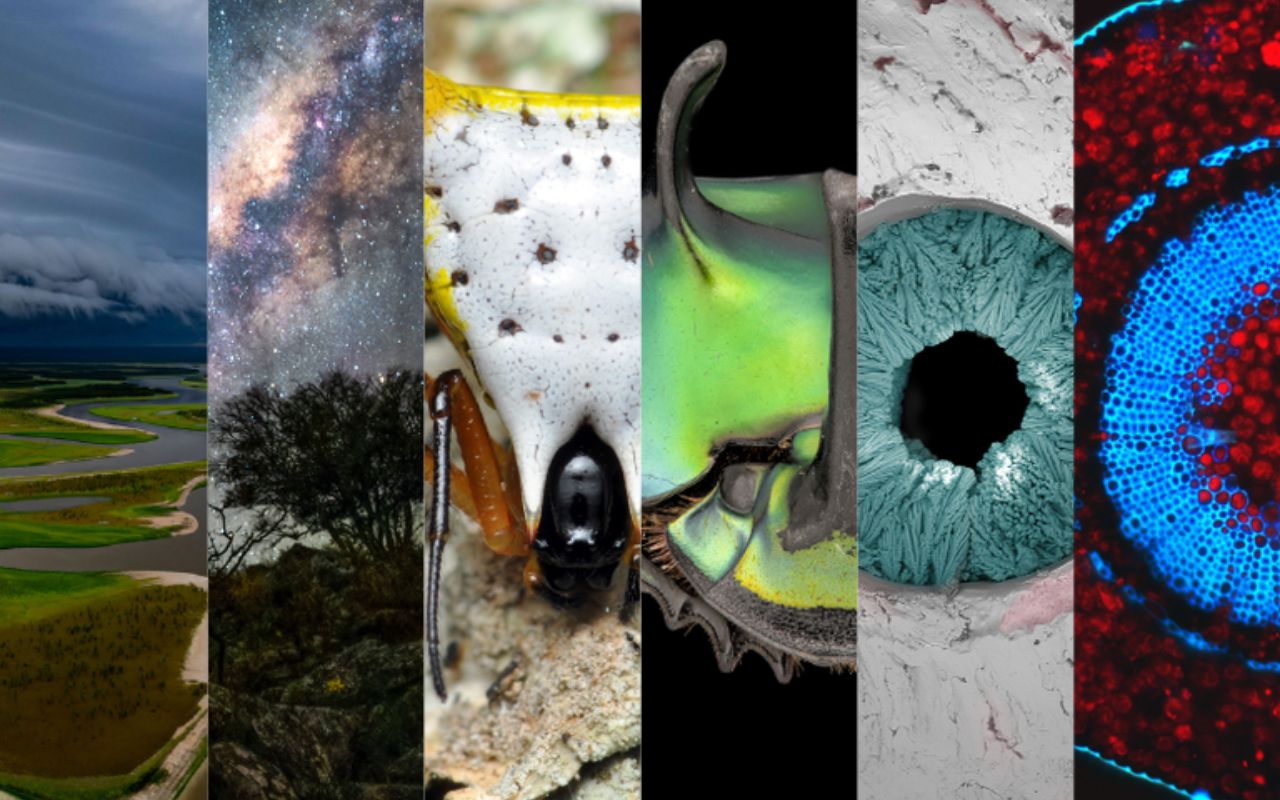
National Competition of CNPq Awards Best Scientific Photo with Up to R$ 15 Thousand and Encourages Innovation, Science, and Art in Brazil.
Winning up to R$ 15 thousand for a photograph is the main promise of the national photography competition of CNPq, which is now open for entries in Brazil. Organized by the National Council for Scientific and Technological Development, the Photography Prize – Science & Art (PFoto) takes place annually, charges no entry fee, and aims to value images that translate science, technology, and innovation through visual art.
Award Draws Attention and Values the Best Scientific Photo
The immediate highlight of the competition is the prize money awarded to the winners. The first place, author of the best photo, receives R$ 15 thousand, an amount considered high for cultural contests in the country.
In addition, the second place is awarded R$ 10 thousand, while the third place secures R$ 5 thousand.
-
Invisible Induction Technology Enables Wireless Power for Blenders, Coffee Makers, and Air Fryers, Reducing Countertop Cables

-
Smart Outdoor Lighting Transforms Gardens into Living Spaces with Weather Resistance and App-Controlled Scenes

-
Green dot on top of smartphone intrigues users, signals privacy alert in Android 12 that experts say shouldn’t be ignored.
-
Humanoid Robot Climbs 6,263-Meter Volcano in Ecuador, Sets Sights on Everest Challenge




The proposal is to recognize the creative and technical effort of those who turn scientific research into accessible imagery for the public.
What is the Photography Prize – Science & Art?
Created in 2011, PFoto has established itself as one of the main initiatives for visual scientific dissemination in Brazil.
The competition is organized by CNPq and integrates institutional actions aimed at popularizing science.
According to the official website: “to foster the production of images related to science, technology, and innovation; to contribute to the dissemination and popularization of science and technology; and to expand CNPq’s image bank”.
Thus, the focus is not only on aesthetics but also on the educational and informative value of the submitted images.
Who Can Compete in the National CNPq Competition
Participation in the competition is open and includes different profiles connected to the academic and scientific community.
Undergraduates or graduates, as well as postgraduates, can register.
Teachers and researchers are also eligible. Foreigners can participate, provided they hold permanent residency in Brazil, which broadens the competition’s reach and reinforces scientific exchange.
Categories for the Competition Images
To broaden the competition’s reach and ensure that different visual languages are represented, the organization opted to separate registrations into two major participation axes.
This division allows both more conventional records and images produced with scientific technology to have equal space in the competition.
In one axis, photographs captured with commonly used everyday equipment are gathered. This classification includes images taken with digital or analog cameras, cell phones, drones, and similar devices.
In this modality, the photographer’s gaze can turn to both natural landscapes and scenes shaped by human action, valuing the interaction between science, environment, and society.
The other axis of the competition is dedicated to records obtained with specialized instruments, generally used in scientific research.

In this group, images generated by optical, electronic, or electromagnetic equipment, such as microscopes, magnifying glasses, telescopes, and satellites, which reveal details invisible to the naked eye are accepted.
Additionally, images produced by diagnostic and analysis technologies, such as endoscopes, colposcopes, PET Scans, and multispectral sensors, also fall within this category.
Records from X-rays, ultrasound, magnetic resonance imaging, and computed tomography complete the list, reinforcing the scientific and innovative nature of the competition.
PFoto operates on the principle that science does not need to be restricted to technical texts. By promoting scientific photography, CNPq enhances dialogue between researchers and society.
The initiative reinforces innovation as a communication tool, transforming data, experiments, and observations into images capable of sparking curiosity, understanding, and interest in scientific knowledge.
How to Register for the Photography Contest
Registration is done exclusively online and is free of charge. Interested individuals must access the official CNPq website, select the desired category, and log in with their Gov.br account.
After that, simply follow the platform’s instructions and fill out the requested information. With the submission of the image, the candidate will already be competing for the prize.
National CNPq Competition Reinforces the Connection Between Science, Art, and Society
Over the years, PFoto has helped form a visual collection that translates Brazilian science beyond laboratories.
With each edition, the competition reaffirms photography as a scientific dissemination tool.
With attractive prizes and a focus on innovation, CNPq’s competition continues to be an opportunity to transform knowledge into images and recognition into concrete value.
With information from Diário do Comércio.






-

-

4 people reacted to this.