Portuguese
  Spanish


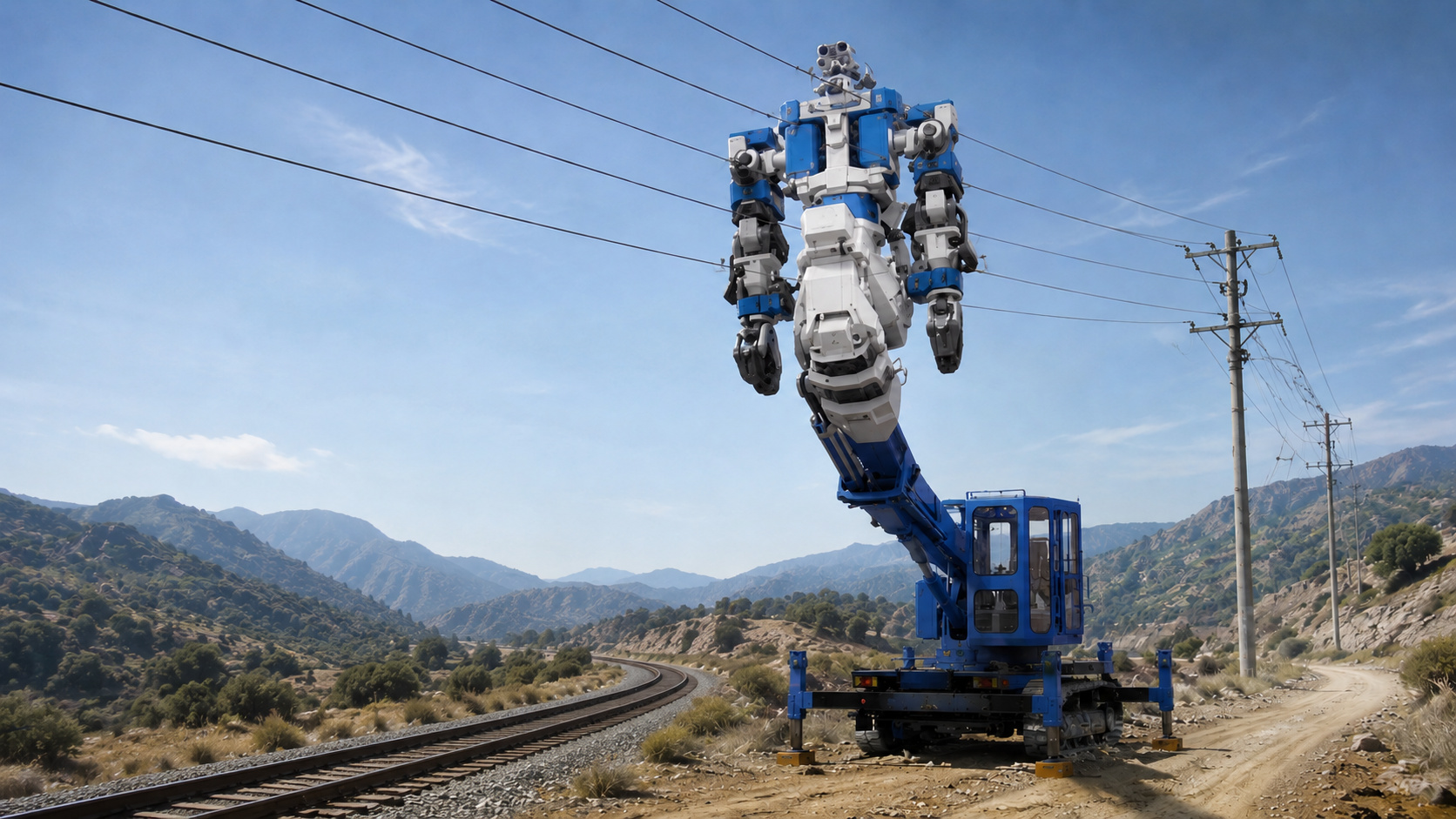


Japanese railway company introduced giant humanoid robot for track maintenance, replacing dangerous work at heights and helping to address the shortage of specialized labor in modern Japan.
While much of the world still associates giant robots with science fiction, a Japanese railway company decided to put them to work. The West Japan Railway Company (JR West) introduced a mechanical humanoid capable of performing maintenance tasks on railway lines, taking on activities that traditionally require workers suspended several meters above the ground.
Mounted on a special railway vehicle, the equipment can reach up to 12 meters in height, according to The Daily Star. The machine was developed to perform tasks such as tree pruning, painting metal structures, and maintaining components near the railway’s electrical network.
The main goal is not to create a technological spectacle but to address two real challenges in Japan: the shortage of specialized labor and the risks faced by teams working at heights and near energized systems.
-
In Brazil’s backyard: Tesla, by Elon Musk, announces official operations in Uruguay, where electric vehicles already make up 20% of new cars but still leaves out the largest market in the region.

-
This Mars rover may finally reveal if life ever existed on Mars.
-
A nearly 70-year-old Chinese inventor has registered 90 patents and created a device that stores water in the roots, helping seedlings survive drought while trying to transform the arid slopes of the Loess Plateau into green areas without relying on heavy irrigation.

-
Researchers want to change the way of producing rare earth magnets, reducing purification steps and making better use of the elements found in Swedish deposits.


The robot sits on a railway truck and works like a kind of giant worker
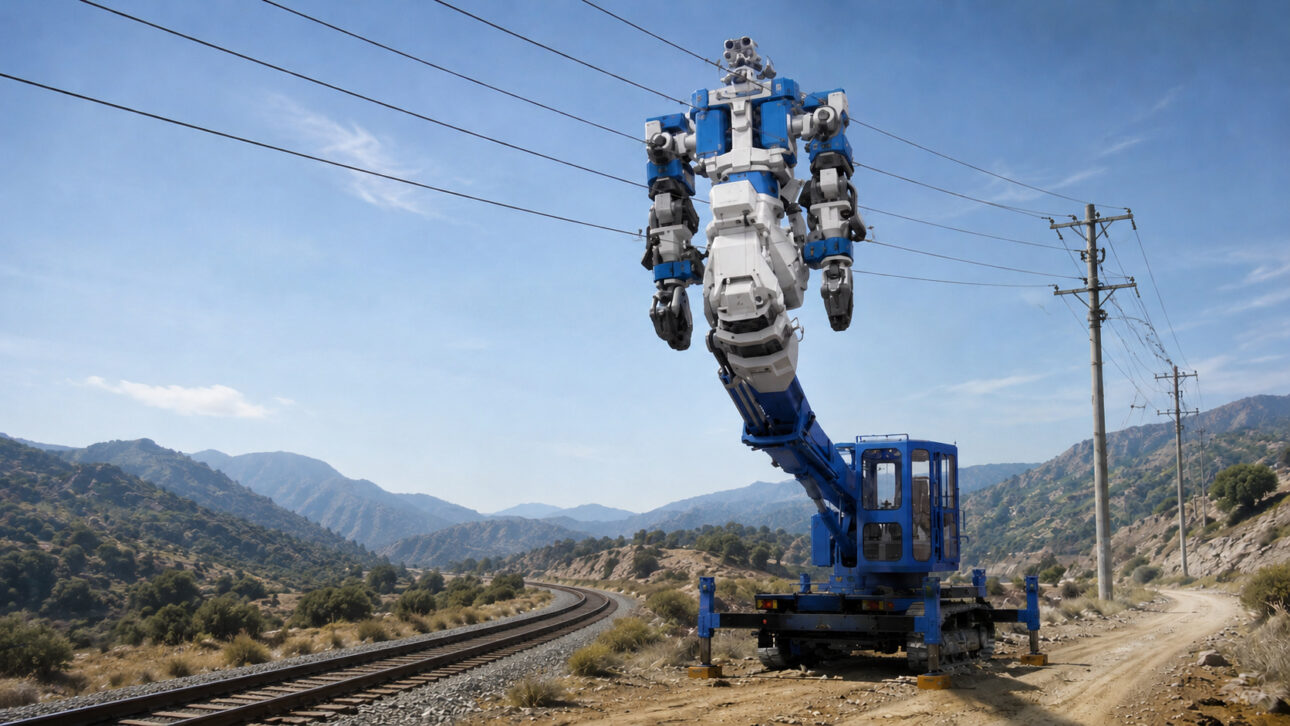
The machine was developed by JR West in partnership with Japanese engineering and robotics companies. According to the railway company, the humanoid is installed on a truck capable of traveling on the tracks. When it arrives at the service location, a hydraulic platform raises the robot, allowing its arms to reach structures located up to 12 meters above the ground.
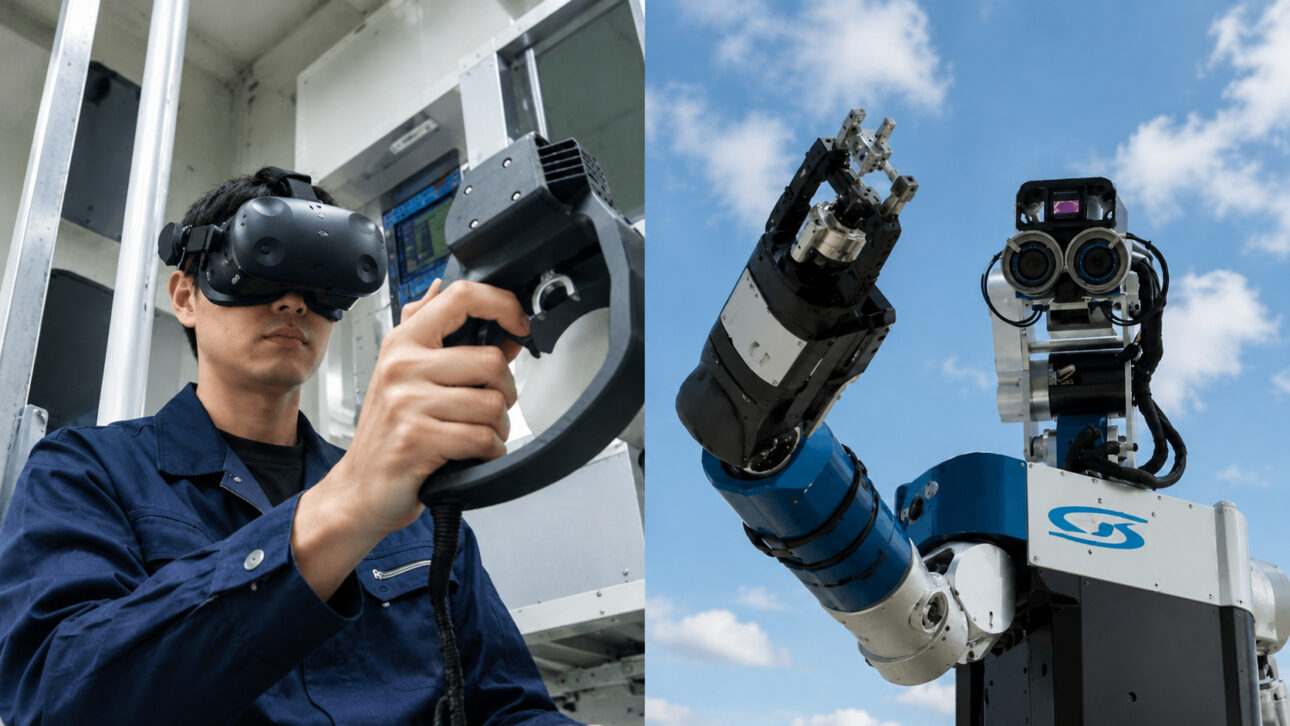
The result resembles a mix between a crane, an industrial arm, and a humanoid robot. Instead of using just a conventional mechanical arm, the structure has two articulated arms that mimic human-like movements.


The arms can hold tools and lift loads during maintenance
According to JR West, the robot can manipulate different equipment depending on the task. The ends of the arms can be fitted with accessories such as power saws, paint brushes, and maintenance tools. The company states that the machine can move objects weighing up to 40 kilograms, allowing it to perform tasks that would normally require specialized workers on elevated platforms.
In demonstrations released by the company, the equipment is shown cutting branches near the railway network and painting metal structures used to support the electric cables that power the trains. The idea is to transform dangerous activities into operations performed remotely, keeping workers in a protected position inside the control vehicle.
The operator sees through the robot’s “eyes”
Unlike an autonomous system, the humanoid does not make decisions on its own. According to JR West, an operator remains inside the railway truck and remotely controls the machine’s movements. The system uses cameras installed on the robot’s head to transmit real-time images to the worker.
In addition to the image, the controls also reproduce sensations related to the weight of the manipulated objects. According to statements from JR West’s president, Kazuaki Hasegawa, the system transmits information to the operator about the resistance and load exerted by the mechanical arms, allowing for more precise movements.
The technology emerges amid a shortage of specialized workers in Japan
The project was not developed solely for technological reasons. According to JR West, the company seeks to reduce reliance on workers exposed to dangerous tasks at heights. Japan faces an accelerated aging population and a gradual reduction in the available workforce for technical and operational activities.
The company also aims to reduce risks associated with falls and electric shocks, two of the main dangers faced by railway maintenance teams. According to JR West, the use of the robot could reduce the need for labor in certain maintenance operations by approximately 30%.
The plan is to expand the use to other infrastructure operations
The company considers the project just the beginning. According to Kazuaki Hasegawa, the intention is to evaluate the results obtained with the humanoid and gradually expand the use of similar machines in other railway infrastructure services.
JR West also stated that it may study future commercial applications of the technology in other sectors that require work at heights or in environments considered dangerous for humans.
A giant robot that came out of science fiction to work on the tracks
For decades, giant robots have been symbols of Japanese anime, movies, and video games. Now, part of this imagery has begun to gain practical application. With a reach of up to 12 meters, the ability to handle heavy tools, and remote operation from a rail truck, JR West’s humanoid shows how machines inspired by science fiction are beginning to take on real tasks in one of the largest railway networks on the planet.
More than an impressive robot, the project represents a concrete attempt to tackle the lack of specialized labor and reduce risks in activities that for decades have relied exclusively on human workers.